





Clapper Rail
Rallus crepitans
The Clapper Rail is a secretive bird that loves to hide in tall grasses and marshes. It has a long body and a distinctive call that sounds like clapping, which is how it got its name!
Habitat: Wetlands
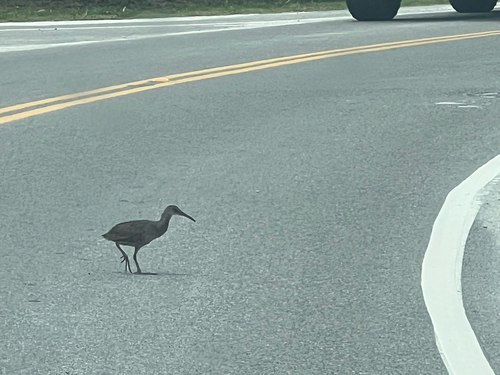
The Clapper Rail is a medium-sized marsh bird with a streaky brown-gray back and rich cinnamon-buff flanks, making it well camouflaged. It has a long, slightly downcurved bill and a relatively short tail, setting it apart from smaller marsh birds.
Category
BirdsRarity
Common
Danger
1/5 · Very low
Snaps
7
Baby Clapper Rails are tiny, fluffy black chicks that can leave the nest almost immediately.
Clapper Rails are mostly found along the coast, rarely venturing far inland.
Their distinctive 'clapping' call is often the only sign they are nearby in dense marsh grass!
They build their nests on elevated platforms in marshes, sometimes even floating on vegetation!
Clapper Rails have a laterally compressed body that helps them slip effortlessly through dense marsh grasses.
Clapper Rails can drink saltwater thanks to special glands that filter out excess salt from their bodies.
Clapper Rails can make loud 'clapping' calls that help them define territory and communicate in the noisy marsh.
These birds primarily feast on small crabs and fish, but also munch on insects and seeds.
Uca pugnax
A primary food source in marsh habitats.

Fundulus heteroclitus
Common marsh fish eaten by adult rails.
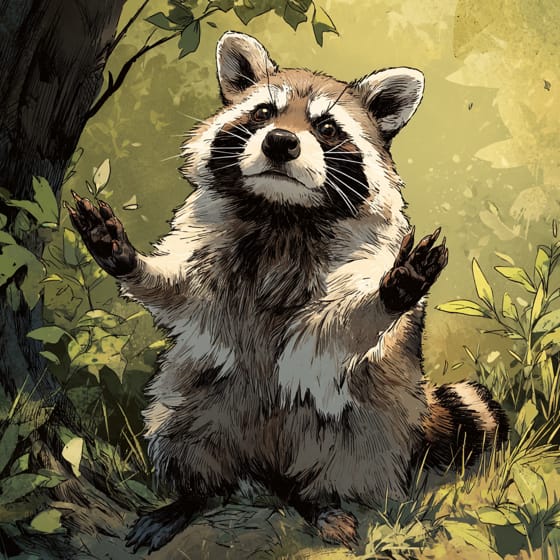
Procyon lotor
Raccoons often raid Clapper Rail nests for eggs.
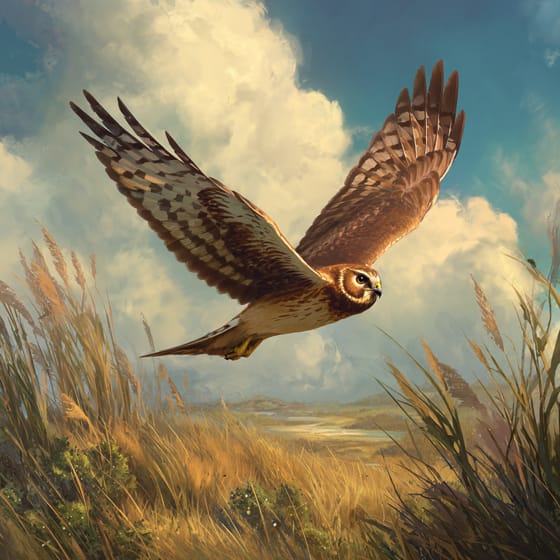
Circus hudsonius
A raptor that preys on Clapper Rails.
Spartina alterniflora
Provides crucial nesting and hiding cover.
Feathered describes animals, primarily birds, possessing a covering of feathers.
Social animals live in organized groups, cooperating for survival benefits such as foraging, defense, and raising offspring.
Solitary animals live alone for most of their lives, only interacting with others for mating or parental care.
This trait identifies organisms whose diet primarily consists of insects and other small invertebrates.

Piscivorous organisms are animals that primarily subsist on a diet of fish.

This habitat trait identifies species found in wetlands, which are areas of land saturated with water, either permanently or seasonally, including marshes, swamps, and bogs.

This trait identifies organisms whose diet consists entirely or primarily of animal tissue.

Diurnal animals are primarily active during daylight hours, typically resting or sleeping at night.

This trait identifies organisms that exhibit exceptional swiftness in movement for hunting, escape, or travel.

Threatened status denotes a species likely to become endangered in the foreseeable future without effective conservation interventions.
Danger
1/5 · Very low
Always respect wildlife and observe birds from a distance without disturbing them.
The easiest way to identify Clapper Rail is to use the Snappit nature identifier app.
32-41 cm
48-56 cm
0.2-0.4 kg
3-6 years
30 km/h
These birds primarily feast on small crabs and fish, but also munch on insects and seeds.
Wetlands
Zoom in to split clusters and explore where this object has been snapped.
Jun 6, 2026
Pawleys Island Historic DistrictPhoto attribution
no rights reserved
License: CC0 1.0 ↗
Image may be shown cropped inside the card frame.

Georgia, US
You might spot Brown Anole, Anole, and Gulf Fritillary.
View guide →

South Carolina, US
You might spot Brown Pelican, Boat-Tailed Grackle, and Great Egret.
View guide →

US
You might spot Brown Pelican, Boat-Tailed Grackle, and Great Egret.
View guide →

New York, US
You might spot Osprey, Diamondback Terrapin, and Clapper Rail.
View guide →

Massachusetts, US
You might spot Duck, Eastern Gray Squirrel, and Eastern Cottontail.
View guide →

Massachusetts, US
You might spot Duck, Eastern Gray Squirrel, and Eastern Cottontail.
View guide →
Take the discovery with you
Snap it with Snappit to identify it, learn what makes it special, and add the discovery to your collection.




.jpg&width=800)








