Common Coral Slime
ceratiomyxa fruticulosa
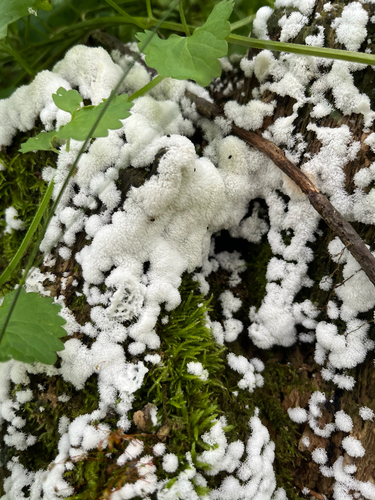
The Common Coral Slime is a fascinating organism that looks like colorful coral under the forest floor! Kids will love discovering its unique shapes and vibrant colors during nature walks.
Habitat: Damp, shaded areas of forests, especially on decaying wood and leaf litter.
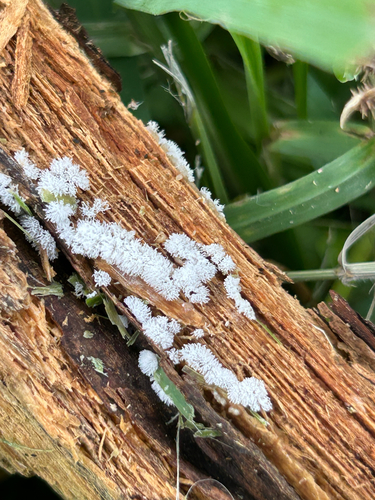
The Common Coral Slime is a striking white or sometimes yellowish-pink, coral-like growth. It features delicate, branched, finger-like structures with a waxy or gummy texture, often forming dense patches on its substrate.
Category
FungiRarity
Common
Danger
0/5 · No known danger
Snaps
15
Each tiny, finger-like branch of the slime mold is covered in microscopic spores!
It's not a true fungus, but a "protist"—a distinct group of life with unique features!
Its scientific name, Ceratiomyxa fruticulosa, roughly means "horned slime berry."
This slime mold looks like miniature white coral growing on dead wood.
Common Coral Slime has unique stalk-less spores that grow directly on its branching surface, which helps them spread easily in moist environments.
Common Coral Slime can move slowly across surfaces as a jelly-like plasmodium to find food before forming its coral-like structures.
Common Coral Slime helps break down dead plant material like logs and leaves, turning waste into vital nutrients for the forest floor.
Pseudomonas fluorescens
Its plasmodium consumes these bacteria.
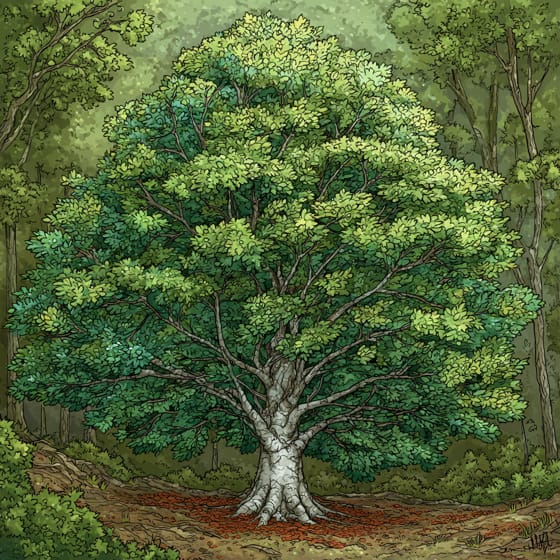
Fagus grandifolia
Grows on decaying wood and leaf litter.
Arion rufus
Slugs and other invertebrates sometimes graze on its fruiting bodies.
Solitary animals live alone for most of their lives, only interacting with others for mating or parental care.
Colorful describes organisms or objects displaying a wide range of bright and distinct colors.
Describes organisms that break down dead organic material, recycling nutrients back into the ecosystem.
Forest habitats are terrestrial environments dominated by dense tree cover, supporting a high diversity of plant and animal life.

Aquatic habitats encompass environments where organisms live predominantly in water, including oceans, rivers, lakes, and wetlands.
Danger
0/5 · No known danger
No special safety notes yet.
The easiest way to identify Common Coral Slime is to use the Snappit nature identifier app.
1-2 cm
inedible
Damp, shaded areas of forests, especially on decaying wood and leaf litter.
wood, leaf litter
Year-round (favors damp conditions)
White
Zoom in to split clusters and explore where this object has been snapped.
May 25, 2026
Pleasant HillPhoto attribution
(c) danpatrick, some rights reserved (CC BY)
License: CC BY 4.0 ↗
Image may be shown cropped inside the card frame.
May 22, 2026
Mercer Arboretum and Botanic GardensPhoto attribution
no rights reserved
License: CC0 1.0 ↗
Image may be shown cropped inside the card frame.

New Jersey, US
You might spot Monarch, Great Blue Heron, and American Robin.
View guide →

Iowa, US
You might spot House Sparrow and Common Eastern Bumble Bee.
View guide →

Massachusetts, US
You might spot Autumn Olive and Eastern Skunk Cabbage.
View guide →

Ohio, US
You might spot Wild Bergamot, Rattlesnake Master, and Eastern Pondhawk.
View guide →

Texas, US
You might spot Honey Mesquite, Anacua, and Alamo Vine.
View guide →

Georgia, US
You might spot Anole, Pond Slider, and Spanish Moss.
View guide →
Take the discovery with you
Snap it with Snappit to identify it, learn what makes it special, and add the discovery to your collection.