





Common Hedge Parsley
torilis arvensis
Common Hedge Parsley is a tall, green plant with beautiful white flowers that attract butterflies! Kids can spot it growing in fields and along roadsides, making it a fun plant to discover during nature walks.
Habitat: Common Hedge Parsley typically grows in fields, roadsides, and grassy areas.
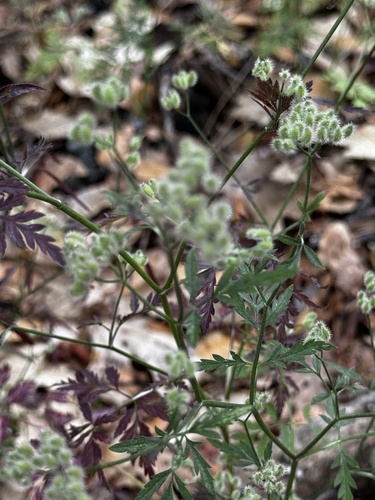
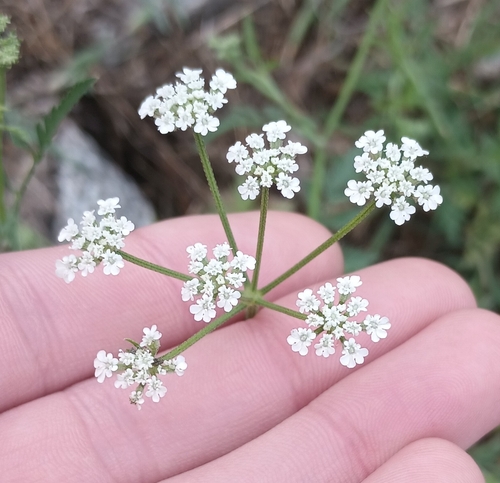
The Common Hedge Parsley has delicate, fern-like green leaves and produces clusters of small, white, lace-like flowers. Its distinguishing feature is the bristly, burr-like seeds that cover its stems and can easily attach to fur or clothing.
Category
PlantsRarity
Common
Danger
1/5 · Very low
Snaps
19
It belongs to the carrot family, which includes many edible herbs and vegetables!
Its seeds are like nature's velcro, sticking to almost anything they touch.
The tiny flowers are arranged in umbrella-shaped clusters, called umbels!
This plant is often mistaken for dangerous look-alikes, like poison hemlock!
Common Hedge Parsley has tiny, hooked bristles on its seeds that help it hitch rides on animals, spreading far and wide.
Common Hedge Parsley can quickly colonize disturbed soils, giving it an advantage over slower-growing plants.
Common Hedge Parsley has hairy stems and leaves that may deter some herbivores from munching on its foliage.
Apis mellifera
collects nectar and pollen
Syrphus ribesii
visits flowers for nectar
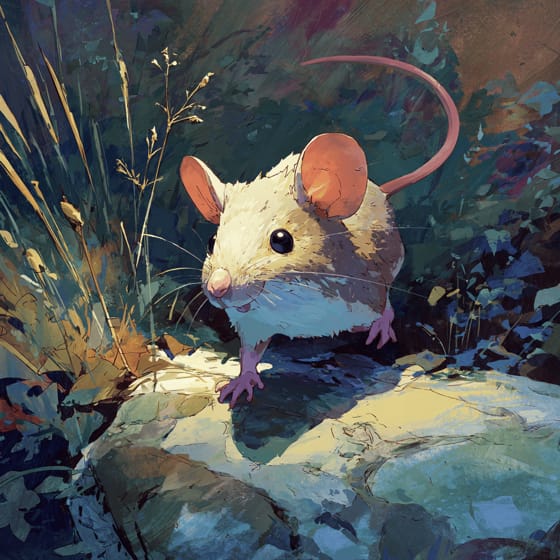
Mus musculus
eats fallen seeds
Herbaceous plants are non-woody plants with soft stems that typically die back to the ground at the end of the growing season.
Colorful describes organisms or objects displaying a wide range of bright and distinct colors.
Grassland habitats are terrestrial biomes dominated by grasses and herbaceous plants, supporting a variety of grazing animals.
Diurnal animals are primarily active during daylight hours, typically resting or sleeping at night.

Describes organisms that transfer pollen, enabling the fertilization and reproduction of plants.
Danger
1/5 · Very low
Always check with an adult before touching or tasting wild plants.
The easiest way to identify Common Hedge Parsley is to use the Snappit nature identifier app.
30-100 cm
20-50 cm
0.2-0.4 cm
Late spring to early autumn
No
None
Biennial
Zoom in to split clusters and explore where this object has been snapped.
May 28, 2026
ColomaPhoto attribution
(c) J. Roe, some rights reserved (CC BY)
License: CC BY 4.0 ↗
Image may be shown cropped inside the card frame.
May 1, 2026
Columbia CanalPhoto attribution
(c) Raven Dandridge, some rights reserved (CC BY)
License: CC BY 4.0 ↗
Image may be shown cropped inside the card frame.

California, US
You might spot Sequoia, California Newt, and Pacific Dogwood.
View guide →

California, US
You might spot Monarch, Bee, and Anise Swallowtail.
View guide →

Texas, US
You might spot Anole, Monarch, and Pinkladies.
View guide →

California, US
You might spot White Globe Lily, Rose Campion, and Pipevine Swallowtail.
View guide →

South Carolina, US
You might spot Great Blue Heron, Spanish Moss, and Cahaba Lily.
View guide →

Kansas, US
You might spot American Robin, Monarch, and Italian Wall Lizard.
View guide →
Take the discovery with you
Snap it with Snappit to identify it, learn what makes it special, and add the discovery to your collection.









.jpg&width=800)



_001.jpg&width=800)




