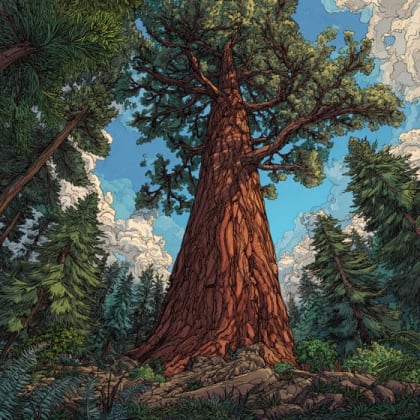





Sequoia

Alder Creek Grove is home to some of the world's most monumental trees.
Alder Creek Grove is home to some of the world's most monumental trees. This awe-inspiring giant sequoia grove, nestled within California's Giant Sequoia National Monument, boasts hundreds of ancient sequoias, including the colossal Stagg Tree, the fifth-largest tree on Earth by volume. Spanning approximately 785 acres, the grove offers a rare glimpse into an ancient ecosystem, featuring a diverse range of tree ages from young seedlings to millennia-old giants. It also encompasses varied habitats, including lush riparian woodlands, open meadows, and mixed conifer forests of red fir, white fir, ponderosa pine, and sugar pine, creating a rich tapestry of Sierra Nevada wilderness.
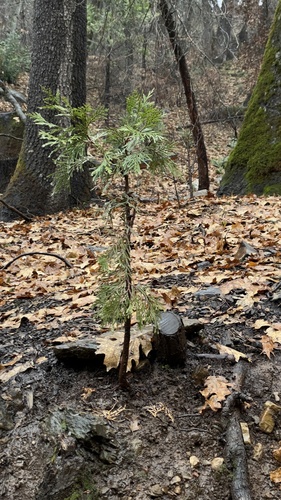
The most iconic resident, the Stagg Tree, stands as tall as a 25-story building and is wider than a two-lane road, a truly humbling spectacle for any visitor. While exploring the grove, you'll discover not only the towering sequoias but also the ongoing efforts to restore and protect this precious environment following the 2020 Castle Fire. New sequoia seedlings, along with other native trees, are being planted to ensure the continued legacy of this magnificent forest for future generations. Keep an eye out for potential wildlife residents like ringtails, flying squirrels, and various bird species that call this ancient forest home.
Visiting Alder Creek Grove offers a profound connection to nature's grandeur and resilience. It's a place where you can walk among living legends, witness significant conservation work firsthand, and find quiet contemplation beneath the world's largest trees. The immense scale of the giant sequoias leaves an indelible impression, making it a memorable destination for anyone seeking to experience the magic of California's Sierra Nevada. Don't forget to bring the Snappit nature identification app along to scan local species.
Alder Creek Grove has a notable history, intertwined with both private ownership and significant conservation efforts. Much of the grove was acquired by the Rouch family in 1946, who initially intended to log and develop the area. While some logging occurred in the late 1940s and early 1950s, the brittle nature of giant sequoia wood proved logging them to be uneconomical, and the family eventually regretted the destruction of about two dozen giant sequoias. Around this time, the Sequoia Crest subdivision of summer cabins was built adjacent to and within the grove to allow people to visit the Stagg Tree and surrounding sequoias. In a landmark conservation achievement, Save the Redwoods League announced in 2019 its initiative to purchase 530 acres of the grove, including the Stagg Tree, from the Rouch family for $15.65 million. This acquisition, completed in December 2019, marked the protection of the largest private holding of unprotected sequoias at the time. The League intends to eventually transfer the property to the U.S. Forest Service for inclusion in the Giant Sequoia National Monument, ensuring its permanent public protection. The grove was significantly impacted by the high-intensity 2020 Castle Fire, which killed an estimated 200 mature sequoias, though the Stagg Tree survived due to firefighting efforts. Post-fire restoration, including extensive seedling planting and cultural burns led by Indigenous communities, has been underway since 2021 to promote forest health and resilience.
Hike the accessible trail to the Stagg Tree, observe the ongoing restoration and reforestation efforts post-fire, and immerse yourself in the grandeur of the ancient forest. Look for other named sequoias and the various native tree species.
Winter (roughly November through March) brings snow and ice, and roads and trails are not cleared, potentially requiring parking along the main asphalt road and a longer walk. Early spring might feature snowmelt and powerful seasonal water flow. Summer temperatures can reach the 70s to 80s°F in higher elevations, but lower areas can be hotter. Fall is characterized by mild temperatures, changing foliage of deciduous trees, and a chance of light showers.
While the League plans future infrastructure upgrades, current visitor infrastructure is limited. The short trail to the Stagg Tree (about 0.33 miles one way from the parking area, or 1.0 mile round trip) involves a dirt road and a short single-track path. The access road to the parking area can have potholes, making it difficult for low-clearance vehicles, which may need to park further away. No parking is available for vehicles over 15 feet long.
The majestic Stagg Tree (the fifth largest tree in the world), the Alder Creek Giant (19th largest globally), diverse stands of giant sequoias, mixed conifer forests, meadows, and riparian areas.
Each card links to a full Explore page with photos, traits, and fun facts.
Start with the big picture, then zoom in to explore individual wildlife observations around this place.
Check Road Conditions
Especially outside of peak summer, verify current road and weather conditions before heading out, as snow and ice can impact access in winter and spring.
Wear Appropriate Footwear
Trails can be unpaved, uneven, or muddy, particularly after rain or snowmelt. Sturdy hiking shoes are highly recommended.
Pack Water and Snacks
There are no services within the grove itself, so bring everything you need for your visit.
Mind Your Vehicle
The short dirt road leading to the parking area can be rough; low-clearance vehicles may need to park earlier and walk the additional distance. No parking is available for vehicles over 15 feet.
Stay on Trails
Help protect the sensitive ecosystem by remaining on designated paths and respecting restoration areas.
Leave No Trace
Carry out everything you carry in to preserve the natural beauty of the grove.
Mar 10, 2026
Photo attribution
(c) Corey Shake, some rights reserved (CC BY)
License: CC BY 4.0 ↗
Image may be shown cropped inside the card frame.
Oct 1, 2025
Photo attribution
(c) Chris Winchell, some rights reserved (CC BY)
License: CC BY 4.0 ↗
Image may be shown cropped inside the card frame.
Dec 27, 2022
Photo attribution
(c) Ike Ikemori, some rights reserved (CC BY)
License: CC BY 4.0 ↗
Image may be shown cropped inside the card frame.
Jun 18, 2026
Jun 17, 2026

Maryland, US
You might spot White-Tailed Deer and Eastern Gray Squirrel.
View guide →
.jpg)
District of Columbia, US
You might spot Eastern Gray Squirrel, Duck, and House Sparrow.
View guide →

Illinois, US
You might spot American Robin, Canada Goose, and House Sparrow.
View guide →

Virginia, US
You might spot Spotted Lanternfly and Northern Cardinal.
View guide →
Take the discovery with you
Identify the wildlife you spot, learn as you go, and keep a collection of the adventure.






















.jpg&width=800)
