





common mugwort
Artemisia vulgaris
Common mugwort is a leafy plant that grows tall and has soft, green leaves. It can be found in many places and is known for its strong smell, especially when you touch it!
Habitat: Grasslands
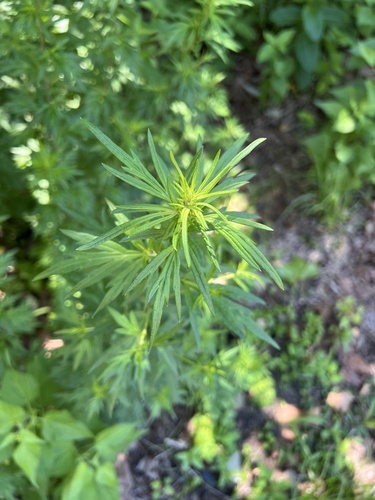
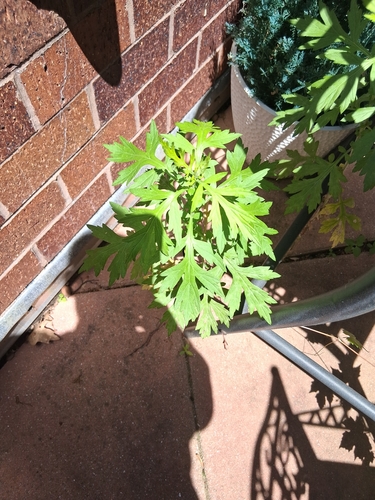
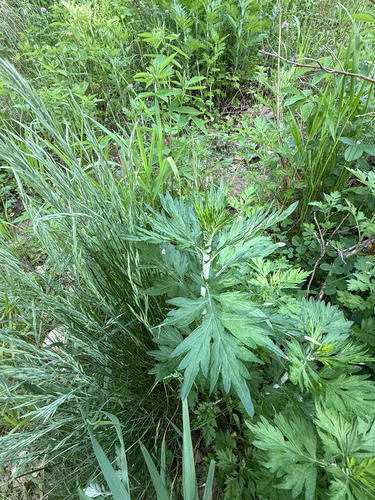
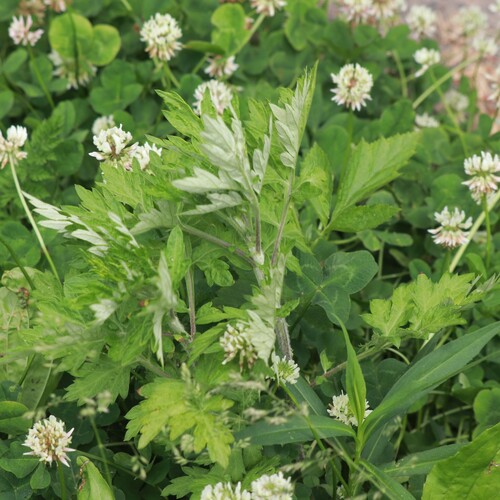
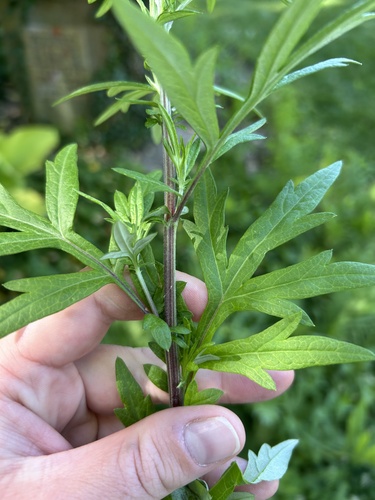
The common mugwort is a tall, erect plant with reddish-brown stems. It has deeply lobed leaves that are dark green above and distinctly silvery-white and fuzzy underneath. Its small, inconspicuous flowers are greenish-yellow or reddish-brown.
Category
PlantsRarity
Common
Danger
1/5 · Very low
Snaps
113
Ancient Romans planted mugwort by roadsides to soothe tired feet!
Its scientific name 'Artemisia' honors Artemis, the Greek goddess of the hunt!
Mugwort can grow over 6 feet tall, towering above many plants!
The fuzzy white undersides of its leaves feel super soft!
Common mugwort has spreading underground stems (rhizomes) that help it quickly colonize and spread across open ground.
Common mugwort can grow in very poor, disturbed soils, which helps it thrive where other plants struggle.
Common mugwort has chemical compounds in its leaves that deter many herbivores from eating it.
Chrysolina artemisiae
Beetle adults and larvae feed on its leaves.
Eupithecia absinthiata
This moth's caterpillars munch on mugwort foliage.

Cuscuta campestris
This vine-like plant attaches to steal mugwort's nutrients.

Homo sapiens
Used in traditional foods and herbal medicine.
Aromatic plants produce and emit fragrant volatile organic compounds, often for defense or to attract pollinators.
Biennial plants complete their life cycle over two growing seasons, typically forming foliage in the first year and flowering/seeding in the second.
Fragrant flowers emit a pleasant aroma, often to attract pollinators or for defense.
Medicinal plants possess chemical compounds that can be used for therapeutic purposes to treat illnesses or maintain health.

Edible plants are those parts of a plant that are considered safe for human consumption.

Grassland habitats are terrestrial biomes dominated by grasses and herbaceous plants, supporting a variety of grazing animals.

Describes plants that are particularly attractive and beneficial to a wide range of pollinating organisms.

This human use trait indicates species from which spices are derived, used for flavoring, preserving food, or as aromatic agents.
No aliases listed yet.
Danger
1/5 · Very low
Always ask an adult before touching or picking plants.
The easiest way to identify common mugwort is to use the Snappit nature identifier app.
60-180 cm
50-100 cm
0.2-0.5 cm
Late summer to early fall
Yes
Mild
Perennial
Zoom in to split clusters and explore where this object has been snapped.
Jun 16, 2026
Glastonbury Historic DistrictPhoto attribution
(c) Mark Apgar, some rights reserved (CC BY)
License: CC BY 4.0 ↗
Image may be shown cropped inside the card frame.
Jun 16, 2026
Photo attribution
(c) Eric Baratta, some rights reserved (CC BY)
License: CC BY 4.0 ↗
Image may be shown cropped inside the card frame.
Jun 6, 2026
Brattleboro Downtown Historic DistrictPhoto attribution
(c) Karen Saunders, some rights reserved (CC BY)
License: CC BY 4.0 ↗
Image may be shown cropped inside the card frame.
Jun 6, 2026
East Windsor Hill Historic DistrictPhoto attribution
(c) Mark Apgar, some rights reserved (CC BY)
License: CC BY 4.0 ↗
Image may be shown cropped inside the card frame.
Jun 3, 2026
Bamboo Brook Outdoor Education CenterPhoto attribution
(c) Bonnie Semmling, some rights reserved (CC BY)
License: CC BY 4.0 ↗
Image may be shown cropped inside the card frame.

Rhode Island, US
You might spot Common Mugwort, Duck, and Azure Bluet.
View guide →

Rhode Island, US
You might spot Common Eastern Bumble Bee and Osprey.
View guide →

Connecticut, US
You might spot Bold Jumping Spider and American Tuliptree.
View guide →

Vermont, US
You might spot Asian Bittersweet, Alder Buckthorn, and Eastern Newt.
View guide →

New York, US
You might spot Dame's Rocket, American Pokeweed, and American Toad.
View guide →

US
You might spot Wharf Louse, Osprey, and Ruddy Turnstone.
View guide →
Take the discovery with you
Snap it with Snappit to identify it, learn what makes it special, and add the discovery to your collection.









.jpg&width=800)


_001.jpg&width=800)



