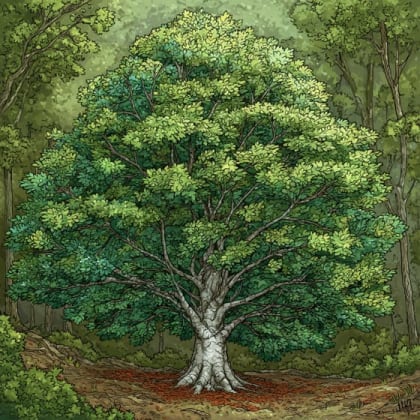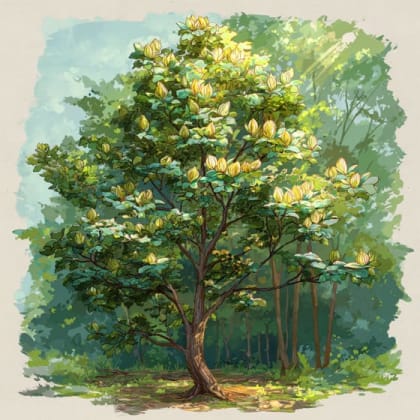





Tulip Tree

Step back in time to the Belltown Historic District, a unique open-air museum nestled in the heart of East Hampton, Connecticut, renowned as the nation's sole mill town exclusively dedicated to bell manufacturing.
Step back in time to the Belltown Historic District, a unique open-air museum nestled in the heart of East Hampton, Connecticut, renowned as the nation's sole mill town exclusively dedicated to bell manufacturing. This captivating district preserves over a century of industrial heritage, showcasing a remarkable collection of 19th-century architecture that tells the story of a specialized industry. Visitors can wander through streets lined with well-preserved homes, historic commercial buildings, and the remnants of the very factories that once filled the air with the sounds of bell-making.
The district's "snappable" treasures include the surviving mill complexes, such as those associated with the enduring Bevin Brothers Manufacturing Company, where the legacy of American bell production continues to this day. Architectural enthusiasts will appreciate the diverse styles, from elegant Greek Revival and Federal homes to intricate Late Victorian commercial structures. Significant landmarks like Hitchcock's Pharmacy, the Buckland and Barton General Store, and various historic churches offer glimpses into the daily life and commerce of a thriving 19th-century industrial community.
Visiting the Belltown Historic District offers a profound connection to America's industrial past, providing a tranquil yet engaging experience. It's a place where history comes alive through its preserved buildings and industrial archaeological sites, inviting exploration and reflection on the ingenuity and craftsmanship that shaped a town. The district's cohesive appearance, much as it looked at the end of the 19th century, makes it a truly memorable destination for history buffs and architectural admirers alike. Take the ultimate field guide with you: use the Snappit app to identify birds, plants, and animals on your trip.
The area now known as East Hampton was settled in 1739, with its early economy driven by shipbuilding. However, by the early 19th century, this industry was in decline. A transformative shift began in 1807 when William Barton arrived in East Hampton, bringing with him specialized knowledge of brass bell manufacturing. He established a foundry and trained a generation of bellmakers, including the prominent Bevin Brothers, who pioneered the use of water power for bell production by damming Pocotopaug Brook. By 1860, Belltown boasted 23 bell manufacturers, solidifying its unique identity as the only mill town in the United States exclusively devoted to this highly specialized industry. The district, listed on the National Register of Historic Places in 1985, encompasses 145 acres and features 147 contributing historic buildings, predominantly from after 1800, reflecting the town's prosperity as a bell-making center. While many bell makers eventually faced challenges from foreign competition, the Bevin Brothers Manufacturing Company, which played a crucial role in the district's history, continues its operations in East Hampton today.
Take a self-guided walking tour to admire the Federal, Greek Revival, and Late Victorian buildings. Look for historical markers that provide context on the bell-making industry and the lives of its residents. Explore the distinct commercial and residential areas, noting the blend of industrial and domestic architecture.
Spring/Summer: Ideal for leisurely walks, with blooming greenery enhancing the historic streetscapes.
Fall: Enjoy vibrant fall colors framing the historic buildings, making for picturesque photography.
Winter: Can be quiet and scenic, especially after a snowfall, but walking conditions might be challenging.
As a historic district primarily consisting of public streets and sidewalks, it is generally walkable. However, some sidewalks may be uneven, and accessibility within private historic buildings would depend on individual property owners.
The Bevin Brothers Manufacturing Company (though likely not open for public tours, its historical significance is central), the diverse 19th-century architectural styles, historic commercial blocks (like the former Hitchcock's Pharmacy and Buckland and Barton General Store), and the various historic churches.
Each card links to a full Explore page with photos, traits, and fun facts.
Start with the big picture, then zoom in to explore individual wildlife observations around this place.
Wear comfortable shoes for walking, as exploration is best done on foot.
Bring a camera to capture the charming 19th-century architecture and historic streetscapes.
Look for historical markers or plaques that provide context on the buildings and the town's bell-making past.
Consider visiting the Chatham Historical Society for additional local historical information.
Explore Main Street and venture onto the side streets like Barton Hill, Summit, and Skinner Street to see a broader range of the district's preserved buildings.
Support local businesses within the district, as some historic commercial buildings may still house shops or eateries.
Jun 13, 2026
Jun 13, 2026
Jun 11, 2026
Jun 11, 2026
Jun 11, 2026

Maryland, US
You might spot White-Tailed Deer and Eastern Gray Squirrel.
View guide →
.jpg)
District of Columbia, US
You might spot Eastern Gray Squirrel, Duck, and House Sparrow.
View guide →

Illinois, US
You might spot American Robin, Canada Goose, and House Sparrow.
View guide →

Virginia, US
You might spot Spotted Lanternfly and Northern Cardinal.
View guide →
Take the discovery with you
Identify the wildlife you spot, learn as you go, and keep a collection of the adventure.