





creeping Jenny
Lysimachia nummularia
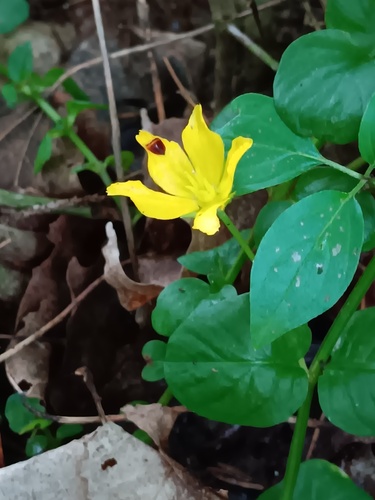
Creeping Jenny is a cheerful plant with bright yellow flowers and round leaves. It loves to grow close to the ground and can spread quickly, making it a fun addition to gardens and parks.
Habitat: Wetlands
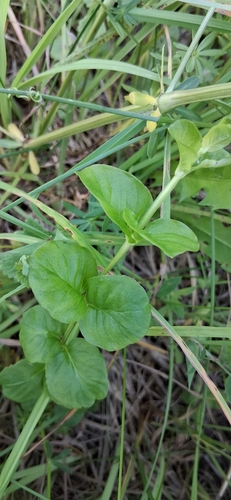
The creeping Jenny has small, round, coin-shaped leaves that are a vibrant golden-green or chartreuse. It grows as a dense, low-lying mat, creating a bright carpet that stands out from darker foliage.
Category
PlantsRarity
Common
Danger
1/5 · Very low
Snaps
15
Creeping Jenny can grow so fast, it often makes a dense, green carpet on the ground!
It's popular in water gardens, even growing beautifully with its roots submerged!
Its scientific name, 'nummularia', means "like a coin" because its leaves are so round!
People sometimes call it "moneywort" because of its bright, coin-shaped leaves!
Creeping Jenny can grow new roots from its stems wherever they touch the ground, helping it spread fast and anchor firmly.
Creeping Jenny has roots that can thrive even in very wet soil, letting it live happily near ponds and streams.
Creeping Jenny can adapt to growing in both sunny and shady spots, making it a very versatile plant.
Apis mellifera
collects nectar and pollen

Helix aspersa
graze on its soft leaves
Anas platyrhynchos
forage on aquatic growth
Deciduous plants periodically shed all their leaves, typically during autumn or dry seasons.
Flowering plants are any plants that produce flowers as part of their reproductive cycle.
Ornamental plants are cultivated primarily for their aesthetic appeal, enhancing landscapes and gardens with their attractive foliage, flowers, or form.
Shade tolerant plants are adapted to grow and thrive in areas with low light levels, requiring less direct sunlight.

Fall color refers to the seasonal change in foliage pigmentation, primarily in deciduous plants, displaying vibrant hues.

Describes plants that are particularly attractive and beneficial to a wide range of pollinating organisms.

Rapid growing plants exhibit accelerated growth rates, quickly increasing in size and biomass within a short period.

This habitat trait identifies species found in wetlands, which are areas of land saturated with water, either permanently or seasonally, including marshes, swamps, and bogs.
Danger
1/5 · Very low
Always look but don't touch plants without asking an adult.
The easiest way to identify creeping Jenny is to use the Snappit nature identifier app.
5-10 cm
30-100 cm
1-2.5 cm
Late spring to mid-summer
No
Mild
Perennial
Zoom in to split clusters and explore where this object has been snapped.
Jun 16, 2026
Parc linéaire de la rivière Saint-CharlesPhoto attribution
no rights reserved
License: CC0 1.0 ↗
Image may be shown cropped inside the card frame.
Jun 24, 2024
Chenango County Courthouse DistrictPhoto attribution
(c) Dominic McLean, some rights reserved (CC BY)
License: CC BY 4.0 ↗
Image may be shown cropped inside the card frame.

Oregon, US
You might spot Duck, Pacific Trillium, and Wood Duck.
View guide →
New Jersey, US
You might spot American Robin, Spotted Lanternfly, and Monarch.
View guide →

Connecticut, US
You might spot Garlic Mustard and Common Eastern Bumble Bee.
View guide →

Michigan, US
You might spot Eastern Box Turtle, Autumn Olive, and Common Watersnake.
View guide →

Québec, CA
You might spot Common Eastern Bumble Bee and Asian Lady Beetle.
View guide →

Massachusetts, US
You might spot Common Eastern Bumble Bee, Bee, and Eastern Calligrapher.
View guide →
Take the discovery with you
Snap it with Snappit to identify it, learn what makes it special, and add the discovery to your collection.







.jpg&width=800)



_001.jpg&width=800)



