





Domestic Duck
Anas platyrhynchos domesticus
Domestic ducks are friendly birds that love to waddle around. They have soft feathers and enjoy splashing in water.
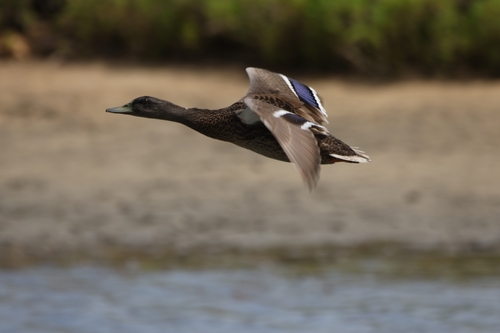
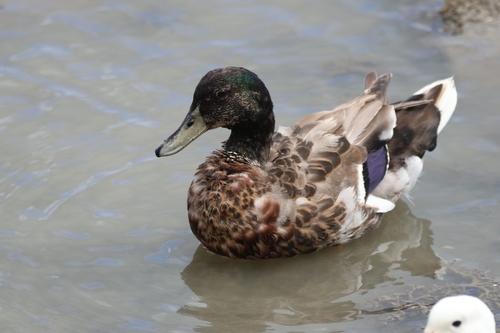
The Domestic Duck has a stocky body, short neck, and webbed feet, with a characteristic flat bill. Plumage varies widely by breed, from pure white to iridescent green, brown, or mottled patterns, making them visually distinct from their wild ancestors.
Category
BirdsRarity
Common
Danger
1/5 · Very low
Snaps
6
A group of ducks on the water is called a 'raft,' but on land, it's a 'flock' or 'team'!
Duck feathers are incredibly warm and waterproof, making them perfect for cozy winter jackets.
Ducks can actually sleep with one eye open and half their brain awake to watch for danger!
Some ducks, like Muscovies, don't quack at all; they make hissing or trilling sounds!
Domestic Ducks have oily feathers that repel water, keeping them warm and dry after swimming.
Domestic Ducks can see clearly underwater, helping them find food hidden beneath the surface.
Domestic Ducks use comb-like structures in their bills to filter tiny food particles from water.
Domestic Ducks are omnivores, eating almost anything they can find in and near water!
Wildlife encompasses all undomesticated animal and plant life existing in their natural habitats.
Feathered describes animals, primarily birds, possessing a covering of feathers.
Characterized by having toes connected by a membrane, typically aiding in swimming.
Social animals live in organized groups, cooperating for survival benefits such as foraging, defense, and raising offspring.

This trait identifies organisms whose diet includes both plant and animal matter.

Domesticated refers to species that have been selectively bred and tamed by humans for specific purposes.

Aquatic habitats encompass environments where organisms live predominantly in water, including oceans, rivers, lakes, and wetlands.

This habitat trait indicates species that can coexist with humans in urban and suburban environments, utilizing man-made structures and green spaces.
Danger
1/5 · Very low
Ducks are usually safe to be around, but always ask an adult before getting too close.
The easiest way to identify Domestic Duck is to use the Snappit nature identifier app.
50-80 cm
90-110 cm
1-5 kg
5-10 years
80 km/h
Domestic Ducks are omnivores, eating almost anything they can find in and near water!
Foraging
Zoom in to split clusters and explore where this object has been snapped.
Jun 6, 2026
Koko Crater Botanical GardenPhoto attribution
(c) Damien Wallace, some rights reserved (CC BY)
License: CC BY 4.0 ↗
Image may be shown cropped inside the card frame.
Jun 6, 2026
Koko Crater Botanical GardenPhoto attribution
(c) Damien Wallace, some rights reserved (CC BY)
License: CC BY 4.0 ↗
Image may be shown cropped inside the card frame.

Arkansas, US
You might spot Eastern Gray Squirrel and Asian Lady Beetle.
View guide →

Hawaii, US
You might spot White-Rumped Shama, Koster's Curse, and Red Button Ginger.
View guide →

Hawaii, US
You might spot Yellow ʻilima, Red-Tailed Tropicbird, and White Leadtree.
View guide →
Take the discovery with you
Snap it with Snappit to identify it, learn what makes it special, and add the discovery to your collection.








.jpg&width=800)










