





Earleaf Greenbrier
Smilax auriculata
The Earleaf Greenbrier is a climbing plant with heart-shaped leaves. It has small, greenish flowers and can often be found in forests, making it a fun plant to discover while exploring nature.
Habitat: Forests
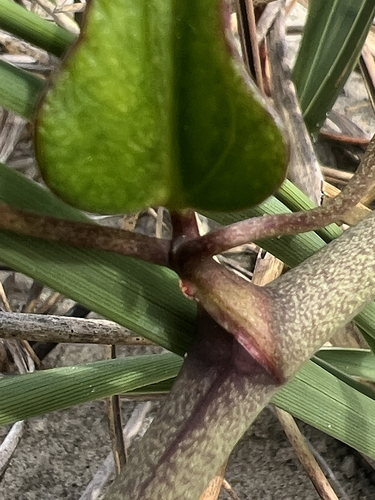
The Earleaf Greenbrier has shiny, often heart-shaped leaves with distinctive ear-like lobes at the base, typically bright green. Its woody stems are covered in sharp thorns, and it produces small, greenish-yellow flowers that develop into dark blue to black berries.
Category
PlantsRarity
Common
Danger
2/5 · Low
Snaps
2
Ancient roots of this plant were once used to make a drink similar to traditional root beer!
Its tough, leathery leaves stay green all year long, even in cooler weather.
Some birds love to eat its dark berries, helping to spread its seeds far and wide.
The 'earleaf' name comes from the small, ear-shaped parts at the base of its leaves.
Earleaf Greenbrier can use its tough tendrils to climb high into trees, helping it reach precious sunlight.
Earleaf Greenbrier has sharp thorns on its stems that defend it from hungry animals wanting a snack.
Earleaf Greenbrier has underground rhizomes that let it sprout new plants and spread its territory easily.
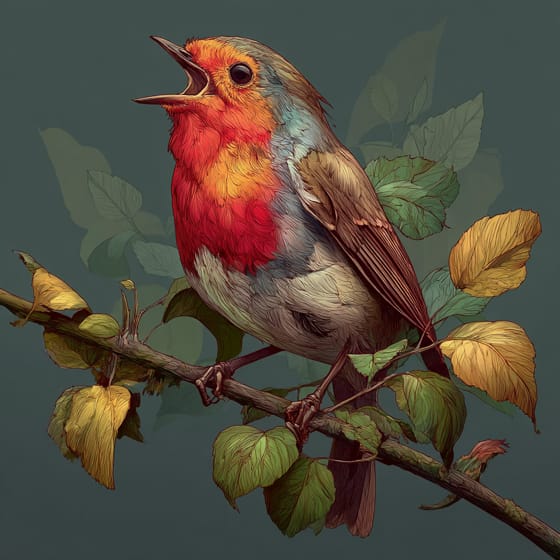
Turdus migratorius
Eats berries and helps spread seeds

Odocoileus virginianus
Browses on its leaves and tender shoots
Apis mellifera
Pollinates flowers, collecting nectar and pollen

Cardinalis cardinalis
Finds shelter within its dense, thorny thickets
Climbing or vine plants are characterized by a growth habit that allows them to ascend upwards by twining, tendrils, or adhesive roots.
Deciduous plants periodically shed all their leaves, typically during autumn or dry seasons.
Ornamental plants are cultivated primarily for their aesthetic appeal, enhancing landscapes and gardens with their attractive foliage, flowers, or form.
Medicinal plants possess chemical compounds that can be used for therapeutic purposes to treat illnesses or maintain health.

Pertaining to plants that have stems covered with sharp, pointed projections for defense.

Describes plants that are particularly attractive and beneficial to a wide range of pollinating organisms.

Forest habitats are terrestrial environments dominated by dense tree cover, supporting a high diversity of plant and animal life.
No aliases listed yet.
Danger
2/5 · Low
Be careful of the thorns on the stems when exploring around this plant.
The easiest way to identify Earleaf Greenbrier is to use the Snappit nature identifier app.
100-500 cm
50-200 cm
0.1-0.3 cm
Spring to early summer
Yes
None
Perennial
Zoom in to split clusters and explore where this object has been snapped.
Jun 6, 2026
Pawleys Island Historic DistrictPhoto attribution
no rights reserved
License: CC0 1.0 ↗
Image may be shown cropped inside the card frame.

Florida, US
You might spot Coastalplain Chaffhead, Slimleaf Pawpaw, and Woolly Pawpaw.
View guide →

South Carolina, US
You might spot Blood Ark, Anole, and Willet.
View guide →

Florida, US
You might spot False Rosemary, Florida Rosemary, and Sanderling.
View guide →
Take the discovery with you
Snap it with Snappit to identify it, learn what makes it special, and add the discovery to your collection.







.jpg&width=800)



_001.jpg&width=800)




