





Eastern black-and-white colobus
Colobus guereza kikuyuensis
The Eastern black-and-white colobus is a playful monkey with beautiful black and white fur. They love to swing from tree to tree in their forest homes, showing off their long tails and acrobatic skills!
Habitat: Forests
The Eastern black-and-white colobus is a striking monkey with long, flowing black fur. It features a distinctive U-shaped mantle of white fur on its back and a white face. A bushy white tuft on its tail makes it easily recognizable.
Category
MammalsRarity
Common
Danger
2/5 · Low
Snaps
Be the first to snap!
Baby colobus are born pure white, gradually changing to black and white fur!
Colobus groups use loud calls and snorts to chat across the forest!
Their name means 'mutilated' in Greek, due to their almost absent thumb!
They live high in trees, rarely touching ground, even for water!
Eastern black-and-white colobus has a multi-chambered stomach that helps them digest tough leaves.
Eastern black-and-white colobus uses its long, bushy tail to expertly balance while leaping and climbing through trees.
Eastern black-and-white colobus can jump huge distances between trees due to powerful leg muscles, helping them navigate.
Eastern black-and-white colobus has long fingers and toes with special pads, allowing firm branch grasping.
These monkeys are mostly leaf-eaters, using a special stomach to digest tough plant material.
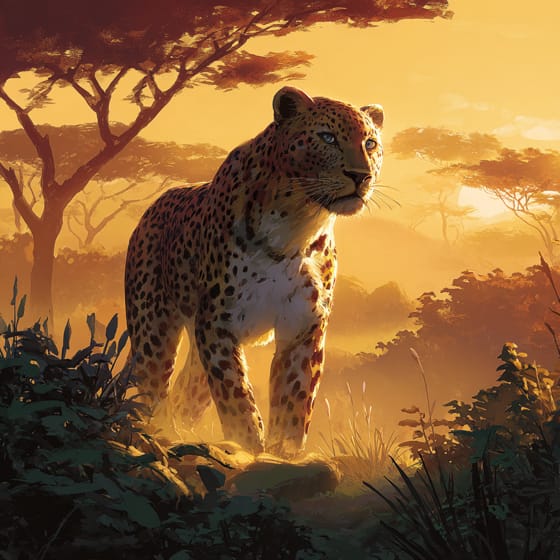
Panthera pardus
A main predator that hunts colobus in the forest canopy.
%2C_at_Ndumo_Nature_Reserve%2C_KwaZulu-Natal%2C_South_Africa_(28947411865).jpg&width=800)
Stephanoaetus coronatus
Large raptor that preys on colobus monkeys from above.
Ficus sycomorus
Colobus often feed on the leaves and fruits of fig trees.
Furry describes animals possessing a dense covering of soft hair or fur.
Social animals live in organized groups, cooperating for survival benefits such as foraging, defense, and raising offspring.
Arboreal animals live primarily in trees, utilizing them for shelter, food, and protection from predators.
This trait characterizes organisms whose diet consists entirely or primarily of plant material.

Forest habitats are terrestrial environments dominated by dense tree cover, supporting a high diversity of plant and animal life.

Diurnal animals are primarily active during daylight hours, typically resting or sleeping at night.

This trait identifies organisms that exhibit exceptional swiftness in movement for hunting, escape, or travel.

Endangered status indicates a species is at a very high risk of extinction in the wild in the near future.
No aliases listed yet.
Danger
2/5 · Low
Always watch from a distance and don't try to touch wild animals.
The easiest way to identify Eastern black-and-white colobus is to use the Snappit nature identifier app.
45-72 cm
9-14 kg
15-24 years
30 km/h
These monkeys are mostly leaf-eaters, using a special stomach to digest tough plant material.
Forests
Foraging
Zoom in to split clusters and explore where this object has been snapped.
Recent snaps will appear here as new observations are added.
Minnesota, US
You might spot Tiger, African Penguin, and Grizzly Bear.
View guide →
Kansas, US
You might spot Tiger, Sloth Bear, and Panthera Pardus Orientalis.
View guide →

Mississippi, US
You might spot Southern White Rhinoceros, Zebra, and Tiger.
View guide →
Take the discovery with you
Snap it with Snappit to identify it, learn what makes it special, and add the discovery to your collection.




.jpg&width=800)

.JPG&width=800)


.jpg&width=800)
