Eastern Oyster
crassostrea virginica
Eastern Oysters are amazing creatures that live in the ocean and help keep the water clean! They can create beautiful shells that are often found on beaches.
Habitat: Shallow coastal waters, particularly in bays and estuaries.
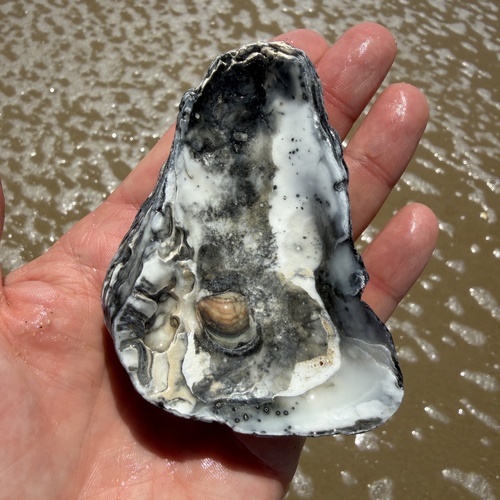
The Eastern Oyster has an irregular, rough, grayish-brown shell that is often longer and narrower than other oyster species. Its top shell is flatter, while the bottom shell is cupped and cemented to a surface, often appearing greenish inside from algae.
Category
InvertebrateRarity
Common
Danger
1/5 · Very low
Snaps
7
Each oyster creates a pearl, but most are too small or not shiny enough for jewelry.
Oyster reefs are natural coastal defenses, protecting shorelines from erosion during storms!
Some oysters can live for over 20 years, silently growing on the ocean floor!
These oysters can live in a wide range of saltiness, from brackish rivers to full ocean water!
Eastern Oyster can clean water by filter-feeding because of specialized gills that trap tiny particles from the environment.
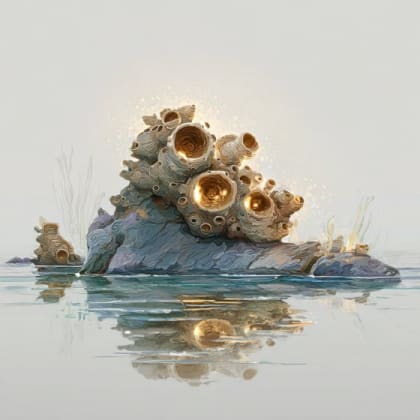
Eastern Oyster has a strong shell that helps build large, complex reefs, providing shelter and habitat for other marine life.
Eastern Oyster can change its gender throughout its life because it helps them adapt and reproduce more effectively in varying conditions.
This filter-feeder strains tiny bits of food from the water using its special gills.
Urosalpinx cinerea
This snail drills through the oyster's shell to eat its soft body.
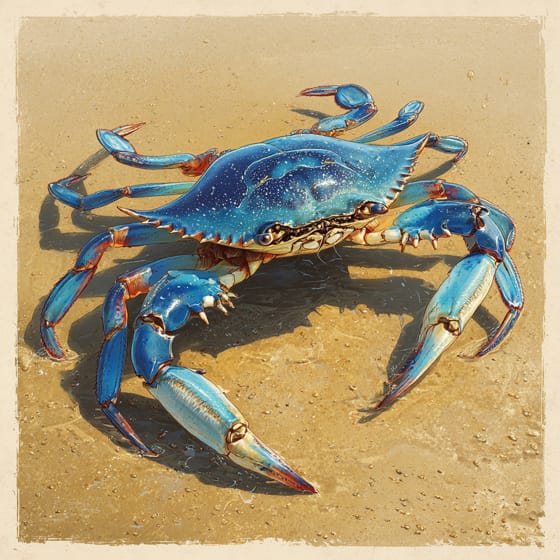
Callinectes sapidus
Blue crabs use their powerful claws to crack open oyster shells.
.jpg&width=800)
Haematopus palliatus
These birds use their strong bills to pry open or hammer oyster shells.
Panopeus herbstii
Mud crabs consume young oysters by crushing their developing shells.
Gobiosoma bosci
Many small fish and invertebrates find shelter within complex oyster reefs.
Social animals live in organized groups, cooperating for survival benefits such as foraging, defense, and raising offspring.
Filter feeders obtain nutrients by straining suspended food particles and small organisms from water.
Describes organisms that break down dead organic material, recycling nutrients back into the ecosystem.
Aquatic habitats encompass environments where organisms live predominantly in water, including oceans, rivers, lakes, and wetlands.

Marine habitats encompass all saltwater environments of the Earth's oceans, supporting an immense diversity of aquatic life.
Danger
1/5 · Very low
Be careful of sharp shells on the beach!
The easiest way to identify Eastern Oyster is to use the Snappit nature identifier app.
5 cm
3 cm
20 g
10 years
This filter-feeder strains tiny bits of food from the water using its special gills.
Shallow coastal waters, particularly in bays and estuaries.
Filter Feeding
Zoom in to split clusters and explore where this object has been snapped.
Jun 3, 2026
Bodie Island Lifesaving and Coast Guard StationPhoto attribution
(c) Conway Hawn, some rights reserved (CC BY)
License: CC BY 4.0 ↗
Image may be shown cropped inside the card frame.

US
You might spot Firewheel, Domestic Horse, and Atlantic Horseshoe Crab.
View guide →

South Carolina, US
You might spot Brown Pelican, Boat-Tailed Grackle, and Great Egret.
View guide →
North Carolina, US
You might spot Sanderling, Laughing Gull, and Brown Pelican.
View guide →

Maryland, US
You might spot Common Pawpaw, Crane-Fly Orchid, and Cut-Leaved Toothwort.
View guide →

US
You might spot American Herring Gull, Cooper's Hawk, and Ring-Billed Gull.
View guide →

Connecticut, US
You might spot Common Eastern Bumble Bee, Osprey, and Monarch.
View guide →
Take the discovery with you
Snap it with Snappit to identify it, learn what makes it special, and add the discovery to your collection.