.jpg&width=800)





American Oystercatcher
Haematopus palliatus
The American Oystercatcher is a striking bird with a long, bright orange beak. It loves to live near the coast and is often seen searching for tasty shellfish to eat.
Habitat: Coastal areas
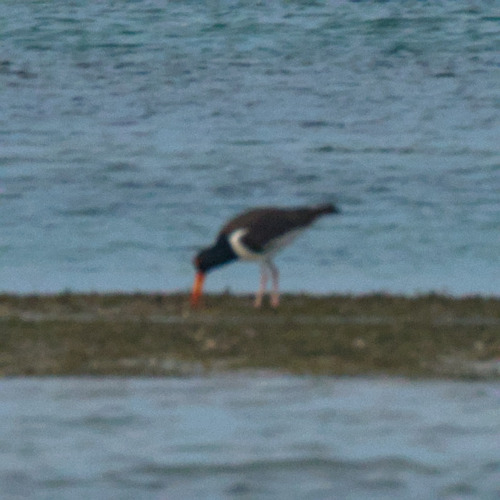
The American Oystercatcher has a large body with a striking black head and neck, a brown back, and a clean white belly. Its most distinctive feature is a long, bright orange-red bill and vibrant yellow eyes with orange eye-rings.
Category
BirdsRarity
Common
Danger
1/5 · Very low
Snaps
30
Many populations often fly in neat V-formations during migration, like tiny airplanes!
Oystercatchers sometimes nest right on the sand, camouflaging their eggs perfectly!
Their bright orange bill takes two years to get its full, awesome color!
They make loud "wheep!" calls that sound like a squeaky toy at the beach!
American Oystercatcher can quickly open shellfish because of its powerful, chisel-like bill that helps them pry apart stubborn shells.
American Oystercatcher can run very fast across sandy and muddy shores that helps them chase after prey and escape from danger.
American Oystercatcher has excellent eyesight that helps them spot tiny worms and camouflaged shellfish from a distance.
They love to eat tasty shellfish and marine worms found on the beach!

Crassostrea virginica
Main food source in some areas.
Mercenaria mercenaria
A common clam species they feed on.

Procyon lotor
Predates on eggs and chicks in nests.
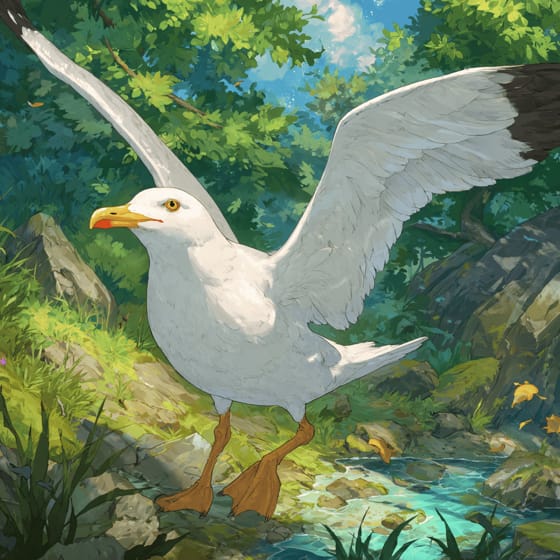
Larus argentatus
Opportunistic predator of eggs and chicks.
Feathered describes animals, primarily birds, possessing a covering of feathers.
Social animals live in organized groups, cooperating for survival benefits such as foraging, defense, and raising offspring.
This trait describes organisms that manipulate external objects to achieve a specific goal.
Coastal habitats are dynamic environments located along the interface between land and sea, influenced by tides, waves, and saltwater.

This trait identifies organisms whose diet consists entirely or primarily of animal tissue.

Diurnal animals are primarily active during daylight hours, typically resting or sleeping at night.

Describes a species whose presence and role have a disproportionately large effect on its environment.

This trait identifies organisms that exhibit exceptional swiftness in movement for hunting, escape, or travel.
No aliases listed yet.
Danger
1/5 · Very low
If you see a bird on the beach, watch it from a distance and don't disturb it.
The easiest way to identify American Oystercatcher is to use the Snappit nature identifier app.
42-52 cm
72-83 cm
0.38-0.7 kg
8-15 years
56 km/h
They love to eat tasty shellfish and marine worms found on the beach!
Coastal areas
Zoom in to split clusters and explore where this object has been snapped.
Jun 3, 2026
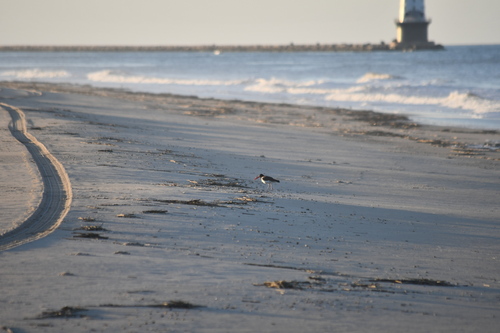
Fort MilesPhoto attribution
(c) inbetweenbays, some rights reserved (CC BY)
License: CC BY 4.0 ↗
Image may be shown cropped inside the card frame.
May 31, 2026
Connecticut College ArboretumPhoto attribution
(c) Sawyer Baran, some rights reserved (CC BY)
License: CC BY 4.0 ↗
Image may be shown cropped inside the card frame.
May 16, 2026
Gasparilla Inn Historic DistrictPhoto attribution
no rights reserved
License: CC0 1.0 ↗
Image may be shown cropped inside the card frame.

New Jersey, US
You might spot Brant, Laughing Gull, and Great Black-Backed Gull.
View guide →

US
You might spot Firewheel, Domestic Horse, and Atlantic Horseshoe Crab.
View guide →

US
You might spot Monarch, Ipsilon Dart Moth, and Canada Goose.
View guide →

Connecticut, US
You might spot Common Mugwort and Canada Goose.
View guide →

Florida, US
You might spot Brown Pelican, Black Spiny-Tailed Iguana, and Sea Grape.
View guide →

Connecticut, US
You might spot Osprey, Diamondback Terrapin, and Monarch.
View guide →
Take the discovery with you
Snap it with Snappit to identify it, learn what makes it special, and add the discovery to your collection.




.jpg&width=800)








