





eastern prairie fringed orchid
Platanthera leucophaea
The eastern prairie fringed orchid is a beautiful flower with long, delicate petals. It grows in special places called prairies and is very special because it needs just the right conditions to thrive.
Habitat: Grasslands
The eastern prairie fringed orchid is a slender plant featuring a tall green stem topped with numerous creamy-white, intricately fringed flowers. Each delicate blossom possesses deeply lobed petals, giving it a distinctive lacy or "shredded" appearance, making it visually unique from other white wildflowers.
Category
PlantsRarity
Rare
Danger
1/5 · Very low
Snaps
1
It relies on special underground fungi to help it get nutrients from the soil!
Its sweet scent is strongest at dusk, calling to its nighttime visitors!
Some orchids can live underground for years, waiting for the perfect conditions to sprout.
This orchid's name comes from its delicate petals that look like they've been cut with tiny scissors.
The eastern prairie fringed orchid blooms at night and releases a sweet fragrance to attract nocturnal hawk moths for pollination.
It has a very long nectar spur (up to 7 cm!) that guides the tongues of specific moths to its sweet reward.
Its fringed petals act as a perfect landing pad and guide for large moth pollinators, helping them find the flower's center.

Hyles lineata
Moths are crucial pollinators, attracted by its night fragrance.
Eumorpha pandorus
Another large moth species that helps transfer the orchid's pollen.
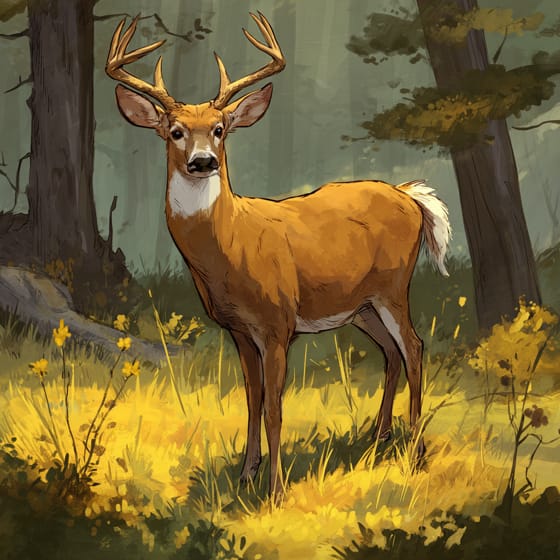
Odocoileus virginianus
Deer may browse on the plant, especially its tender leaves and flowers.
Flowering plants are any plants that produce flowers as part of their reproductive cycle.
Summer blooming plants produce their flowers during the summer season, often providing vibrant color when many other plants have finished.
Fragrant flowers emit a pleasant aroma, often to attract pollinators or for defense.
Grassland habitats are terrestrial biomes dominated by grasses and herbaceous plants, supporting a variety of grazing animals.

Describes plants that are particularly attractive and beneficial to a wide range of pollinating organisms.

Describes a species whose presence and role have a disproportionately large effect on its environment.

Threatened status denotes a species likely to become endangered in the foreseeable future without effective conservation interventions.

Endangered status indicates a species is at a very high risk of extinction in the wild in the near future.
No aliases listed yet.
Danger
1/5 · Very low
Always look at flowers from a distance to keep them safe and healthy.
The easiest way to identify eastern prairie fringed orchid is to use the Snappit nature identifier app.
30-90 cm
2-3 cm
Summer
No
None
Perennial
Insect
Zoom in to split clusters and explore where this object has been snapped.

Michigan, US
You might spot Eastern Gray Squirrel, Tree-Of-Heaven, and House Sparrow.
View guide →

Michigan, US
You might spot Eastern Gray Squirrel, Rock Pigeon, and House Sparrow.
View guide →

Michigan, US
You might spot Eastern Gray Squirrel, Eastern Foxsnake, and Monarch.
View guide →

Michigan, US
You might spot Eastern Gray Squirrel, House Sparrow, and Rock Pigeon.
View guide →
Take the discovery with you
Snap it with Snappit to identify it, learn what makes it special, and add the discovery to your collection.









.jpg&width=800)


_001.jpg&width=800)




