.jpg&width=800)





Eight-spotted Forester Moth
Alypia octomaculata
The Eight-spotted Forester Moth is a colorful insect with beautiful black and yellow wings. It loves to flutter around flowers and is often seen in gardens during warm months.
Habitat: Forests
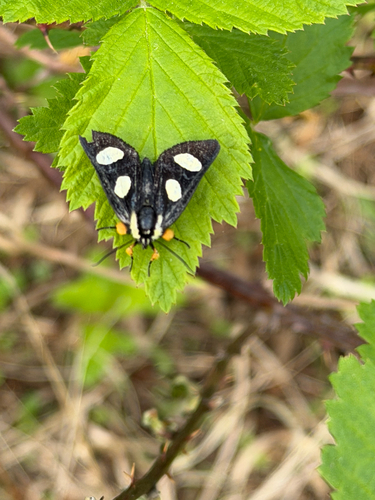
The Eight-spotted Forester Moth has striking velvety black wings, each forewing marked with two bright yellow or creamy white spots, creating a total of eight spots. Its legs are adorned with noticeable orange-yellow tufts, making it visually distinct from other moths.
Category
InsectsRarity
Common
Danger
1/5 · Very low
Snaps
40
Its bright spots are believed to trick predators into thinking it's a wasp, not a tasty moth!
Its scientific name, 'octomaculata', means 'eight-spotted' in Latin, perfectly describing its wings!
The caterpillars have bold black and white stripes with orange dots, looking very different from the adult.
Unlike most moths that fly at night, this forester moth loves to buzz around in the sunshine.
Eight-spotted Forester Moth has bright warning colors that helps them look like a stinging wasp, scaring predators away.
Eight-spotted Forester Moth can fly actively during the day, which helps them find food and mates when many nocturnal predators are sleeping.
Its caterpillars can devour grape and Virginia creeper leaves, using these specific plants as their primary food source for growth.
Adults drink flower nectar, while their caterpillars munch on grapevine leaves!
Age differences: Yes, adults feed on nectar from flowers, while their larval stage (caterpillar) feeds on the leaves of host plants.
Vitis vinifera
Caterpillars feed on its leaves.

Parthenocissus quinquefolia
Another primary food source for larvae.
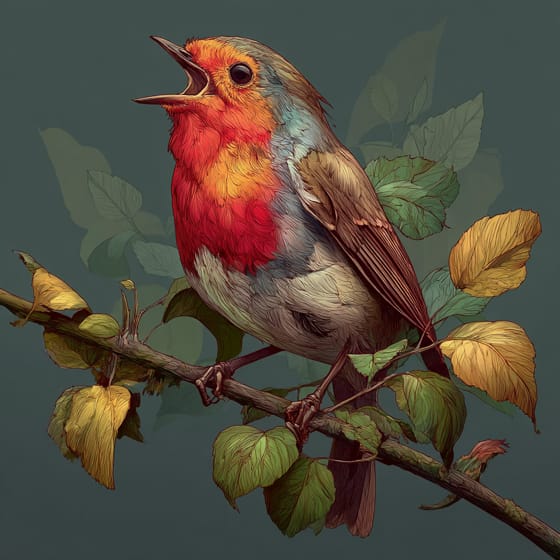
Turdus migratorius
Adult moths are prey for birds.

Asclepias syriaca
Adults visit flowers for nectar.
Furry describes animals possessing a dense covering of soft hair or fur.
Marked with spots or patches of a different color.
Solitary animals live alone for most of their lives, only interacting with others for mating or parental care.
Colorful describes organisms or objects displaying a wide range of bright and distinct colors.

This trait characterizes organisms whose diet consists entirely or primarily of plant material.

Forest habitats are terrestrial environments dominated by dense tree cover, supporting a high diversity of plant and animal life.

Diurnal animals are primarily active during daylight hours, typically resting or sleeping at night.

Describes organisms that transfer pollen, enabling the fertilization and reproduction of plants.
No aliases listed yet.
Danger
1/5 · Very low
Don't touch moths, as they can be delicate and may fly away quickly.
The easiest way to identify Eight-spotted Forester Moth is to use the Snappit nature identifier app.
30-37 mm
12-15 mm
7-14 days
Adults drink flower nectar, while their caterpillars munch on grapevine leaves!
Forests
Foraging
6
Zoom in to split clusters and explore where this object has been snapped.
May 2, 2026
Sperryville Historic DistrictPhoto attribution
(c) Brian Gratwicke, some rights reserved (CC BY)
License: CC BY 4.0 ↗
Image may be shown cropped inside the card frame.

Ohio, US
You might spot Spotted Lanternfly and White-Tailed Deer.
View guide →

Tennessee, US
You might spot American Robin, Northern Cardinal, and Eastern Chipmunk.
View guide →

Massachusetts, US
You might spot Threeleaf Goldthread and Spotted Salamander.
View guide →

Alabama, US
You might spot Painted Bunting, House Finch, and Red-Shouldered Hawk.
View guide →

Tennessee, US
You might spot American Robin and Eastern Gray Squirrel.
View guide →

Tennessee, US
You might spot Monarch and Eastern Tiger Swallowtail.
View guide →
Take the discovery with you
Snap it with Snappit to identify it, learn what makes it special, and add the discovery to your collection.






.jpg&width=800)


