





Eurasian Jay
Garrulus glandarius
The Eurasian Jay is a colorful bird with beautiful blue wings and a friendly personality. They love to hop around in trees and are known for their playful nature.
Habitat: Forests
The Eurasian Jay has striking pinkish-brown plumage with a black tail, white rump, and a distinctive black moustachial stripe. Its most eye-catching feature is the brilliant blue and black barred patch on its wings, making it easily identifiable.
Category
BirdsRarity
Common
Danger
1/5 · Very low
Snaps
1
A jay can hide thousands of acorns in a single autumn season.
Eurasian Jays are known to mob and chase away birds of prey.
Jays prefer to bury acorns in places with lots of light!
They often steal eggs and chicks from other birds' nests.
Eurasian Jay can remember thousands of hidden food caches because of its excellent spatial memory that helps them survive winter.
Eurasian Jay can mimic sounds of other birds and even animals that helps them deter predators or deceive other birds.
Eurasian Jay can bury acorns and seeds that helps them plant new trees and spread forests across landscapes.
Eurasian Jay has a loud, harsh alarm call that helps them warn other animals about approaching danger.
An omnivore eating acorns, nuts, insects, and sometimes eggs and chicks of other birds.
Quercus robur
Relies on its acorns for winter food supply.

Fagus sylvatica
Caches beechnuts, helping spread this tree species.

Accipiter nisus
A common predator that hunts jays.
Formica rufa
Forages for these ants, especially in summer.
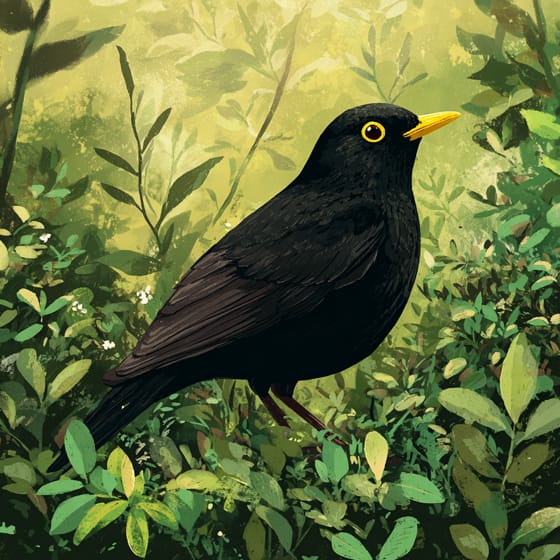
Turdus merula
Predates on eggs and nestlings of this songbird.
Feathered describes animals, primarily birds, possessing a covering of feathers.
Social animals live in organized groups, cooperating for survival benefits such as foraging, defense, and raising offspring.
This trait identifies organisms whose diet includes both plant and animal matter.
Arboreal animals live primarily in trees, utilizing them for shelter, food, and protection from predators.

Colorful describes organisms or objects displaying a wide range of bright and distinct colors.

This trait describes organisms that manipulate external objects to achieve a specific goal.

Forest habitats are terrestrial environments dominated by dense tree cover, supporting a high diversity of plant and animal life.

Diurnal animals are primarily active during daylight hours, typically resting or sleeping at night.

Describes a species whose presence and role have a disproportionately large effect on its environment.
No aliases listed yet.
Danger
1/5 · Very low
Enjoy watching birds from a distance, and don't try to touch them.
The easiest way to identify Eurasian Jay is to use the Snappit nature identifier app.
32-35 cm
52-58 cm
0.15-0.19 kg
5-8 years
40 km/h
An omnivore eating acorns, nuts, insects, and sometimes eggs and chicks of other birds.
Forests
Zoom in to split clusters and explore where this object has been snapped.
Take the discovery with you
Snap it with Snappit to identify it, learn what makes it special, and add the discovery to your collection.





.jpg&width=800)







