_Val_Roseg.jpg&width=800)





Eurasian Nuthatch
Sitta europaea
The Eurasian Nuthatch is a small bird known for its beautiful blue-gray feathers and a unique ability to climb down trees headfirst! They love to eat nuts and seeds, making them fun to watch in the forest.
Habitat: Forests
The Eurasian Nuthatch is a compact bird with a distinctive slate-blue back, an orange-rufous underside, and a prominent black eye-stripe. Its sturdy, pointed beak and short tail give it a unique appearance among woodland birds, often seen climbing trees.
Category
BirdsRarity
Common
Danger
1/5 · Very low
Snaps
Be the first to snap!
A nuthatch chick leaves its nest only 24 days after hatching, growing super fast!
Their name comes from 'nut hack,' for how they hack open nuts with their beak.
They often choose old woodpecker holes or natural tree hollows for their nests.
They often store seeds in tree crevices to eat later, like a tiny pantry!
Eurasian Nuthatch can descend trees headfirst because its strong feet allow unique grip and balance.
Eurasian Nuthatch has a powerful, chisel-like beak that helps them crack open tough nuts.
Eurasian Nuthatch can narrow nest hole entrances using mud to protect their chicks from predators.
This little bird enjoys a varied diet of insects in summer and seeds, nuts, and acorns in winter.

Accipiter nisus
A swift hunter that preys on small woodland birds.

Strix aluco
This nocturnal hunter may catch sleeping nuthatches.
Quercus robur
Provides abundant acorns and bark for foraging and nesting.
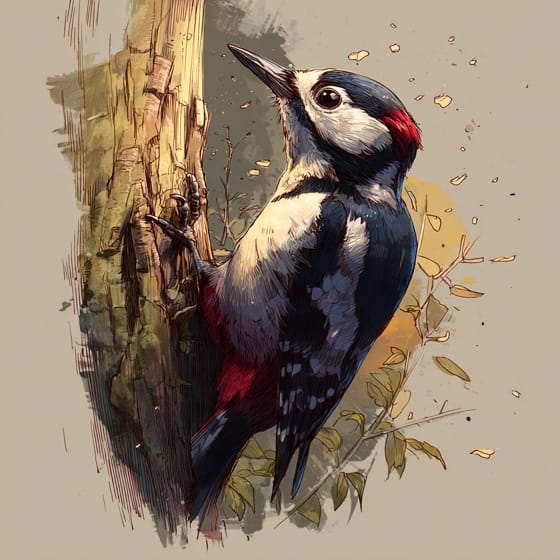
Dendrocopos major
Nuthatches often use their old, abandoned nest holes.
Feathered describes animals, primarily birds, possessing a covering of feathers.
Social animals live in organized groups, cooperating for survival benefits such as foraging, defense, and raising offspring.
This trait identifies organisms whose diet includes both plant and animal matter.
Singing animals produce complex vocalizations, often for purposes of attracting mates, defending territory, or communicating within their species.

Arboreal animals live primarily in trees, utilizing them for shelter, food, and protection from predators.

This trait describes organisms that manipulate external objects to achieve a specific goal.

Forest habitats are terrestrial environments dominated by dense tree cover, supporting a high diversity of plant and animal life.

Diurnal animals are primarily active during daylight hours, typically resting or sleeping at night.
No aliases listed yet.
Danger
1/5 · Very low
Always watch birds from a distance and be quiet so you don't scare them away.
The easiest way to identify Eurasian Nuthatch is to use the Snappit nature identifier app.
12-14.5 cm
22.5-27 cm
0.017-0.028 kg
2-9 years
30 km/h
This little bird enjoys a varied diet of insects in summer and seeds, nuts, and acorns in winter.
Forests
Zoom in to split clusters and explore where this object has been snapped.
Recent snaps will appear here as new observations are added.
Take the discovery with you
Snap it with Snappit to identify it, learn what makes it special, and add the discovery to your collection.




.jpg&width=800)








