.jpg&width=800)





Eurasian Wryneck
Jynx torquilla
The Eurasian Wryneck is a special bird that can twist its neck like a snake! It has a beautiful brown and gray pattern that helps it hide in trees. This bird loves to eat ants and beetles.
Habitat: Forests
The Eurasian Wryneck is a small, slender bird with cryptic, mottled grey, brown, and rufous plumage, featuring intricate barred and streaked patterns. It has a distinctive dark stripe running from its eye down its neck, and a long tail. Its soft colours help it blend perfectly with tree bark.
Category
BirdsRarity
Common
Danger
1/5 · Very low
Snaps
Be the first to snap!
During migration, wrynecks often fly alone, traveling long distances over land and sea!
Sometimes, they visit gardens in autumn, fattening up for their amazing journey south!
Their eggs are surprisingly pure white, often hidden deep inside dark tree cavities.
Unlike other woodpeckers, wrynecks prefer to nest in ready-made holes, not drilling their own!
Eurasian Wryneck can turn its head nearly 180 degrees to scan for predators or find hidden insects.
Eurasian Wryneck has a unique defense display, twisting its neck and hissing to mimic a snake and scare off threats.
Eurasian Wryneck has a long, sticky tongue to reach deep into ant nests, helping it catch its favorite insect prey.
Eurasian Wryneck has a patterned plumage that perfectly blends with tree bark, helping it hide from predators.
Eurasian Wrynecks mainly gobble up ants and other insects using their super-sticky tongue!
Formica rufa
Major food source, found in nests.

Accipiter nisus
A common predator of adult wrynecks.
Sturnus vulgaris
Competes for tree cavities for nesting.
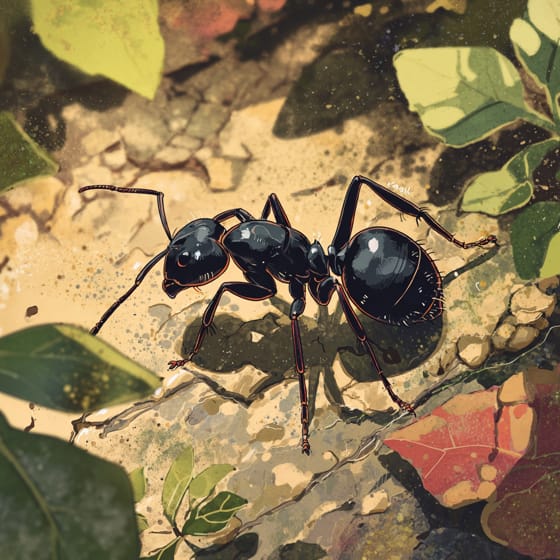
Lasius niger
Eats larvae and adults from colonies.
Feathered describes animals, primarily birds, possessing a covering of feathers.
Solitary animals live alone for most of their lives, only interacting with others for mating or parental care.
Singing animals produce complex vocalizations, often for purposes of attracting mates, defending territory, or communicating within their species.
Arboreal animals live primarily in trees, utilizing them for shelter, food, and protection from predators.

Camouflaged describes organisms that possess coloring or patterns that allow them to blend into their environment.

This trait identifies organisms whose diet primarily consists of insects and other small invertebrates.

Forest habitats are terrestrial environments dominated by dense tree cover, supporting a high diversity of plant and animal life.

Diurnal animals are primarily active during daylight hours, typically resting or sleeping at night.
No aliases listed yet.
Danger
1/5 · Very low
Enjoy watching birds from a distance and don't disturb their nests.
The easiest way to identify Eurasian Wryneck is to use the Snappit nature identifier app.
16-18 cm
25-30 cm
0.03-0.05 kg
5-10 years
40 km/h
Eurasian Wrynecks mainly gobble up ants and other insects using their super-sticky tongue!
Forests
Zoom in to split clusters and explore where this object has been snapped.
Recent snaps will appear here as new observations are added.
Take the discovery with you
Snap it with Snappit to identify it, learn what makes it special, and add the discovery to your collection.




.jpg&width=800)








