





fireweed
Chamaenerion angustifolium
Fireweed is a beautiful flower that grows tall and has bright pink petals. It often blooms in fields and along roadsides, making the world a little more colorful!
Habitat: Grasslands
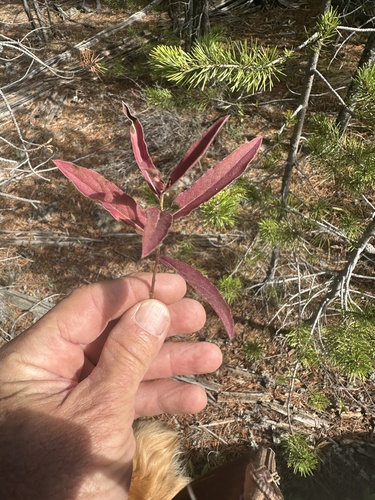
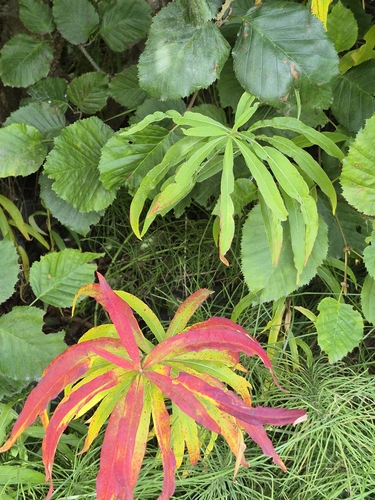
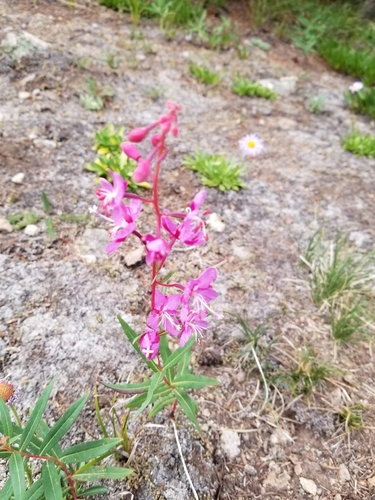
The fireweed is a tall plant with striking magenta-pink flowers that bloom in a conical spire, opening from bottom to top. Its narrow, lance-shaped green leaves are arranged spirally on the stem, making it stand out in clearings.
Category
PlantsRarity
Common
Danger
1/5 · Very low
Snaps
50
Fireweed produces delicious honey, making bee colonies strong and healthy!
In some places, you can tell how much summer is left by how many fireweed flowers have opened!
Its light, fluffy seeds were once gathered and used as soft pillow stuffing!
Young fireweed shoots taste like asparagus and are a tasty wild edible!
Fireweed can quickly grow in areas after a forest fire, helping the soil heal and other plants return.
Fireweed has fluffy, wind-borne seeds, allowing it to spread far and wide to colonize new spots quickly.
Fireweed can grow new plants from strong underground stems called rhizomes, helping it form large patches.
Apis mellifera
gathers abundant nectar to produce honey.
Bombus terricola
visits its flowers, transferring pollen.
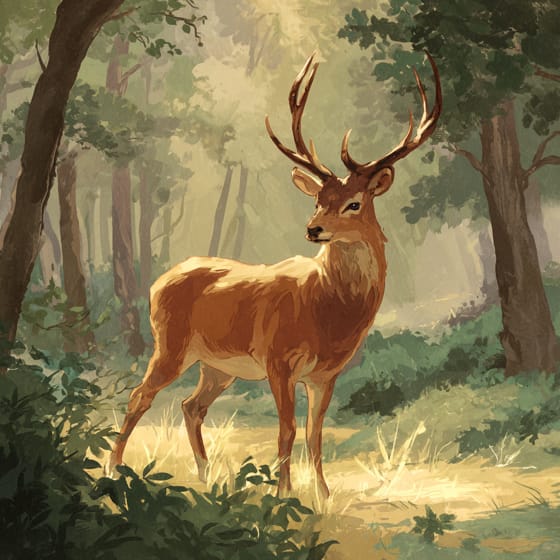
Cervus elaphus
browses on its leaves and young shoots.
Flowering plants are any plants that produce flowers as part of their reproductive cycle.
Summer blooming plants produce their flowers during the summer season, often providing vibrant color when many other plants have finished.
Medicinal plants possess chemical compounds that can be used for therapeutic purposes to treat illnesses or maintain health.
Colorful describes organisms or objects displaying a wide range of bright and distinct colors.

Edible plants are those parts of a plant that are considered safe for human consumption.

Grassland habitats are terrestrial biomes dominated by grasses and herbaceous plants, supporting a variety of grazing animals.

Describes plants that are particularly attractive and beneficial to a wide range of pollinating organisms.

Rapid growing plants exhibit accelerated growth rates, quickly increasing in size and biomass within a short period.
No aliases listed yet.
Danger
1/5 · Very low
Always look but don't touch flowers without asking an adult.
The easiest way to identify fireweed is to use the Snappit nature identifier app.
50-250 cm
30-90 cm
2-4 cm
Summer to early Fall
Yes
None
Perennial
Zoom in to split clusters and explore where this object has been snapped.
Sep 11, 2025
Grizzly & Wolf Discovery CenterPhoto attribution
no rights reserved
License: CC0 1.0 ↗
Image may be shown cropped inside the card frame.
Sep 1, 2025
Alaska Wildlife Conservation CenterPhoto attribution
(c) Jana Winberg, some rights reserved (CC BY)
License: CC BY 4.0 ↗
Image may be shown cropped inside the card frame.
Aug 6, 2020
IndependencePhoto attribution
(c) Shane Guenin, some rights reserved (CC BY)
License: CC BY 4.0 ↗
Image may be shown cropped inside the card frame.

Oregon, US
You might spot Duck, Pacific Trillium, and Wood Duck.
View guide →

Alaska, US
You might spot Cliff Swallow, Pretty Jacob's-Ladder, and Dwarf Fireweed.
View guide →

Montana, US
You might spot Bighorn Sheep and Mountain Goat.
View guide →

Alaska, US
You might spot Sandhill Crane, Fireweed, and Prickly Wild Rose.
View guide →

Colorado, US
You might spot Rocky Mountain Marsh-Marigold and American Bistort.
View guide →

Washington, US
You might spot Rock Pigeon, Great Blue Heron, and Duck.
View guide →
Take the discovery with you
Snap it with Snappit to identify it, learn what makes it special, and add the discovery to your collection.








.jpg&width=800)



_001.jpg&width=800)



