





fringed sagebrush
Artemisia frigida
Fringed sagebrush is a small, bushy plant that grows in dry places. Its soft, silvery leaves smell wonderful and can be found in many parts of North America.
Habitat: Grasslands
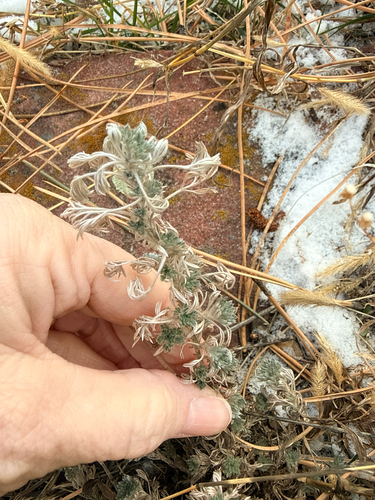
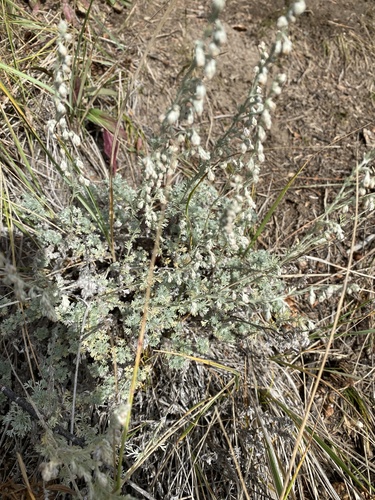
The fringed sagebrush is a low-growing plant with finely divided, fern-like leaves that are covered in soft, silvery hairs. It often forms dense, cushion-like clumps, presenting a distinct gray-green texture different from taller grasses.
Category
PlantsRarity
Common
Danger
1/5 · Very low
Snaps
9
Even in the cold of winter, its evergreen leaves can sometimes peek out from under the snow.
If you gently crush its leaves, it releases a surprisingly fresh, minty scent!
Its fuzzy leaves make it feel super soft, almost like a tiny velvet carpet!
Native Americans traditionally used this plant for tea and even as a smudge stick.
Fringed sagebrush has tiny, fuzzy leaves that trap moisture and reflect sunlight, helping it survive in dry, sunny places.
Fringed sagebrush can withstand freezing temperatures and harsh winds, thriving in cold, exposed places where other plants struggle.
Fringed sagebrush produces strong aromatic compounds in its leaves, helping deter some animals from munching on its foliage.
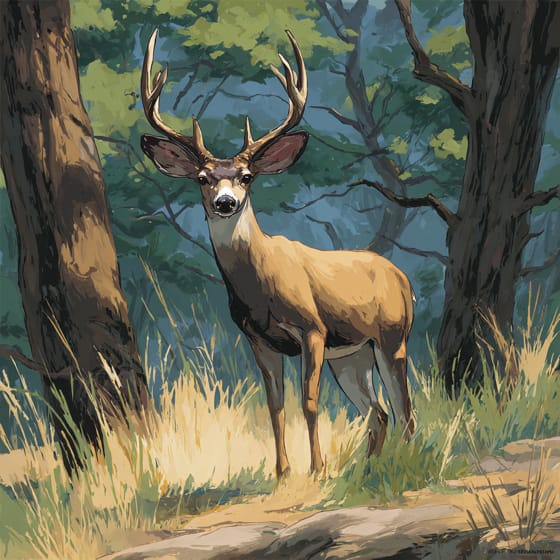
Odocoileus hemionus
a vital food source, especially in winter
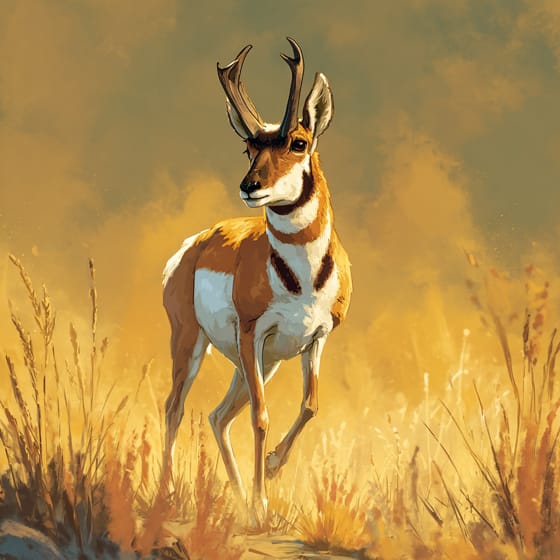
Antilocapra americana
grazes on its aromatic foliage throughout the year
Centrocercus urophasianus
provides low-lying cover and nesting sites

Lepus townsendii
finds its leaves a good snack in arid landscapes
Aromatic plants produce and emit fragrant volatile organic compounds, often for defense or to attract pollinators.
A shrub is a woody plant smaller than a tree, typically with multiple stems branching from or near the ground.
Fragrant flowers emit a pleasant aroma, often to attract pollinators or for defense.
Drought-tolerant plants can survive and flourish in conditions with limited water availability.

Edible plants are those parts of a plant that are considered safe for human consumption.

Grassland habitats are terrestrial biomes dominated by grasses and herbaceous plants, supporting a variety of grazing animals.

Describes plants that are particularly attractive and beneficial to a wide range of pollinating organisms.

Describes a species whose presence and role have a disproportionately large effect on its environment.
No aliases listed yet.
Danger
1/5 · Very low
Always look but don't touch plants unless you know they are safe.
The easiest way to identify fringed sagebrush is to use the Snappit nature identifier app.
10-50 cm
15-60 cm
0.2-0.3 cm
Summer to early Fall
Yes
Mild
Perennial
Zoom in to split clusters and explore where this object has been snapped.
Jan 16, 2026
Reptile GardensPhoto attribution
(c) Jane Weeden, some rights reserved (CC BY)
License: CC BY 4.0 ↗
Image may be shown cropped inside the card frame.
Sep 15, 2023
Chicken Historic DistrictPhoto attribution
(c) Donald Hampton, some rights reserved (CC BY-SA)
License: CC BY-SA 4.0 ↗
Image may be shown cropped inside the card frame.

Alaska, US
You might spot Cliff Swallow, Pretty Jacob's-Ladder, and Dwarf Fireweed.
View guide →

Colorado, US
You might spot Common Starlily and Wholeleaf Paintbrush.
View guide →

Colorado, US
You might spot Great Basin Bristlecone Pine and Mule Deer.
View guide →

Alaska, US
You might spot Canadian Bunchberry, Saskatoon, and Canadian Buffalo-Berry.
View guide →

New Mexico, US
You might spot Tree Cholla, Mule Deer, and Sacred Datura.
View guide →

Colorado, US
You might spot Great Basin Bristlecone Pine and Mule Deer.
View guide →
Take the discovery with you
Snap it with Snappit to identify it, learn what makes it special, and add the discovery to your collection.









.jpg&width=800)


_001.jpg&width=800)



