





German Shepherd
Canis lupus familiaris
A German Shepherd is a smart, strong dog that learns jobs quickly. Many help police, rescuers, and families.
Habitat: Homes with yards, training fields, and parks
The German Shepherd has a strong, athletic build with pointed ears and a bushy tail. Its common coat colors include black and tan, sable, or solid black, often featuring a distinctive "saddle" marking on its back.
Category
MammalsRarity
Common
Danger
3/5 · Moderate
Snaps
Be the first to snap!
A German Shepherd's bite force is incredibly strong, around 238 pounds per square inch!
German Shepherds are so smart they're often used by police and military for important jobs!
They have a special double coat that keeps them warm in winter and cool in summer.
This breed was originally developed in Germany to herd sheep and protect flocks.
German Shepherds can track scents with incredible accuracy because of their powerful sense of smell, which helps them find lost items or people.
German Shepherds have high intelligence that helps them quickly learn complex commands and tasks, making them excellent working dogs.
German Shepherds can move swiftly and gracefully due to their muscular build, which helps them herd livestock or protect their families.
They mostly eat specially formulated dog food, but also enjoy meat and sometimes vegetables.

Homo sapiens
Provides care and companionship, receives loyalty and service.
Ctenocephalides felis
Feeds on their blood, causing itching and irritation.
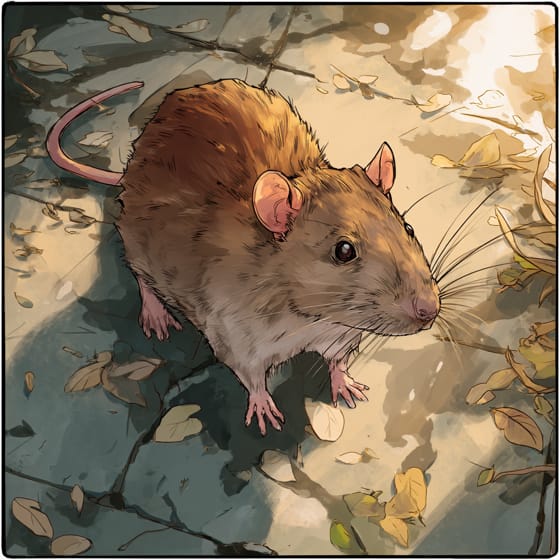
Rattus norvegicus
Can deter or catch these rodents as pests.
Furry describes animals possessing a dense covering of soft hair or fur.
Social animals live in organized groups, cooperating for survival benefits such as foraging, defense, and raising offspring.
This trait describes organisms that manipulate external objects to achieve a specific goal.
Domesticated refers to species that have been selectively bred and tamed by humans for specific purposes.

This trait identifies organisms whose diet consists entirely or primarily of animal tissue.

Describes a species whose presence and role have a disproportionately large effect on its environment.

This trait identifies organisms that exhibit exceptional swiftness in movement for hunting, escape, or travel.

This habitat trait indicates species that can coexist with humans in urban and suburban environments, utilizing man-made structures and green spaces.
Danger
3/5 · Moderate
Meet with an adult, stand calmly, and let the dog sniff your hand first.
The easiest way to identify German Shepherd is to use the Snappit nature identifier app.
55-65 cm
22-40 kg
9-13 years
48 km/h
They mostly eat specially formulated dog food, but also enjoy meat and sometimes vegetables.
Homes with yards, training fields, and parks
5-10
Zoom in to split clusters and explore where this object has been snapped.
Recent snaps will appear here as new observations are added.
Take the discovery with you
Snap it with Snappit to identify it, learn what makes it special, and add the discovery to your collection.




.jpg&width=800)



.JPG&width=800)



.jpg&width=800)
