





Giant Panda
Ailuropoda melanoleuca
Giant pandas are cute bears with black and white fur. They love to eat bamboo all day long and are great climbers. These gentle giants live in the mountains of China.
Habitat: Mountain regions
The Giant Panda is easily recognizable with its thick, woolly black and white fur. It has a distinctive black patch around each eye, black ears, and black legs, with a white body and head. This unique coloring helps them camouflage in snowy and rocky mountain environments.
Category
MammalsRarity
Rare
Danger
1/5 · Very low
Snaps
Be the first to snap!
A newborn panda cub is smaller than a stick of butter!
Despite their size, pandas are excellent swimmers and enjoy splashing around.
Pandas have huge molar teeth, perfect for grinding tough bamboo into mush.
They often do a handstand while peeing to mark their territory higher up!
Giant Pandas have a specialized 'pseudo-thumb' bone that helps them grip and strip bamboo stalks with incredible skill.
Giant Pandas can climb trees easily using their strong claws, which helps them escape predators or find comfy resting spots.
Giant Pandas have a thick, woolly coat that keeps them warm in the chilly, high-altitude mountain forests.
Mostly eats bamboo, but sometimes adds other plants and small animals to its diet.
Fargesia robusta
Bulk of its diet, especially shoots and leaves.
Canis lupus
Can prey on sick or young pandas.
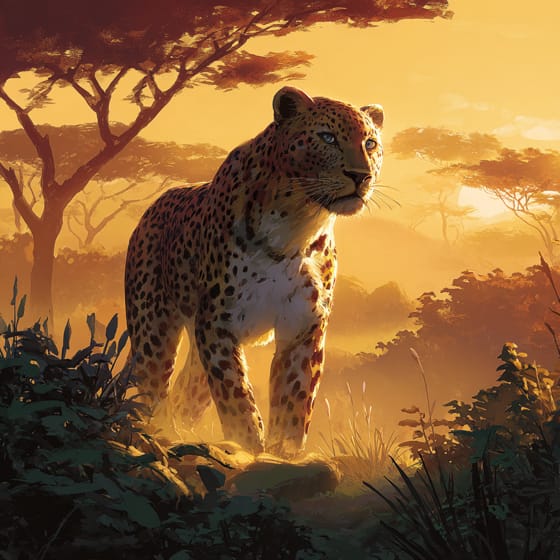
Panthera pardus
Historic predator of panda cubs.
Furry describes animals possessing a dense covering of soft hair or fur.
Solitary animals live alone for most of their lives, only interacting with others for mating or parental care.
This trait characterizes organisms whose diet consists entirely or primarily of plant material.
This habitat trait identifies species found in mountainous regions, characterized by high elevation, steep slopes, and varying climate zones.

Describes a species whose presence and role have a disproportionately large effect on its environment.

Protected status signifies a species or area is safeguarded by legal measures and conservation efforts to prevent harm or loss.

Nocturnal animals are primarily active during the nighttime hours, typically resting or sleeping during the day.

Endangered status indicates a species is at a very high risk of extinction in the wild in the near future.
Danger
1/5 · Very low
Always observe pandas from a safe distance and never try to touch them.
The easiest way to identify Giant Panda is to use the Snappit nature identifier app.
120-190 cm
70-150 kg
15-20 years
32 km/h
Mostly eats bamboo, but sometimes adds other plants and small animals to its diet.
Mountain regions
Foraging
Zoom in to split clusters and explore where this object has been snapped.
Recent snaps will appear here as new observations are added.

District of Columbia, US
You might spot Giant Panda, Red Panda, and Asian Elephant.
View guide →
Spain, ES
You might spot Giant Panda, Koala, and Bottlenose Dolphin.
View guide →

Hainaut, BE
You might spot Giant Panda, Polar Bear, and Tiger.
View guide →
California, US
You might spot Giant Panda, African Penguin, and Koala.
View guide →
Georgia, US
You might spot Giant Panda, African Elephant, and African Lion.
View guide →

Berlin, DE
You might spot Giant Panda, Asian Elephant, and Hippopotamus.
View guide →
Take the discovery with you
Snap it with Snappit to identify it, learn what makes it special, and add the discovery to your collection.




.jpg&width=800)




.JPG&width=800)


.jpg&width=800)
