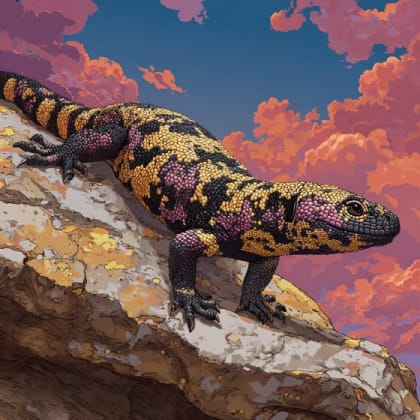
Gila Monster
Heloderma suspectum
The Gila Monster is a colorful lizard with a chunky body. They are slow movers but are very interesting to watch!
Habitat: Deserts and dry scrubland
The Gila Monster has a stout body covered in unique, bead-like scales. It displays striking patterns of black with bright pink, orange, or yellow markings. These vibrant colors and bumpy skin make it visually distinct among desert reptiles.
Category
ReptilesRarity
Rare
Danger
4/5 · High
Snaps
3
Gila Monsters are slow-movers, but they can hold onto prey for a long time when biting.
The Gila Monster is one of only two venomous lizards found in North America!
They lay their leathery eggs underground, keeping them safe from hungry predators and hot sun.
They spend up to 95% of their lives underground, often in burrows dug by other animals!
Gila Monsters deliver venom by chewing on prey, which helps them overpower and disable small animals without relying on speed.
Gila Monsters have fat stored in their large tails, which helps them survive long periods without food in harsh desert conditions.
Gila Monsters have an excellent sense of smell, able to locate hidden prey, like eggs or buried young, using their forked tongue.
Gila Monsters are carnivores that eat eggs, small mammals, and young birds.

Neotoma albigula
preys on young and eggs found in burrows.
%2C_M%C3%A4nnchen.jpg&width=800)
Callipepla gambelii
eats eggs and hatchlings from ground nests.
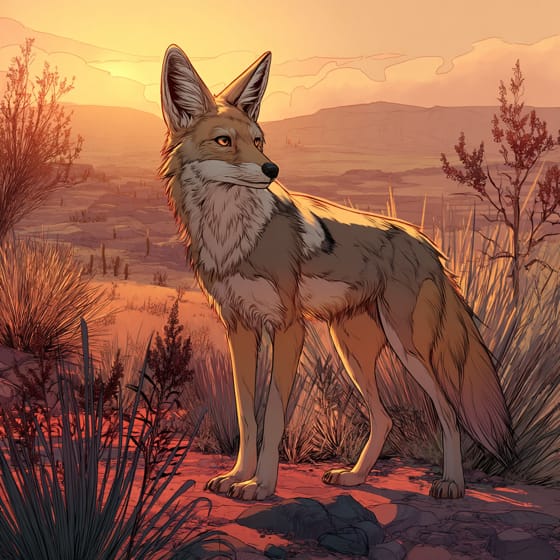
Canis latrans
may occasionally prey on adult or juvenile Gila Monsters.
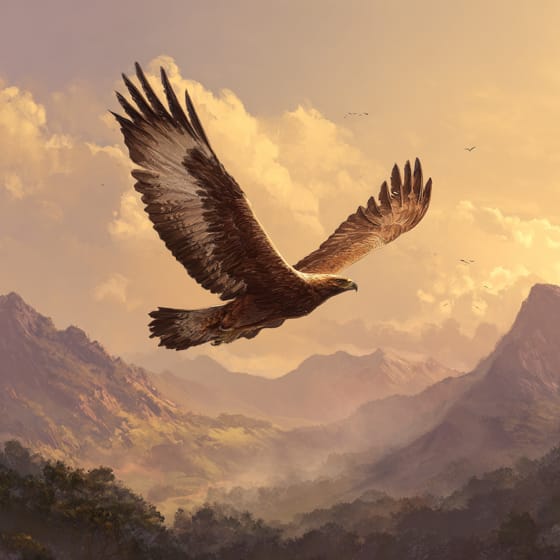
Aquila chrysaetos
a raptor that sometimes preys on Gila Monsters.
Wildlife encompasses all undomesticated animal and plant life existing in their natural habitats.
Desert habitats are arid regions characterized by extremely low precipitation and often extreme temperatures, supporting specialized flora and fauna.
This trait characterizes organisms with an exceptionally long lifespan compared to others of their kind.
This trait identifies organisms whose diet consists entirely or primarily of animal tissue.

Nocturnal animals are primarily active during the nighttime hours, typically resting or sleeping during the day.

Venomous organisms produce toxins that are injected into another animal, typically through a bite or sting.
Danger
4/5 · High
Look but don’t touch. Keep a safe distance and wash hands after exploring.
The easiest way to identify Gila Monster is to use the Snappit nature identifier app.
30-56 cm
1.5-2.3 kg
20-30 years
0.8 km/h
Gila Monsters are carnivores that eat eggs, small mammals, and young birds.
Deserts and dry scrubland
Foraging
Zoom in to split clusters and explore where this object has been snapped.
Pennsylvania, US
You might spot American Alligator, Black Bear, and Canada Lynx.
View guide →

Arizona, US
You might spot Golden Eagle, Black Bear, and Cougar.
View guide →

Arizona, US
You might spot Saguaro, Fishhook Barrel Cactus, and Desert Spiny Lizard.
View guide →

Arizona, US
You might spot Rainbow Hedgehog Cactus and Red-Tailed Hawk.
View guide →
Take the discovery with you
Snap it with Snappit to identify it, learn what makes it special, and add the discovery to your collection.