





goldback fern
Pentagramma triangularis
The goldback fern is a beautiful plant with bright green leaves that look like they have golden backs! It loves to grow in shady places and can often be found in forests.
Habitat: Forests
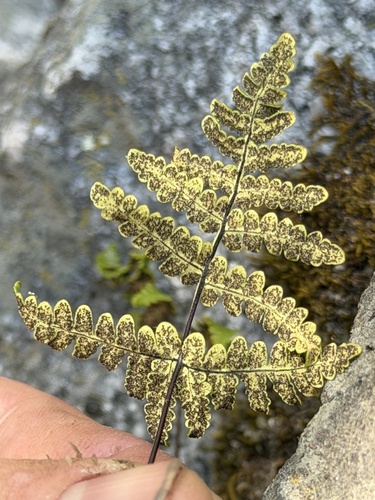
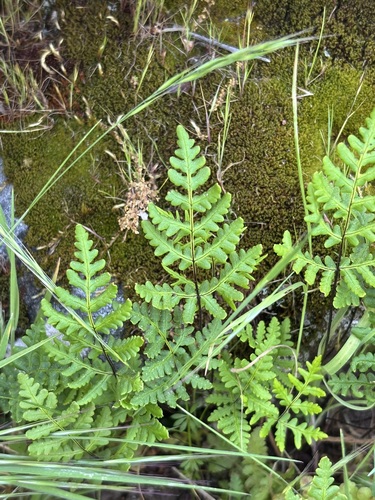
The goldback fern has distinctive triangular-shaped fronds that are vibrant green on top. Its most unique feature is the striking golden-yellow, powdery coating found on the underside of its fronds, which gives it its common name.
Category
PlantsRarity
Common
Danger
1/5 · Very low
Snaps
8
Goldback ferns don't grow flowers or seeds; they reproduce using microscopic spores hidden beneath their fronds.
Its scientific name, Pentagramma, refers to the frond's five-sided, star-like base shape!
The golden powder isn't pollen or dust; it's a special wax that protects the fern!
These ferns are ancient, belonging to a plant group that lived with dinosaurs millions of years ago!
Goldback fern can produce a powdery, golden-yellow wax on its fronds that helps protect it from sun and dehydration.
Goldback fern has tough rhizomes and roots that allow it to anchor securely in rock crevices, even on steep cliffs.
Goldback fern can curl its fronds tightly during dry periods, reducing water loss and reviving when moisture returns.
Ariolimax californicus
Grazes on the fern's fronds in its native habitat.
-left_01.jpg&width=800)
Porcellio scaber
Finds cool, damp refuge beneath the fern's fronds and rhizomes.
Pardosa amentata
Uses the fern's fronds and damp base as hunting grounds and refuge.
Ornamental plants are cultivated primarily for their aesthetic appeal, enhancing landscapes and gardens with their attractive foliage, flowers, or form.
Shade tolerant plants are adapted to grow and thrive in areas with low light levels, requiring less direct sunlight.
Evergreen plants retain their foliage throughout the year, never shedding all their leaves at once.
Spore-producing organisms reproduce by releasing small, often single-celled, reproductive units called spores.

Colorful describes organisms or objects displaying a wide range of bright and distinct colors.

Forest habitats are terrestrial environments dominated by dense tree cover, supporting a high diversity of plant and animal life.
No aliases listed yet.
Danger
1/5 · Very low
Always look but don't touch wild plants unless you have an adult with you.
The easiest way to identify goldback fern is to use the Snappit nature identifier app.
10-30 cm
10-30 cm
No
None
Perennial
Forests
Zoom in to split clusters and explore where this object has been snapped.
Jun 2, 2026
Yosemite ValleyPhoto attribution
(c) Brian Finzel, some rights reserved (CC BY-SA)
License: CC BY-SA 4.0 ↗
Image may be shown cropped inside the card frame.
Mar 15, 2026
San Joaquin Experimental RangePhoto attribution
(c) Nina S. Zhao, some rights reserved (CC BY)
License: CC BY 4.0 ↗
Image may be shown cropped inside the card frame.

California, US
You might spot Redwood Sorrel, Redwood, and Button's Banana Slug.
View guide →

California, US
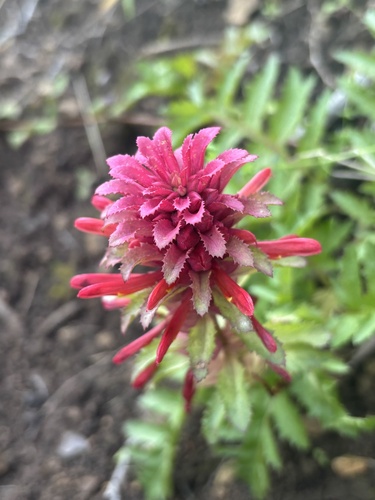
You might spot Warrior's Plume and Purple Owl's-Clover.
View guide →
California, US
You might spot Warrior's Plume, Western Leatherwood, and White Globe Lily.
View guide →

California, US
You might spot Gray Pine, Gambel Oak, and Caterpillar Scorpionweed.
View guide →

California, US
You might spot Sequoia, California Incense-Cedar, and White Fir.
View guide →
California, US
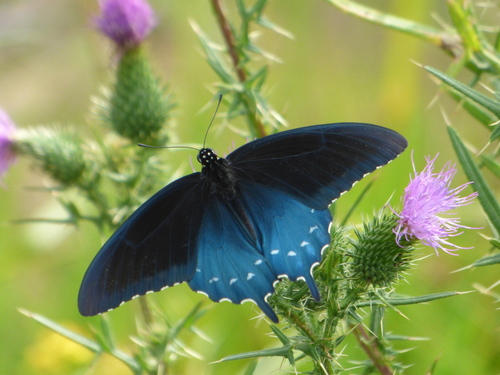
You might spot Pipevine Swallowtail and Western Fence Lizard.
View guide →
Take the discovery with you
Snap it with Snappit to identify it, learn what makes it special, and add the discovery to your collection.








.jpg&width=800)



_001.jpg&width=800)


