





Golden-backed Snipe Fly
Chrysopilus thoracicus
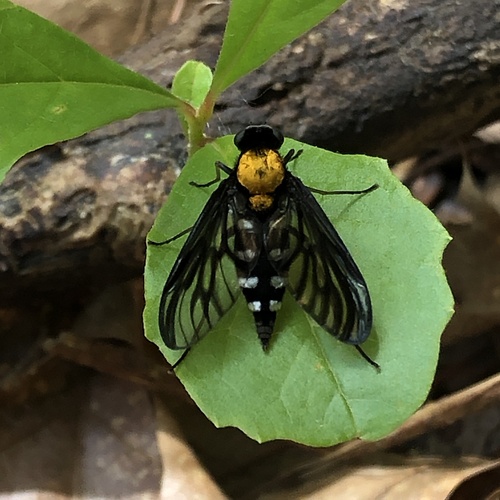
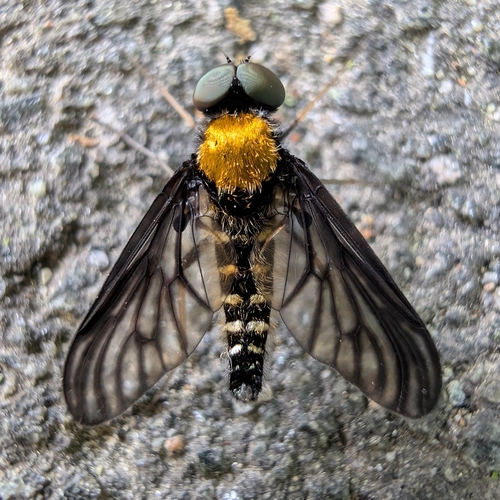
The Golden-backed Snipe Fly is a shiny, beautiful insect with a golden back. It loves to fly around flowers and is often seen in gardens and fields, making it a fun friend to spot!
Habitat: Grasslands
The Golden-backed Snipe Fly is a small, slender fly with a distinctive, iridescent golden-yellow thorax that truly sparkles. Its abdomen is dark brown to black, and its wings are clear, sometimes with a brownish tinge near the base, setting it apart from other drabber flies.
Category
InsectsRarity
Common
Danger
1/5 · Very low
Snaps
42
Adult Golden-backed Snipe Flies love flower nectar.
Despite "snipe fly," they don't have a long beak!
Some snipe flies are called "timber flies" for larval habits.
Their larvae are tiny predators hiding underground!
Golden-backed Snipe Fly can hover effortlessly in mid-air using rapid wing movements, allowing them to ambush small insects with precision.
Golden-backed Snipe Fly has a spongy proboscis that helps them lap up nectar and other liquid foods, providing quick energy for flight.
Golden-backed Snipe Fly larvae live in soil and rotting wood, where they can consume decaying matter and other small invertebrates as decomposers.
Adults sip flower nectar for energy; larvae are tiny predators or decomposers in soil.
Age differences: Larvae are predatory or detritivorous in soil; adults feed on nectar and plant fluids.
Daucus carota
Visits flowers for nectar, aiding plant reproduction.
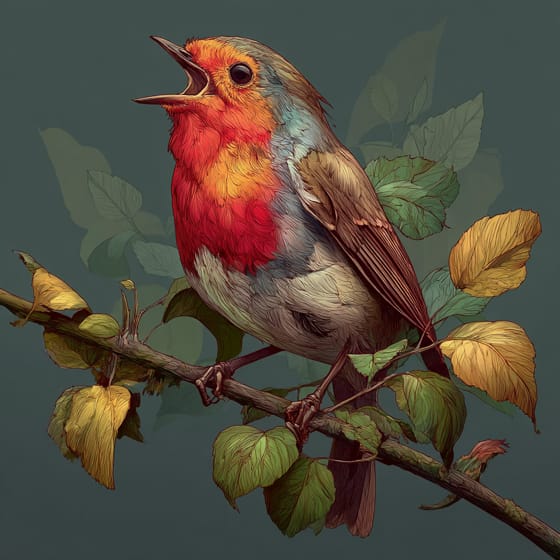
Turdus migratorius
An easy meal for insect-eating birds.
Folsomia candida
Larvae prey on small soil invertebrates like springtails.
Social animals live in organized groups, cooperating for survival benefits such as foraging, defense, and raising offspring.
Aerial creatures spend a significant portion of their lives airborne, utilizing flight for various activities such as hunting, migration, or nesting.
Colorful describes organisms or objects displaying a wide range of bright and distinct colors.
Grassland habitats are terrestrial biomes dominated by grasses and herbaceous plants, supporting a variety of grazing animals.

Describes plants that are particularly attractive and beneficial to a wide range of pollinating organisms.

Diurnal animals are primarily active during daylight hours, typically resting or sleeping at night.

Describes organisms that transfer pollen, enabling the fertilization and reproduction of plants.
No aliases listed yet.
Danger
1/5 · Very low
These flies are not dangerous, but it's always good to watch insects from a distance.
The easiest way to identify Golden-backed Snipe Fly is to use the Snappit nature identifier app.
10-18 mm
5-9 mm
10-20 days
Adults sip flower nectar for energy; larvae are tiny predators or decomposers in soil.
Grasslands
Ambush
6
Zoom in to split clusters and explore where this object has been snapped.
May 26, 2026
Harriman Historic DistrictPhoto attribution
(c) Andrew Conboy, some rights reserved (CC BY)
License: CC BY 4.0 ↗
Image may be shown cropped inside the card frame.
Apr 22, 2026
Museum of Life and SciencePhoto attribution
(c) Kevin Anderson, some rights reserved (CC BY)
License: CC BY 4.0 ↗
Image may be shown cropped inside the card frame.

New Jersey, US
You might spot Garlic Mustard, Sensitive Fern, and Common Mugwort.
View guide →

Ohio, US
You might spot Eastern Fox Squirrel and Spotted Lanternfly.
View guide →

Michigan, US
You might spot Eastern Gray Squirrel, Tree-Of-Heaven, and House Sparrow.
View guide →

Illinois, US
You might spot Brown-Belted Bumble Bee and Eastern Gray Squirrel.
View guide →

Michigan, US
You might spot Monarch, Canada Goose, and Eastern Gray Squirrel.
View guide →

Virginia, US
You might spot Pharaoh Cicada, Lesser Celandine, and Eastern Box Turtle.
View guide →
Take the discovery with you
Snap it with Snappit to identify it, learn what makes it special, and add the discovery to your collection.







.jpg&width=800)



