Gooseneck Barnacle
pollicipes polymerus
The Gooseneck Barnacle is a unique sea creature that clings tightly to rocks in the ocean. Its long, flexible stalk allows it to reach up for food while staying securely attached!
Habitat: Coastal waters and rocky shorelines
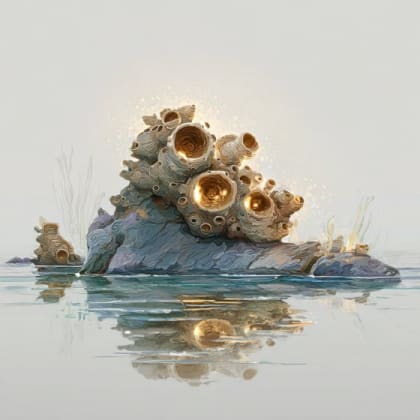
The Gooseneck Barnacle has a long, flexible, reddish-brown stalk, ending in a cluster of white, calcified plates. It often looks like a stony flower or a small, curved neck attached to rocks, with a distinctive dark 'goose neck' base, different from typical flat barnacles.
Category
InvertebrateRarity
Common
Danger
0/5 · No known danger
Snaps
4
Barnacles start life as tiny, free-swimming larvae before finding a spot to settle down!
Believe it or not, barnacles are closer relatives to crabs and lobsters than to clams!
Some people in coastal regions consider Gooseneck Barnacles a delicious seafood delicacy!
The glue a barnacle makes is one of the strongest natural adhesives known to science!
Gooseneck Barnacle can stick incredibly tightly to rocks because of a natural, super-strong cement it produces.
Gooseneck Barnacle has feathery legs that help them sweep tiny food from passing water currents into their mouth.
Gooseneck Barnacle has a rubbery stalk that helps them sway with strong ocean waves without breaking off.
These barnacles filter tiny bits of food, like plankton, directly from the ocean water.
Pisaster ochraceus
These sea stars use their suction cups to pull barnacles off rocks.

Nucella lamellosa
This snail can drill into the barnacle's shell to eat the soft tissues.

Haematopus bachmani
These birds use their strong beaks to pry Gooseneck Barnacles off rocks.
Solitary animals live alone for most of their lives, only interacting with others for mating or parental care.
Filter feeders obtain nutrients by straining suspended food particles and small organisms from water.
Aquatic habitats encompass environments where organisms live predominantly in water, including oceans, rivers, lakes, and wetlands.
Marine habitats encompass all saltwater environments of the Earth's oceans, supporting an immense diversity of aquatic life.
Danger
0/5 · No known danger
No special safety notes yet.
The easiest way to identify Gooseneck Barnacle is to use the Snappit nature identifier app.
10 cm
25 g
15 years
These barnacles filter tiny bits of food, like plankton, directly from the ocean water.
Coastal waters and rocky shorelines
Filter Feeding
Zoom in to split clusters and explore where this object has been snapped.

California, US
You might spot Penguin, Leopard Shark, and Weedy Seadragon.
View guide →

US
You might spot Ochre Sea Star and Giant Green Anemone.
View guide →

California, US
You might spot Sunburst Anemone and Striped Shore Crab.
View guide →
California, US
You might spot Penguin, Leafy Seadragon, and Weedy Seadragon.
View guide →

California, US
You might spot Sea Star, Leopard Shark, and Swellshark.
View guide →

California, US
You might spot Corkystem Passionvine and Blister Glassy-Bubble.
View guide →
Take the discovery with you
Snap it with Snappit to identify it, learn what makes it special, and add the discovery to your collection.