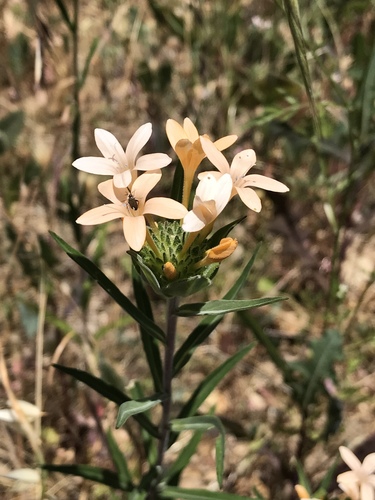


Grand Collomia
collomia grandiflora
Grand Collomia (Collomia grandiflora) is a striking annual wildflower native to western North America, renowned for its dense, head-like clusters of tubular flowers. Rising elegantly on upright stems, this member of the phlox family paints dry, sunny landscapes with beautiful shades of salmon, peach, and cream. It is highly valued by native pollinators and nature enthusiasts alike for its rugged resilience and late spring to summer beauty. Thriving in sandy, gravelly, or disturbed soils, Grand Collomia serves as a pioneer species that stabilizes soils and provides early-season sustenance to insects. Its unique reproductive strategy and tough nature make it a fascinating study in plant adaptation, holding a special place in the ecology of open woodlands, chaparrals, and montane slopes.
Habitat: Typically found on dry, open slopes, rocky hillsides, forest edges, and disturbed soils like roadsides across western North America.
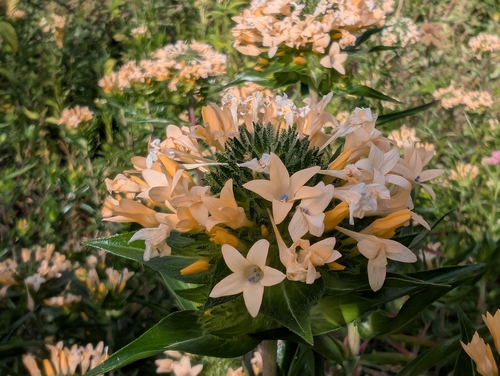
This upright annual herb grows from 10 to 100 centimeters tall, featuring a sturdy, usually unbranched, slightly hairy stem. The alternate, lance-shaped leaves are bright green and lack stalks near the top of the plant. The most distinctive feature is the terminal, dense, rounded cluster of showy, trumpet-shaped flowers. Each trumpet flares into five lobes, displaying a range of unusual colors from pale cream and yellow to warm salmon, peach, or light orange. Prominent blue or white anthers peek out from the throat of the flowers, creating a lovely contrast against the warm-toned petals.
Category
PlantsRarity
Common
Danger
1/5 · Very low
Snaps
1
Grand Collomia's warm salmon-peach flower color is highly unusual among North American wildflowers, making it easily distinguishable.
Its self-pollinating closed flowers act as a biological insurance policy, guaranteeing survival even if no insects visit the plant.
The genus name 'Collomia' is derived from the Greek word for 'glue', highlighting the plant's fascinating sticky seed coat.
Upon contact with moisture, the outer coating of the seeds swells into a sticky gel that glues the seed to the soil, preventing wind dispersal and conserving vital hydration.
In addition to showy open flowers, the plant can produce small, closed flowers that self-pollinate internally, ensuring seed production even under harsh conditions.
As an annual, it germinates rapidly with spring moisture, flowering and setting seed before the intense heat and dry spells of late summer set in.
As a photosynthetic plant, Grand Collomia produces its own energy using sunlight, carbon dioxide, water, and essential mineral nutrients drawn from the soil.

Bombus vosnesenskii
Pollinates the showy open flowers, seeking nectar and pollen.
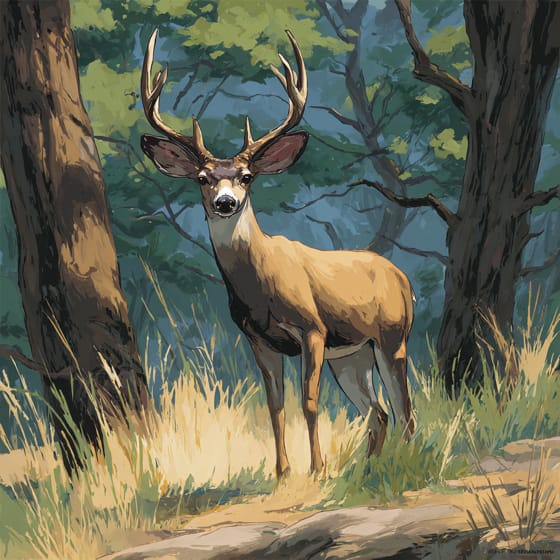
Odocoileus hemionus
Grazes on the foliage and flower heads during late spring.

Papilio rutulus
Visits the flowers for nectar, acting as a crucial pollinator in dry meadow ecosystems.
No trait badges are assigned for this object yet.
No aliases listed yet.
Collections for this object will appear here as more themes are added.
Danger
1/5 · Very low
No special safety notes yet.
The easiest way to identify Grand Collomia is to use the Snappit nature identifier app.
10-100 cm
0.01-0.15 kg
1 years
As a photosynthetic plant, Grand Collomia produces its own energy using sunlight, carbon dioxide, water, and essential mineral nutrients drawn from the soil.
Typically found on dry, open slopes, rocky hillsides, forest edges, and disturbed soils like roadsides across western North America.
Zoom in to split clusters and explore where this object has been snapped.
Jun 19, 2026
Discovery ParkPhoto attribution
(c) Zachary M.C., some rights reserved (CC BY)
License: CC BY 4.0 ↗
Image may be shown cropped inside the card frame.

Washington, US
You might spot Great Blue Heron, Aggregating Anemone, and Ochre Sea Star.
View guide →

Washington, US
You might spot Rock Pigeon, American Crow, and Pigeon Guillemot.
View guide →

California, US
You might spot Sequoia, Thimbleberry, and Pacific Dogwood.
View guide →
Take the discovery with you
Snap it with Snappit to identify it, learn what makes it special, and add the discovery to your collection.











.jpg&width=800)



_001.jpg&width=800)




