





Western Tiger Swallowtail
Papilio rutulus
The Western Tiger Swallowtail is a beautiful butterfly with yellow and black stripes. It flutters gracefully around gardens and parks, bringing joy to everyone who sees it.
Habitat: Urban areas
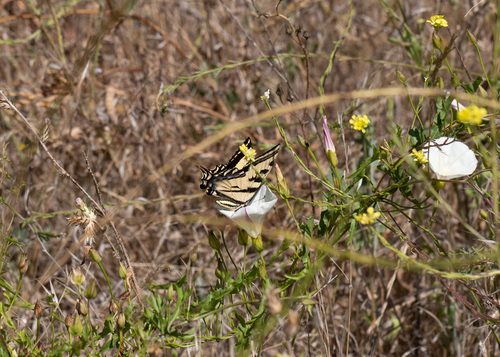
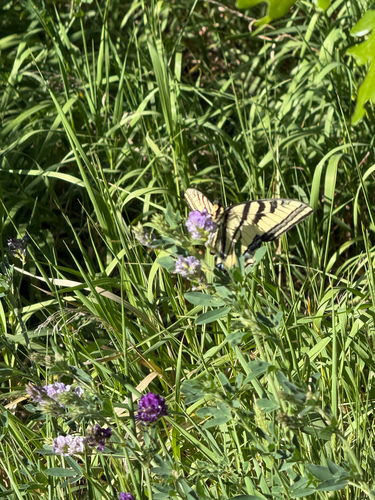
The Western Tiger Swallowtail is a large, brightly colored butterfly with striking yellow wings marked by bold black tiger-like stripes. Its hindwings feature distinctive tails, along with areas of blue and orange spots near these tails, differentiating it from similar species.
Category
InsectsRarity
Common
Danger
1/5 · Very low
Snaps
55
Males sometimes gather in muddy puddles to drink water and minerals!
The chrysalis can be green or brown to blend perfectly with its surroundings!
Their caterpillars shed their skin four times before becoming a chrysalis!
These butterflies help flowers make seeds by carrying pollen from plant to plant!
Western Tiger Swallowtail can drink flower nectar because it has a long, straw-like proboscis that helps them refuel.
Western Tiger Swallowtail has special sensors on its feet that help them taste leaves and flowers before laying eggs or feeding.
Western Tiger Swallowtail has eye-catching tails on its hindwings that can trick predators into attacking the wrong end, helping them escape.
Western Tiger Swallowtail caterpillars can scare away predators by flashing a stinky, orange, Y-shaped organ.
Adults drink flower nectar; caterpillars munch on leaves from host trees and shrubs.
Age differences: Larvae eat leaves, while adults sip nectar from various flowering plants.
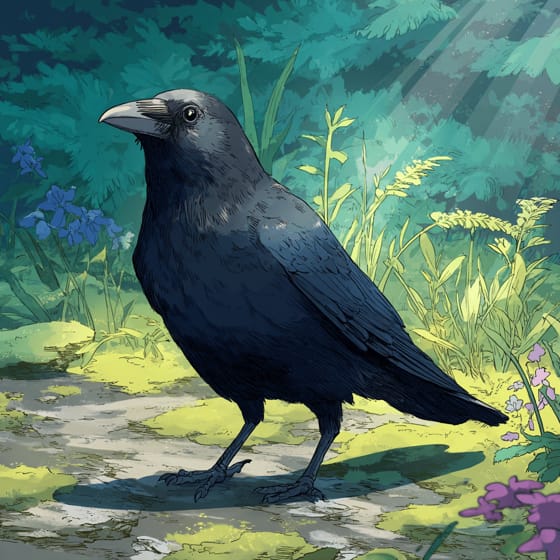
Corvus brachyrhynchos
Adult butterflies can be prey for various birds.
Salix lucida
Caterpillars feed on the leaves of willow trees.

Asclepias syriaca
Adults help pollinate flowers while sipping nectar.
Marked with parallel bands or lines of color.
Colorful describes organisms or objects displaying a wide range of bright and distinct colors.
This trait characterizes organisms whose diet consists entirely or primarily of plant material.
Describes plants that are particularly attractive and beneficial to a wide range of pollinating organisms.

This trait characterizes organisms with an exceptionally long lifespan compared to others of their kind.

Diurnal animals are primarily active during daylight hours, typically resting or sleeping at night.

Migratory animals undertake seasonal movements from one region to another, typically in response to changes in climate or food availability.

This habitat trait indicates species that can coexist with humans in urban and suburban environments, utilizing man-made structures and green spaces.

Describes organisms that transfer pollen, enabling the fertilization and reproduction of plants.
No aliases listed yet.
Danger
1/5 · Very low
Butterflies are gentle and safe to watch, but don't try to catch them.
The easiest way to identify Western Tiger Swallowtail is to use the Snappit nature identifier app.
70-100 mm
35-55 mm
10-20 days
20 km/h
Adults drink flower nectar; caterpillars munch on leaves from host trees and shrubs.
Urban areas
Foraging
Zoom in to split clusters and explore where this object has been snapped.
Jun 4, 2026
Conejo Valley Botanical GardenPhoto attribution
(c) Zack Abbey, some rights reserved (CC BY)
License: CC BY 4.0 ↗
Image may be shown cropped inside the card frame.
May 28, 2026
Great Sand Dunes National Park and PreservePhoto attribution
(c) Coryn Fox Corvus, some rights reserved (CC BY)
License: CC BY 4.0 ↗
Image may be shown cropped inside the card frame.
May 28, 2026
Main Avenue Historic DistrictPhoto attribution
(c) Michelle Pustka, some rights reserved (CC BY)
License: CC BY 4.0 ↗
Image may be shown cropped inside the card frame.

California, US
You might spot Redwood Sorrel, Redwood, and Button's Banana Slug.
View guide →

New Mexico, US
You might spot Tree Cholla, Colorado Pinyon, and House Finch.
View guide →

Oregon, US
You might spot Duck, Pacific Trillium, and Wood Duck.
View guide →

Colorado, US
You might spot Eastern Fox Squirrel, Bee, and Duck.
View guide →

California, US
You might spot Western Fence Lizard, Duck, and California Brittlebush.
View guide →

Washington, US
You might spot Pacific Banana Slug and Oregon Forestsnail.
View guide →
Take the discovery with you
Snap it with Snappit to identify it, learn what makes it special, and add the discovery to your collection.








.jpg&width=800)



