




Black Medick
Medicago lupulina
Black Medick is a small plant with bright yellow flowers that bloom in the summer. It's often found in grassy areas and is loved by bees and butterflies!
Habitat: Grasslands
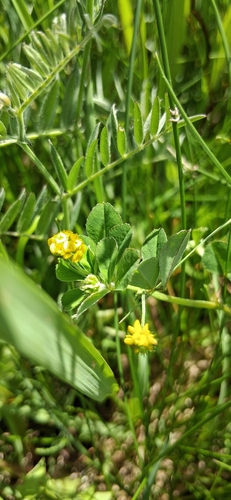
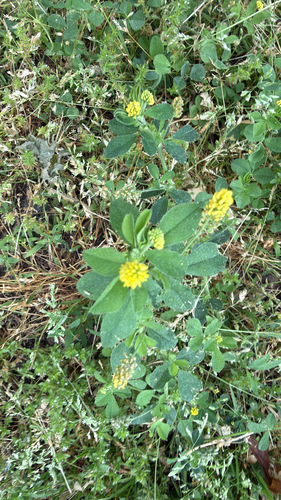
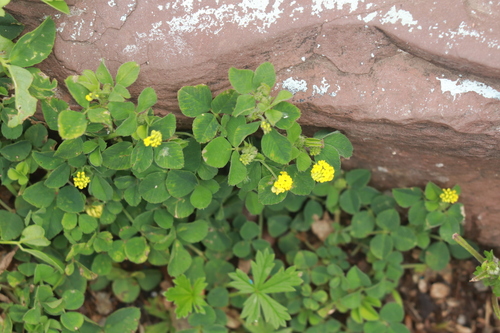
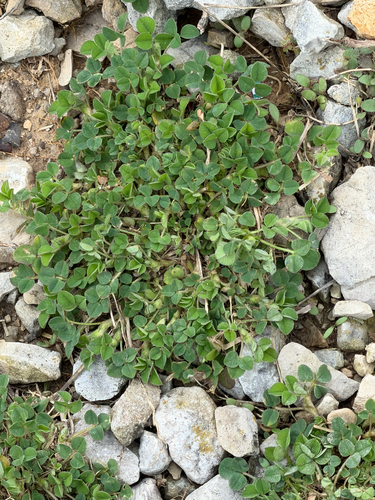
The Black Medick has small, bright yellow flowers tightly clustered into spherical heads. Its clover-like leaves are made of three oval leaflets, with the central one on a slightly longer stalk. Mature seeds turn black and are kidney-shaped, giving the plant its name.
Category
PlantsRarity
Common
Danger
1/5 · Very low
Snaps
39
Ancient cultures sometimes used Black Medick for its supposed medicinal properties, long ago!
Its tiny leaves fold neatly at night, almost like they're going to sleep until morning!
The 'black' in its name comes from its mature, dark-colored seed pods, not its bright yellow flowers!
This hardy plant is a favorite snack for many grazing animals, like cows and sheep!
Black Medick can fix nitrogen from the air with help from bacteria, which enriches the soil for other plants to grow.
Black Medick has tough seeds that can stay dormant in soil for years, ready to sprout when conditions are right.
Black Medick has a deep taproot that helps it reach water and nutrients, making it tough in dry conditions.
Apis mellifera
collects nectar and pollen
Rhizobium leguminosarum
fixes nitrogen in its root nodules

Bos taurus
grazes on the leaves and stems
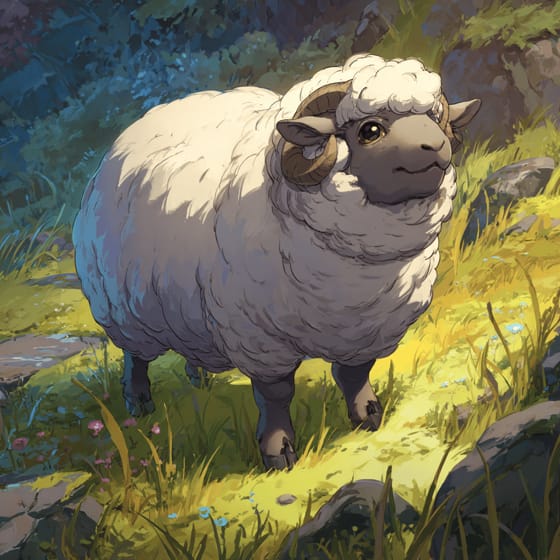
Ovis aries
forages on the plant as pasture
Flowering plants are any plants that produce flowers as part of their reproductive cycle.
Describes organisms capable of converting atmospheric nitrogen into compounds usable by plants.
Summer blooming plants produce their flowers during the summer season, often providing vibrant color when many other plants have finished.
Fragrant flowers emit a pleasant aroma, often to attract pollinators or for defense.

Edible plants are those parts of a plant that are considered safe for human consumption.

Grassland habitats are terrestrial biomes dominated by grasses and herbaceous plants, supporting a variety of grazing animals.

Describes plants that are particularly attractive and beneficial to a wide range of pollinating organisms.
No aliases listed yet.
Danger
1/5 · Very low
Always check with an adult before touching or picking plants.
The easiest way to identify Black Medick is to use the Snappit nature identifier app.
15-60 cm
20-75 cm
0.3-0.5 cm
Spring to Fall
Yes
None
Perennial
Zoom in to split clusters and explore where this object has been snapped.
Jun 16, 2026
Parc linéaire de la rivière Saint-CharlesPhoto attribution
no rights reserved
License: CC0 1.0 ↗
Image may be shown cropped inside the card frame.
Jun 6, 2026
Amesbury and Salisbury Mills Village Historic DistrictPhoto attribution
(c) The Wrong Industry, some rights reserved (CC BY)
License: CC BY 4.0 ↗
Image may be shown cropped inside the card frame.
May 25, 2026
East Granby Historic DistrictPhoto attribution
(c) Mark Apgar, some rights reserved (CC BY)
License: CC BY 4.0 ↗
Image may be shown cropped inside the card frame.
Mar 10, 2026
Selmier State ForestPhoto attribution
(c) Aidan, some rights reserved (CC BY)
License: CC BY 4.0 ↗
Image may be shown cropped inside the card frame.

Illinois, US
You might spot Common Eastern Bumble Bee and Brown-Belted Bumble Bee.
View guide →

Michigan, US
You might spot Eastern Gray Squirrel, Tree-Of-Heaven, and House Sparrow.
View guide →

Rhode Island, US
You might spot Common Eastern Bumble Bee and Osprey.
View guide →

Illinois, US
You might spot Carolina Mantis and Goldenrod Soldier Beetle.
View guide →

New York, US
You might spot Bald Eagle, Common Eastern Bumble Bee, and Red-Tailed Hawk.
View guide →

Florida, US
You might spot American Beautyberry and Brown Anole.
View guide →
Take the discovery with you
Snap it with Snappit to identify it, learn what makes it special, and add the discovery to your collection.








.jpg&width=800)


_001.jpg&width=800)



