_(23437796612).jpg&width=800)





Greater Anglewing
Microcentrum rhombifolium
The Greater Anglewing is a fun green bug that looks like a leaf! It loves to hide in trees and bushes, making it a great little friend for nature explorers.
Habitat: Forests
The Greater Anglewing has a striking leaf-like appearance, with broad, green wings that perfectly mimic foliage. Its body is also green, and the outer edges of its wings have an angular, veined pattern, making it nearly invisible among leaves.
Category
InsectsRarity
Common
Danger
1/5 · Very low
Snaps
2
Greater Anglewings actually 'hear' with special ears located on their front legs.
Its super long antennae can be more than twice its body length!
Their eggs are glued to twigs and look just like tiny flat seeds.
These insects are nocturnal, meaning they are most active and sing at night.
Greater Anglewing can perfectly blend in with green leaves because its body and wings are shaped and colored to look just like them.
Greater Anglewing produces a loud 'katy-did' or 'tic-tic-tic' sound by rubbing its wings together, primarily to attract mates.
Greater Anglewing has powerful hind legs that help them leap away quickly from predators when they are spotted.
This insect mainly munches on different parts of plants, like leaves, flowers, and even some fruits.
Solitary animals live alone for most of their lives, only interacting with others for mating or parental care.
Singing animals produce complex vocalizations, often for purposes of attracting mates, defending territory, or communicating within their species.
Camouflaged describes organisms that possess coloring or patterns that allow them to blend into their environment.
This trait characterizes organisms whose diet consists entirely or primarily of plant material.

Forest habitats are terrestrial environments dominated by dense tree cover, supporting a high diversity of plant and animal life.

Diurnal animals are primarily active during daylight hours, typically resting or sleeping at night.

Describes organisms that transfer pollen, enabling the fertilization and reproduction of plants.
No aliases listed yet.
Danger
1/5 · Very low
Always watch where you step in nature to avoid stepping on tiny bugs like this one.
The easiest way to identify Greater Anglewing is to use the Snappit nature identifier app.
70-100 mm
40-60 mm
60-120 days
5 km/h
This insect mainly munches on different parts of plants, like leaves, flowers, and even some fruits.
Forests
Foraging
Zoom in to split clusters and explore where this object has been snapped.

Florida, US
You might spot Brown Anole, Green Treefrog, and Southern Toad.
View guide →

Arkansas, US
You might spot White-Throated Sparrow, Northern Cardinal, and House Finch.
View guide →
_end_July_2012.jpg)
Massachusetts, US
You might spot Great Egret, Eastern Redcedar, and Osprey.
View guide →
Virginia, US
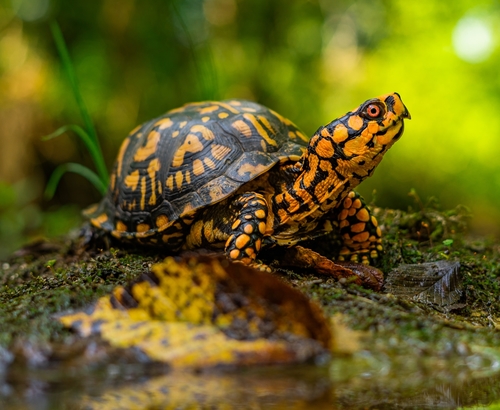
You might spot Eastern Box Turtle, True Sedges, and True Lilies.
View guide →
Take the discovery with you
Snap it with Snappit to identify it, learn what makes it special, and add the discovery to your collection.









.jpg&width=800)



