





Green Comma
Polygonia faunus
The Green Comma is a beautiful butterfly with a unique greenish color on its wings. It loves to flutter around in sunny spots and can often be seen resting on leaves.
Habitat: Forests
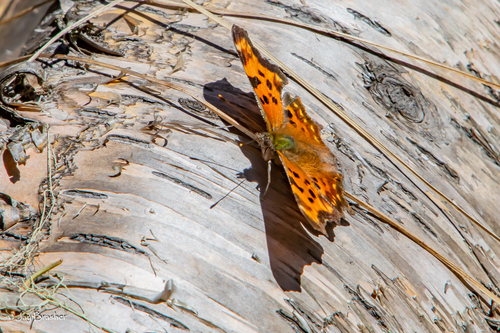
The Green Comma has a distinctive ragged wing shape, with bright orange-brown upper surfaces marked by black spots and a unique green border. Its underside is mottled dark brown and grey, making it look exactly like a dead leaf, which helps it disappear.
Category
InsectsRarity
Common
Danger
1/5 · Very low
Snaps
5
Adult Green Commas can survive the entire winter by finding a cozy hiding spot.
Its caterpillar looks like it's covered in spikes to scare away predators!
They have taste sensors on their feet, letting them 'taste' where they land!
This butterfly sips sweet tree sap and rotting fruit, not just flower nectar!
Green Comma has wings that perfectly mimic a dead leaf because of their ragged edges and mottled brown underside, helping them hide from hungry birds.
Green Comma can fly and be active even in cool weather because of its ability to bask in sunlight, helping them find food earlier than other butterflies.
Green Comma can drink tree sap because of its specialized proboscis, that helps them access sugary liquids not available to many other insects.
Caterpillars munch on leaves, while adults enjoy tree sap and rotting fruits.
Age differences: Larvae eat leaves of specific host plants, while adults primarily feed on tree sap and fermented fruit.
Humulus lupulus
Larvae feed on the leaves.
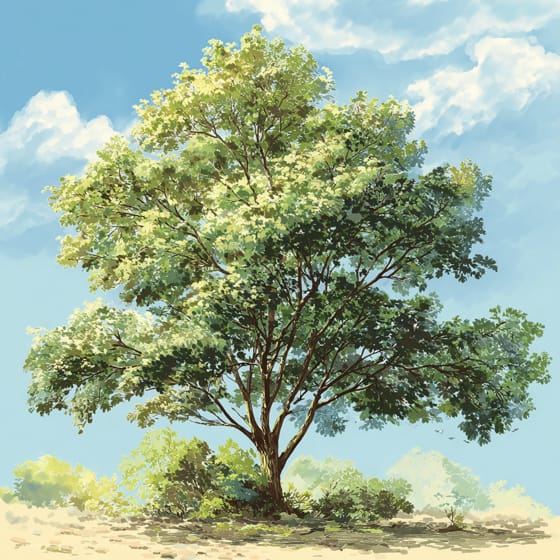
Ulmus americana
Larvae feed on the leaves.
Urtica dioica
Larvae feed on the leaves.
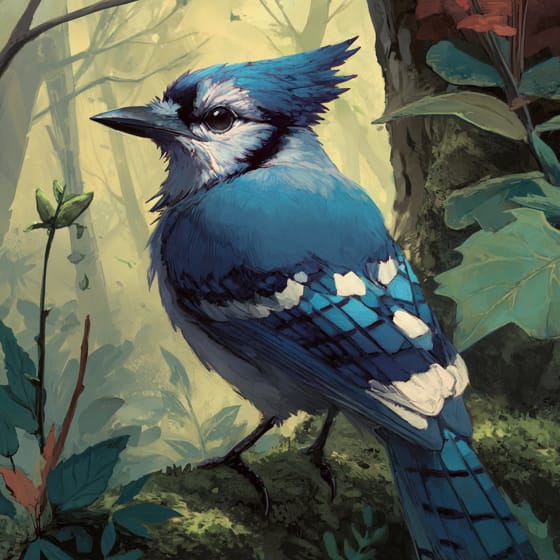
Cyanocitta cristata
Adults and larvae can be prey.
Solitary animals live alone for most of their lives, only interacting with others for mating or parental care.
Camouflaged describes organisms that possess coloring or patterns that allow them to blend into their environment.
Colorful describes organisms or objects displaying a wide range of bright and distinct colors.
This trait characterizes organisms whose diet consists entirely or primarily of plant material.

Describes plants that are particularly attractive and beneficial to a wide range of pollinating organisms.

Forest habitats are terrestrial environments dominated by dense tree cover, supporting a high diversity of plant and animal life.

Diurnal animals are primarily active during daylight hours, typically resting or sleeping at night.

Describes organisms that transfer pollen, enabling the fertilization and reproduction of plants.
No aliases listed yet.
Danger
1/5 · Very low
Butterflies are gentle creatures, but it's best to watch them from a distance.
The easiest way to identify Green Comma is to use the Snappit nature identifier app.
45-64 mm
18-25 mm
30-270 days
15 km/h
Caterpillars munch on leaves, while adults enjoy tree sap and rotting fruits.
Forests
Foraging
Zoom in to split clusters and explore where this object has been snapped.
May 13, 2026
Tobin Harbor Historic DistrictPhoto attribution
(c) Jay Brasher, some rights reserved (CC BY)
License: CC BY 4.0 ↗
Image may be shown cropped inside the card frame.

Montana, US
You might spot Black Bear, Brown Bear, and Moose.
View guide →

British Columbia, CA
You might spot Green Comma, Mourning Cloak, and Hoary Comma.
View guide →

Washington, US
You might spot Cascade Oregon-Grape, Douglas Fir, and Salal.
View guide →
Alaska, US
You might spot Brown Bear, Black Bear, and Moose.
View guide →

Wisconsin, US
You might spot Western Bog Laurel and Purple Pitcher Plant.
View guide →

Vermont, US
You might spot Eastern Newt and Common Eastern Bumble Bee.
View guide →
Take the discovery with you
Snap it with Snappit to identify it, learn what makes it special, and add the discovery to your collection.







.jpg&width=800)


