

Hawaiian Convict Surgeonfish
acanthurus sandvicensis
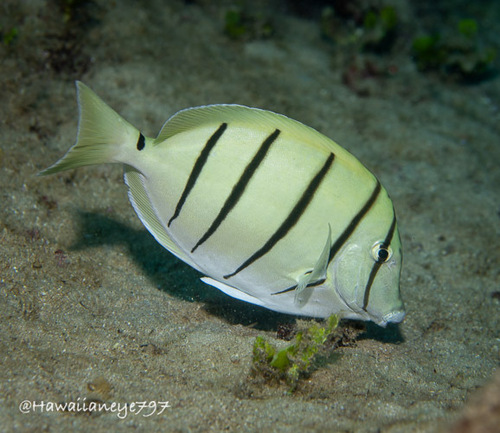
The Hawaiian Convict Surgeonfish, known locally in Hawaii as "manini," is a vibrant and highly social reef fish. Renowned for its bold, vertical stripes resembling a traditional prisoner's uniform, this striking species plays a vital role in maintaining the health of Hawaiian coral reefs. They are often seen in massive, synchronized schools, numbering in the hundreds, as they sweep across shallow reef flats to graze. This schooling behavior is not just social; it is a tactical strategy to overwhelm territorial damselfishes that guard their own private algae gardens. As an endemic species to the Hawaiian Islands, the manini holds cultural significance and is a beloved sight for snorkelers and divers alike. Their constant activity and ecological contribution as primary herbivores make them an essential and delightful species to observe in the wild.
Habitat: Found in shallow coral reefs, rocky shorelines, and exposed tide pools throughout the Hawaiian Archipelago.
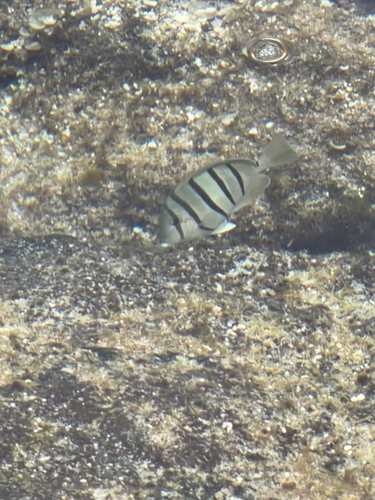
This species features a compressed, oval-shaped body that is predominantly a pale greenish-yellow or silvery-white, accented by six distinct, vertical black bars running down its sides. It has a sharp, spine-like "scalpel" near the base of its tail which is used for defense. The head is rounded with a small, downturned mouth perfectly adapted for scraping algae from rocks, and they typically grow to a length of about 12 to 25 centimeters.
Category
FishRarity
Common
Danger
1/5 · Very low
Snaps
3
During spawning cycles, huge aggregations form at dusk to release gametes directly into the water column, utilizing the cover of darkness to protect their eggs.
Its Hawaiian name, 'manini', is so common that it has entered local slang to mean 'small' or 'insignificant', referencing the fish's small size compared to larger game fish.
They possess a sharp, venomous spine on their tail base that can cause painful wounds if handled carelessly.
Possesses sharp, modified scales on either side of the caudal peduncle that can fold out like scalpels to deter predators.
Schools in large numbers to overwhelm aggressive, territorial damselfishes and safely feed in their heavily defended algal lawns.
Capably fades or intensifies its dark vertical stripes depending on stress levels, social interactions, or environmental background.
Feeds constantly during the day on fine filamentous and turf algae growing on coral rubble and rocks.
Age differences: Larvae and post-larvae feed on plankton before transitioning to a strictly herbivorous diet as they settle onto the reef.
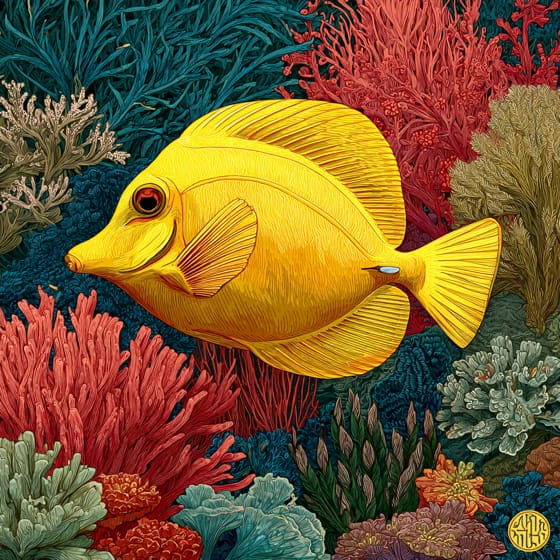
Zebrasoma flavescens
Competes for filamentous algae on shallow reefs.
Triaenodon obesus
Preys on adult surgeonfish sheltering in reef crevices at night.
Labroides phthirophagus
Removes ectoparasites and dead skin from the surgeonfish's body at cleaning stations.
No trait badges are assigned for this object yet.
No aliases listed yet.
Collections for this object will appear here as more themes are added.
Danger
1/5 · Very low
No special safety notes yet.
The easiest way to identify Hawaiian Convict Surgeonfish is to use the Snappit nature identifier app.
12-25 cm
0.1-0.4 kg
5-15 years
15 km/h
Feeds constantly during the day on fine filamentous and turf algae growing on coral rubble and rocks.
Found in shallow coral reefs, rocky shorelines, and exposed tide pools throughout the Hawaiian Archipelago.
Grazing
Zoom in to split clusters and explore where this object has been snapped.
Jun 18, 2026
Kahaluu BayPhoto attribution
(c) Jamie Campbell, some rights reserved (CC BY)
License: CC BY 4.0 ↗
Image may be shown cropped inside the card frame.

Hawaii, US
You might spot Gold Dust Day Gecko, Yellow Tang, and Saffron Finch.
View guide →

US
You might spot Brown Anole, Zebra Dove, and Red-Crested Cardinal.
View guide →

Hawaii, US
You might spot Gold Dust Day Gecko, Brown Anole, and White-Rumped Shama.
View guide →

Hawaii, US
You might spot Yellow ʻilima, Red-Tailed Tropicbird, and White Leadtree.
View guide →

Hawaii, US
You might spot Brown Anole, Red-Crested Cardinal, and Gold Dust Day Gecko.
View guide →

Hawaii, US
You might spot Brown Anole, Red-Crested Cardinal, and Gold Dust Day Gecko.
View guide →
Take the discovery with you
Snap it with Snappit to identify it, learn what makes it special, and add the discovery to your collection.