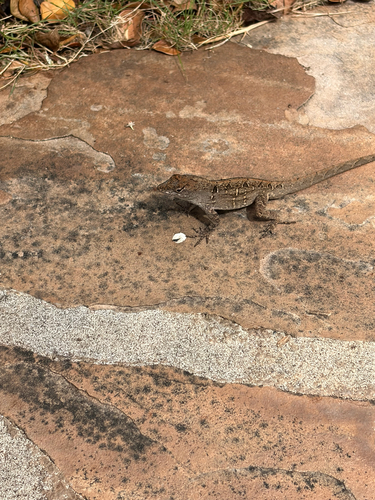
Brown Anole

Lahaina Historic District offers a profound journey into Hawaii's rich and complex past.
Lahaina Historic District offers a profound journey into Hawaii's rich and complex past. This National Historic Landmark District, once the bustling capital of the Hawaiian Kingdom and a pivotal Pacific whaling port, weaves together royal heritage, missionary influences, and maritime history into a tapestry unlike any other. Recognized for its well-preserved 19th-century character, the district provides a living narrative of the islands' transformation and enduring spirit.
While the district tragically suffered extensive damage during the 2023 wildfires, its essence as a historical and cultural treasure remains vibrant, with ongoing preservation and rebuilding efforts underway. Visitors can still appreciate the resilience embodied by landmarks such as the iconic Lahaina Banyan Tree, which, though burned, shows signs of recovery, and the historic Maria Lanakila Catholic Church, which survived the blaze. The district's thoroughfares, including Front Street, continue to invite contemplation of past eras, from the Hawaiian monarchy to the adventurous whaling days and the missionary period.
A visit to Lahaina Historic District is an opportunity to connect deeply with the layered history of Maui and witness the profound commitment to honoring its heritage. Exploring the sites, even those undergoing reconstruction, allows one to imagine the bustling port, the royal processions, and the daily lives of those who shaped this unique Hawaiian town. It stands as a powerful testament to the unwavering spirit of Lahaina, offering an unforgettable and poignant experience. Turn your visit into a safari! Use the Snappit app to scan and log wildlife sightings here.
The Lahaina Historic District boasts a storied past, serving as the capital of the Hawaiian Kingdom from 1820 to 1845 under monarchs Kamehameha I, II, and III. Its strategic location on Maui's western coast soon transformed it into a bustling hub for the Pacific whaling fleet, attracting hundreds of ships annually between 1819 and the 1860s. This influx of seafarers brought a diverse population, leading to the establishment of shops, hotels, and a dynamic cultural exchange, often marked by tensions with arriving Christian missionaries who began their influence in 1823. As the whaling industry declined in the mid-19th century, Lahaina transitioned into a sugar plantation town, drawing Chinese immigrants as contract laborers who later settled in the area, further enriching its cultural mosaic. Designated a National Historic Landmark in 1962, the district faced a devastating challenge in August 2023 when wildfires swept through, causing widespread destruction to many of its cherished historic structures. Despite the catastrophic losses, the spirit of Lahaina and the commitment to preserving its invaluable history persist through dedicated recovery and rebuilding initiatives.
Explore the historical markers and remnants of significant buildings. Walk along Front Street to imagine the bustling whaling days. Take photographs of the resilient Banyan Tree. Consider local walking tours for deeper insights into the district's multifaceted history.
Lahaina experiences warm weather year-round. The winter months (December to May) are generally cooler and ideal for exploring on foot. Whale watching season typically runs from December to May, peaking in spring.
Pedestrian and ADA-compliant pathways lead to the loading dock and ferry terminal at the harbor. A drop-off zone at Wharf Street is available for kupuna (seniors) and those with mobility difficulties. Be aware that some sidewalk repairs are ongoing, and pedestrians and vehicles may share space, requiring slow speeds.
A monumental tree planted in 1873, covering an entire acre. Though impacted by fire, it remains a central and resilient landmark.
Located between the Banyan Tree and Lahaina Harbor, this historic building housed the Lahaina Heritage Museum and a visitor center.
A beautiful historic church that remarkably survived the 2023 wildfires.
Historically significant as a whaling port, it continues to be a picturesque spot and a departure point for boat tours.
Each card links to a full Explore page with photos, traits, and fun facts.
Start with the big picture, then zoom in to explore individual wildlife observations around this place.
Start Early
Begin your exploration in the morning to enjoy cooler temperatures and avoid the peak afternoon heat.
Stay Hydrated and Protected
Bring water, wear sunblock, and consider a hat, as much of the district is exposed to the sun.
Grab a Map
Obtain a free brochure and map of the Lahaina Historic Trail from the visitor center (when available at the Old Lahaina Courthouse) or online to guide your self-guided tour.
Respect Recovery Efforts
Be mindful of ongoing repairs and current access restrictions. Many historic buildings are still being assessed or rebuilt, so please respect all signage and barriers.
Wear Comfortable Shoes
You'll be doing a lot of walking on various surfaces, so comfortable footwear is essential.
Parking
Utilize designated free three-hour parking lots at 116 Prison St. and off 500 Front St. Street parking along Front Street is generally prohibited.
Jun 14, 2026
Photo attribution
(c) speedy-birds, some rights reserved (CC BY)
License: CC BY 4.0 ↗
Image may be shown cropped inside the card frame.
Jun 14, 2026
Photo attribution
(c) speedy-birds, some rights reserved (CC BY)
License: CC BY 4.0 ↗
Image may be shown cropped inside the card frame.
Jun 14, 2026
Photo attribution
(c) speedy-birds, some rights reserved (CC BY)
License: CC BY 4.0 ↗
Image may be shown cropped inside the card frame.
Jun 18, 2026
Jun 18, 2026

Maryland, US
You might spot White-Tailed Deer and Eastern Gray Squirrel.
View guide →
.jpg)
District of Columbia, US
You might spot Eastern Gray Squirrel, Duck, and House Sparrow.
View guide →

Illinois, US
You might spot American Robin, Canada Goose, and House Sparrow.
View guide →

Virginia, US
You might spot Spotted Lanternfly and Northern Cardinal.
View guide →
Take the discovery with you
Identify the wildlife you spot, learn as you go, and keep a collection of the adventure.