.jpg&width=800)





Hawfinch
Coccothraustes coccothraustes
The Hawfinch is a colorful bird with a big beak that helps it crack open hard seeds. It has a lovely song and can be found in forests and gardens. Watch for its bright orange and black feathers!
Habitat: Forests
The Hawfinch is a stocky, large-headed bird with a massive, cone-shaped bill. It has a warm orange-brown head, grey nape, and striking dark blue primary feathers with a distinct white wing patch. Its short tail is dark with white tips.
Category
BirdsRarity
Common
Danger
1/5 · Very low
Snaps
Be the first to snap!
Their powerful jaws can exert a force of over 50 kilograms to crack seeds!
They cleverly strip the fruit flesh off to reach the nutritious, hard seeds inside.
You might hear a distinct 'crack!' sound from its beak when it's eating tough fruit pits.
Young Hawfinches have spotted chests, which helps them blend into dappled light!
Hawfinch can crack open incredibly tough seeds and fruit pits because of its massive, powerful beak and jaw muscles.
Hawfinch has incredibly strong jaw muscles that help them generate immense force, equivalent to up to 100 kg!
Hawfinch can hide very well in dense tree foliage because its subtly patterned plumage provides excellent camouflage.
These birds mostly eat tough seeds and fruits, with some insects.

Accipiter nisus
Adults and fledglings can be prey.

Strix aluco
Mainly preys on adults during the night.
Crataegus monogyna
Relies heavily on its berries and seeds for food.
Prunus avium
Cracks open cherry stones for the nutritious kernel.
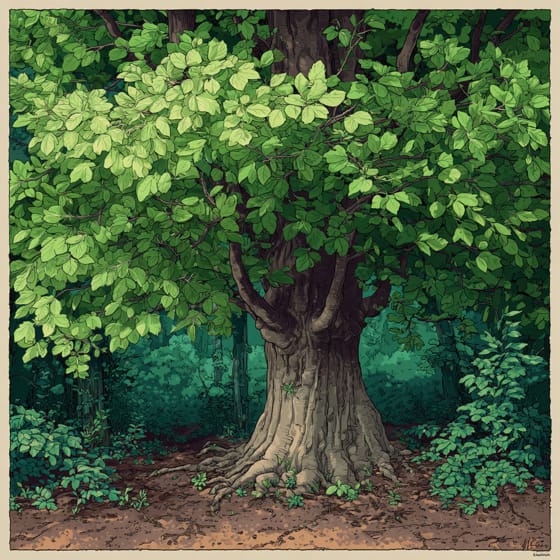
Carpinus betulus
Feeds on the hard seeds found within its fruit.
Feathered describes animals, primarily birds, possessing a covering of feathers.
Social animals live in organized groups, cooperating for survival benefits such as foraging, defense, and raising offspring.
Singing animals produce complex vocalizations, often for purposes of attracting mates, defending territory, or communicating within their species.
Arboreal animals live primarily in trees, utilizing them for shelter, food, and protection from predators.

Colorful describes organisms or objects displaying a wide range of bright and distinct colors.

This trait characterizes organisms whose diet consists entirely or primarily of plant material.

Forest habitats are terrestrial environments dominated by dense tree cover, supporting a high diversity of plant and animal life.

Diurnal animals are primarily active during daylight hours, typically resting or sleeping at night.
No aliases listed yet.
Danger
1/5 · Very low
Enjoy watching birds from a distance and don't try to touch or catch them.
The easiest way to identify Hawfinch is to use the Snappit nature identifier app.
18 cm
29-33 cm
0.05-0.07 kg
5-10 years
55 km/h
These birds mostly eat tough seeds and fruits, with some insects.
Forests
Zoom in to split clusters and explore where this object has been snapped.
Recent snaps will appear here as new observations are added.
Take the discovery with you
Snap it with Snappit to identify it, learn what makes it special, and add the discovery to your collection.




.jpg&width=800)






