





honeysuckle family
Caprifoliaceae
Honeysuckles are sweet-smelling shrubs that have beautiful flowers. They attract butterflies and hummingbirds, making gardens lively and colorful!
Habitat: Forests
The honeysuckle family has beautiful trumpet-shaped flowers, often in clusters, ranging from white and yellow to pink and red. Many grow as climbing vines or bushy shrubs, featuring pairs of oval leaves. Their unique flower shape makes them stand out visually.
Category
PlantsRarity
Common
Danger
1/5 · Very low
Snaps
Be the first to snap!
Certain honeysuckle leaves grow so close to the stem that they look like they're giving the stem a hug!
Hummingbirds love the tubular flowers of honeysuckle, sipping the sugary nectar with their long, thin beaks.
Some honeysuckle flowers change color as they age, signaling to pollinators which ones still have fresh nectar!
The sweet scent of honeysuckle can be detected by humans from many meters away, especially on a warm evening.
Honeysuckle family flowers release a powerful, sweet scent, especially at night, to attract moths and other nocturnal pollinators from far away.
Many honeysuckles have twining stems that can rapidly climb trees and structures, helping them reach sunlight above other plants.
Their tube-shaped flowers hold sweet nectar deep inside, guiding long-tongued insects and hummingbirds directly to the pollen.
Bombus terrestris
collects nectar and pollen from flowers.

Archilochus colubris
feeds on nectar from tubular flowers.
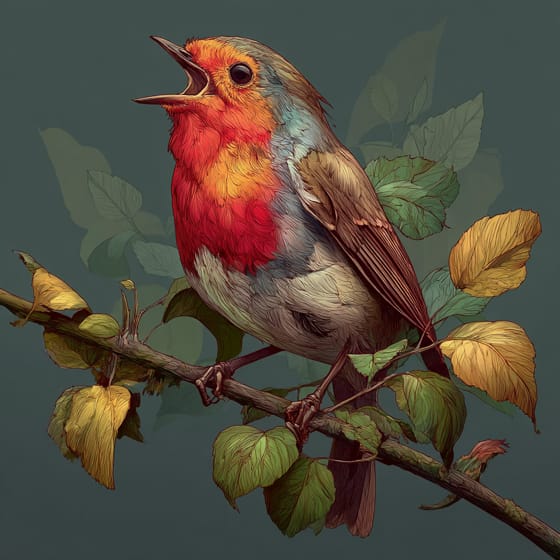
Turdus migratorius
eats the small, colorful berries for food.
Aromatic plants produce and emit fragrant volatile organic compounds, often for defense or to attract pollinators.
Deciduous plants periodically shed all their leaves, typically during autumn or dry seasons.
Flowering plants are any plants that produce flowers as part of their reproductive cycle.
A shrub is a woody plant smaller than a tree, typically with multiple stems branching from or near the ground.

Spring blooming plants produce their flowers during the spring season, often signifying the end of winter and the start of new growth.

Summer blooming plants produce their flowers during the summer season, often providing vibrant color when many other plants have finished.

Fragrant flowers emit a pleasant aroma, often to attract pollinators or for defense.

Edible plants are those parts of a plant that are considered safe for human consumption.

Describes plants that are particularly attractive and beneficial to a wide range of pollinating organisms.

Forest habitats are terrestrial environments dominated by dense tree cover, supporting a high diversity of plant and animal life.
Danger
1/5 · Very low
Always ask an adult before picking flowers, and never eat anything without checking first!
The easiest way to identify honeysuckle family is to use the Snappit nature identifier app.
50-1000 cm
50-500 cm
1-6 cm
Late spring to late summer
No
Mild
Perennial
Zoom in to split clusters and explore where this object has been snapped.
Recent snaps will appear here as new observations are added.
Take the discovery with you
Snap it with Snappit to identify it, learn what makes it special, and add the discovery to your collection.







.jpg&width=800)


_001.jpg&width=800)



