





Hooked Buttercup
ranunculus recurvatus
The Hooked Buttercup is a bright and cheerful flower that loves to grow in sunny places! Its unique hooked petals can make it look like it's reaching out to greet you!
Habitat: Wetlands, meadows, and areas with moist soil.
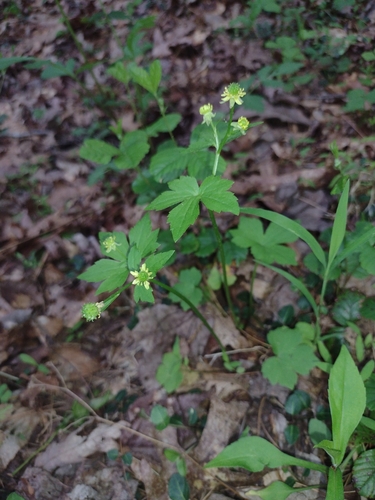
The Hooked Buttercup has small, bright yellow flowers with usually 5 petals and distinctive sepals that bend backward, giving it a 'hooked' appearance. Its leaves are deeply divided into three to five toothed segments.
Category
PlantsRarity
Common
Danger
1/5 · Very low
Snaps
10
Buttercup flowers can reflect sunlight, making them warmer for cold-blooded insects!
If you rub a buttercup flower on your skin, it might leave a temporary yellow stain!
Its name 'Ranunculus' means 'little frog' in Latin, because many species grow near water!
The Hooked Buttercup is part of a huge plant family with over 600 different species!
Hooked Buttercup contains a toxic compound called protoanemonin that helps it defend against most hungry animals.
This buttercup has super shiny, reflective petals that act like a mirror to attract bees and other helpful insects.
Its seeds are housed in tiny fruits that have a hooked tip, helping them cling to fur or clothing for dispersal.
Apis mellifera
collects nectar and pollen
Bombus impatiens
visits flowers for nectar
Syrphus ribesii
feeds on pollen and nectar
Colorful describes organisms or objects displaying a wide range of bright and distinct colors.
Grassland habitats are terrestrial biomes dominated by grasses and herbaceous plants, supporting a variety of grazing animals.
This trait characterizes organisms whose diet consists entirely or primarily of plant material.
This habitat trait identifies species found in wetlands, which are areas of land saturated with water, either permanently or seasonally, including marshes, swamps, and bogs.

Describes organisms that transfer pollen, enabling the fertilization and reproduction of plants.
Danger
1/5 · Very low
No special safety notes yet.
The easiest way to identify Hooked Buttercup is to use the Snappit nature identifier app.
30-70 cm
10-20 cm
0.5-1.5 cm
Spring_summer
No
Moderate
Perennial
Zoom in to split clusters and explore where this object has been snapped.
May 27, 2026
Bald Eagle State ForestPhoto attribution
(c) Cecil Smith, some rights reserved (CC BY)
License: CC BY 4.0 ↗
Image may be shown cropped inside the card frame.
May 23, 2025
Medfield RhododendronsPhoto attribution
(c) John Baur, some rights reserved (CC BY)
License: CC BY 4.0 ↗
Image may be shown cropped inside the card frame.

Pennsylvania, US
You might spot Mountain Laurel, Ghost Pipe, and Sweetfern.
View guide →
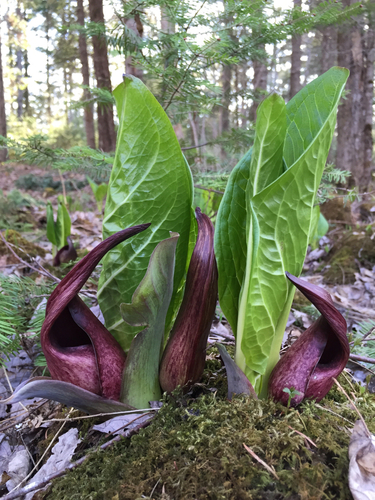
Connecticut, US
You might spot Eastern Skunk Cabbage and Eastern White Pine.
View guide →

Massachusetts, US
You might spot Hemlock Woolly Adelgid, Eastern Newt, and Red Trillium.
View guide →

New Hampshire, US
You might spot Wood Nettle and Water Chickweed.
View guide →
Kentucky, US
You might spot Kangaroos, Possums, Wombats, and Allies and Emu.
View guide →

New Hampshire, US
You might spot Hackberry Emperor, Tansy, and Wood Nettle.
View guide →
Take the discovery with you
Snap it with Snappit to identify it, learn what makes it special, and add the discovery to your collection.









.jpg&width=800)



_001.jpg&width=800)




