





Horace's Duskywing
Erynnis horatius
Horace's Duskywing is a small butterfly with dark brown wings and a special love for sunny spots. They flutter around flowers and are fun to watch as they dance in the air.
Habitat: Meadows and open woods
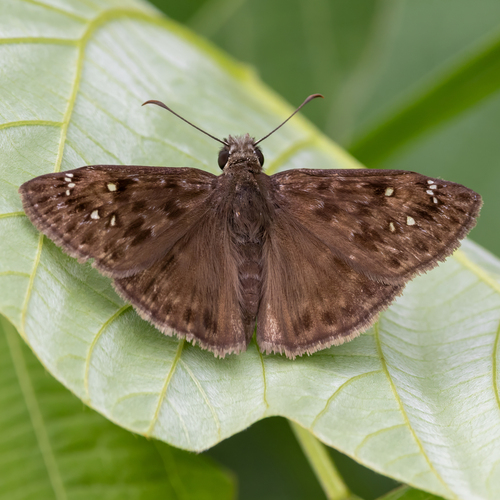
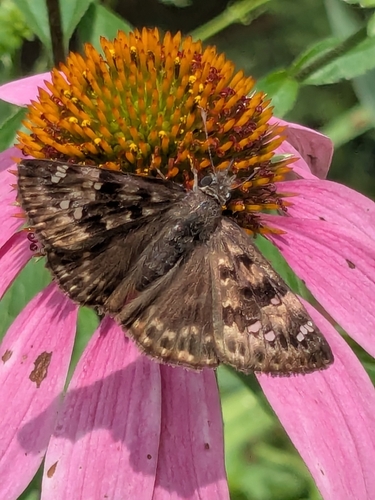
The Horace's Duskywing is a medium-sized skipper butterfly with mottled, dark brown-gray wings that often appear dusty. Its forewings typically feature small, clear or white spots, more prominent on females. The hindwing fringe is distinctly checkered brown and white, differentiating it from similar duskywings.
Category
InsectsRarity
Common
Danger
1/5 · Very low
Snaps
19
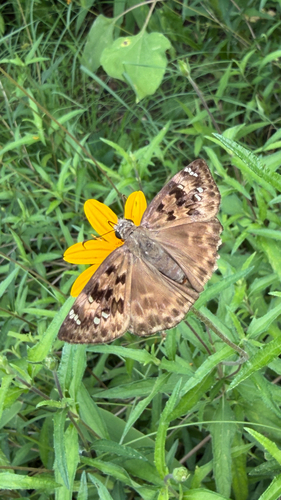
Horace's Duskywing sometimes perches on the ground with its wings spread flat.
Its name honors the ancient Roman poet, Horace!
This caterpillar can change its color from green to reddish-brown before pupating!
Unlike most butterflies, its antennae have tiny hooks at the very tips.
Horace's Duskywing can fly with incredibly fast, darting movements because its powerful flight muscles help it escape predators.
Horace's Duskywing caterpillars can create a secure shelter by rolling up leaves, which helps them hide from hungry birds.
Horace's Duskywing larvae can survive cold winters by entering a dormant state, helping them emerge as adults in spring.
Adult Horace's Duskywings drink flower nectar, while their caterpillars munch on leaves.
Age differences: Larvae eat leaves of host plants, while adults primarily feed on flower nectar.
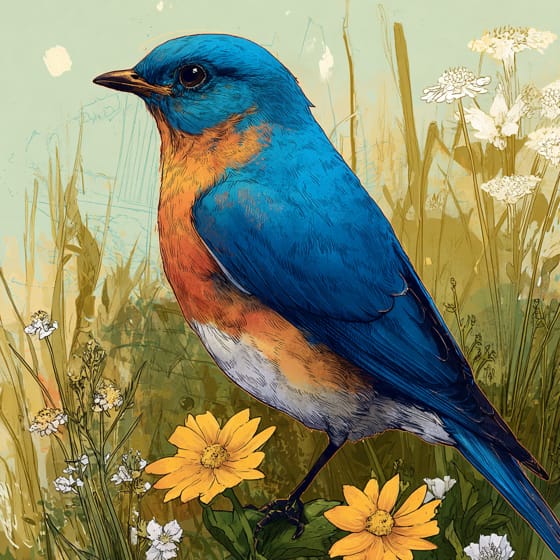
Sialia sialis
Bluebirds eat adult butterflies.
Araniella displicata
Spiders can catch adults in webs.

Trifolium repens
Adults visit flowers for nectar.

Quercus alba
Caterpillars feed on its leaves.
Solitary animals live alone for most of their lives, only interacting with others for mating or parental care.
Camouflaged describes organisms that possess coloring or patterns that allow them to blend into their environment.
Colorful describes organisms or objects displaying a wide range of bright and distinct colors.
This trait characterizes organisms whose diet consists entirely or primarily of plant material.

Describes plants that are particularly attractive and beneficial to a wide range of pollinating organisms.

Diurnal animals are primarily active during daylight hours, typically resting or sleeping at night.

Describes organisms that transfer pollen, enabling the fertilization and reproduction of plants.
No aliases listed yet.
Danger
1/5 · Very low
Always watch butterflies from a distance so you don't scare them away.
The easiest way to identify Horace's Duskywing is to use the Snappit nature identifier app.
32-45 mm
15-25 mm
10-30 days
20 km/h
Adult Horace's Duskywings drink flower nectar, while their caterpillars munch on leaves.
Meadows and open woods
Foraging
Zoom in to split clusters and explore where this object has been snapped.
Jun 20, 2026
Fairlie-PoplarPhoto attribution
(c) Dan Vickers, some rights reserved (CC BY)
License: CC BY 4.0 ↗
Image may be shown cropped inside the card frame.
Jun 7, 2026
King William Historic DistrictPhoto attribution
(c) IDClaire, some rights reserved (CC BY)
License: CC BY 4.0 ↗
Image may be shown cropped inside the card frame.
Jun 3, 2026
Oklahoma AquariumPhoto attribution
(c) Justine Anderson, some rights reserved (CC BY)
License: CC BY 4.0 ↗
Image may be shown cropped inside the card frame.

Florida, US
You might spot Anole, Eastern Box Turtle, and Golden Silk Spider.
View guide →

Maryland, US
You might spot Osprey, Duck, and Spotted Lanternfly.
View guide →

South Carolina, US
You might spot Anole, Asian Lady Beetle, and Gulf Fritillary.
View guide →
Maryland, US
You might spot Duck, American Toad, and Eastern Bluebird.
View guide →

Georgia, US
You might spot Eastern Gray Squirrel, Domestic Cat, and American Robin.
View guide →

New York, US
You might spot Monarch and Common Eastern Bumble Bee.
View guide →
Take the discovery with you
Snap it with Snappit to identify it, learn what makes it special, and add the discovery to your collection.







.jpg&width=800)



