





Humboldt's Lily
Lilium humboldtii
Humboldt's Lily is a beautiful flower that grows in California. It has bright yellow petals with lovely spots and can be found in meadows and forests, bringing joy to all who see it.
Habitat: Forests
The Humboldt's Lily is a tall, striking plant with whorls of bright green leaves. It has numerous large, pendant flowers featuring strongly reflexed (curled back) orange-yellow petals adorned with prominent reddish-brown spots. Its showy blooms emerge from a sturdy green stem.
Category
PlantsRarity
Common
Danger
1/5 · Very low
Snaps
3
Each mature plant can proudly display dozens of stunning flowers at once!
Its bulb can be found incredibly deep, sometimes 30 cm underground!
Its petals curl back so far, they almost touch the stem!
Named after explorer Alexander von Humboldt, a truly inspiring scientist!
Humboldt's Lily has deeply buried bulbs that help it survive dry spells by storing water and nutrients underground.
Its impressive height allows it to reach for sunlight, making its vibrant flowers visible even in dense forest undergrowth.
The lily's distinct spotted, recurved petals are a visual and scent signal, perfectly designed to attract specific insect pollinators.
Apis mellifera
collects nectar and pollen

Papilio rutulus
feeds on nectar from flowers
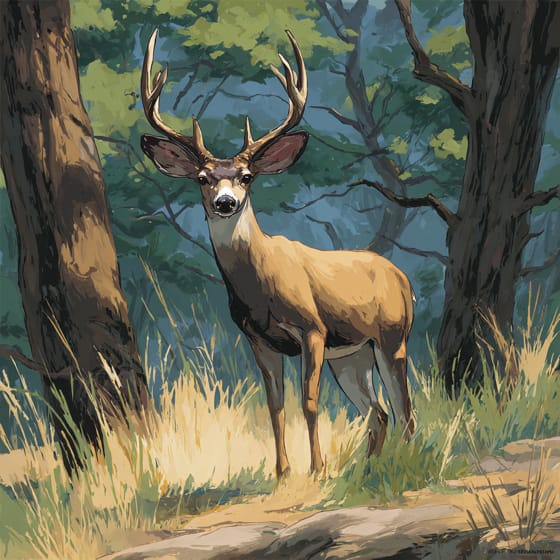
Odocoileus hemionus
may browse on foliage and flowers

Thomomys bottae
consumes underground bulbs
Marked with spots or patches of a different color.
Flowering plants are any plants that produce flowers as part of their reproductive cycle.
Spring blooming plants produce their flowers during the spring season, often signifying the end of winter and the start of new growth.
Summer blooming plants produce their flowers during the summer season, often providing vibrant color when many other plants have finished.

A tube flower has petals fused together at the base, forming a distinct tubular structure that typically holds nectar deep within.

Fragrant flowers emit a pleasant aroma, often to attract pollinators or for defense.

Colorful describes organisms or objects displaying a wide range of bright and distinct colors.

Describes plants that are particularly attractive and beneficial to a wide range of pollinating organisms.

Forest habitats are terrestrial environments dominated by dense tree cover, supporting a high diversity of plant and animal life.
No aliases listed yet.
Danger
1/5 · Very low
Always look but do not pick flowers, so they can keep growing for everyone to enjoy.
The easiest way to identify Humboldt's Lily is to use the Snappit nature identifier app.
100-250 cm
30-60 cm
6-10 cm
Late spring to early summer
No
Mild
Perennial
Zoom in to split clusters and explore where this object has been snapped.

California, US
You might spot Western Fence Lizard and California Brittlebush.
View guide →

California, US
You might spot Sunburst Anemone, Western Gull, and Giant Coreopsis.
View guide →

California, US
You might spot Ant, Chimpanzee, and African Lion.
View guide →
Take the discovery with you
Snap it with Snappit to identify it, learn what makes it special, and add the discovery to your collection.







.jpg&width=800)


_001.jpg&width=800)




