

Ilia And Umber Underwings
catocala ilia-complex
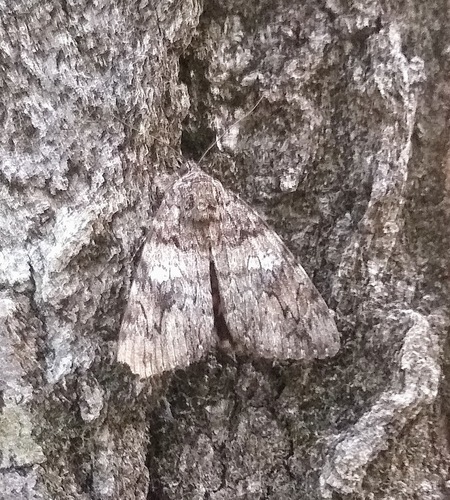
The Ilia Underwing and its close relatives in the umber underwing complex represent some of the most fascinating examples of evolutionary camouflage in the insect world. By day, these medium-to-large moths rest quietly on the trunks of oak trees, perfectly blending into the rough bark with their highly mottled, cryptic grayish-brown forewings. However, when disturbed or in flight, they flash their strikingly vibrant orange-and-black banded hindwings. This sudden burst of color acts as a startle display to confuse potential predators, a defense mechanism known as deimatic behavior. Found throughout deciduous forests across North America, these moths are a favorite among nocturnal insect enthusiasts who marvel at their dual-natured beauty.
Habitat: Found in deciduous and mixed-wood forests, specifically in close association with various species of oak trees.
The Ilia Underwing moth typically has a wingspan ranging from 7 to 9 cm. Its forewings are incredibly intricate, displaying a mottled mix of charcoal gray, light brown, white, and black that perfectly mimics lichen-covered oak bark, often featuring a prominent white spot near the center. In contrast, the hidden hindwings are a brilliant, fiery orange or deep yellow, decorated with a thick, wavy black median band and a broad black outer margin. The body is stout and covered in fine, hair-like gray scales, allowing it to lay incredibly flat against flat wooden surfaces.
Category
InsectsRarity
Common
Danger
1/5 · Very low
Snaps
Be the first to snap!
The genus name Catocala translates roughly to beautiful behind or beautiful below, referring to their brilliantly colored hindwings hidden beneath drab forewings.
They rest with their heads pointing downwards on tree trunks, which helps them blend into the natural vertical patterns of the bark.
Underwing moths have been a favorite of lepidopterists for centuries, inspiring a rich subculture of baiting them with sweet, fermented mixtures at night.
Flashes its bright orange and black hindwings when threatened to startle predators and mask its escape.
Possesses forewings that expertly mimic tree bark and lichen, rendering the moth nearly invisible while resting during the day.
Equipped with tympanic organs on its metathorax that can detect the echolocation calls of hunting bats, allowing the moth to perform evasive maneuvers.
Caterpillars feed exclusively on the foliage of oaks and occasionally other deciduous trees, while adult moths feed on fermenting tree sap, rotting fruit, and flower nectar.

Quercus alba
The caterpillar of this moth species uses the leaves of this tree as its primary host plant and food source.

Megascops asio
This nocturnal bird actively hunts adult underwing moths during the night.

Poecile atricapillus
Feeds on the caterpillars of the underwing moth in oak canopies during late spring.
No trait badges are assigned for this object yet.
Collections for this object will appear here as more themes are added.
Danger
1/5 · Very low
No special safety notes yet.
Compare resting wing shape, forewing markings, antennae and body build. Small brown moths can hinge on fine details a phone photo can't always catch. Moth Identifier: upload a photo and compare the visible details.
3+ cm
7+ cm
0.001+ kg
1+ years
15 km/h
Caterpillars feed exclusively on the foliage of oaks and occasionally other deciduous trees, while adult moths feed on fermenting tree sap, rotting fruit, and flower nectar.
Found in deciduous and mixed-wood forests, specifically in close association with various species of oak trees.
Zoom in to split clusters and explore where this object has been snapped.
Recent snaps will appear here as new observations are added.
Take the discovery with you
Snap it with Snappit to identify it, learn what makes it special, and add the discovery to your collection.