





Swainson's Thrush
Catharus ustulatus
Swainson's Thrush is a lovely bird known for its beautiful song. It has a brown back and spotted chest, making it easy to recognize in the woods.
Habitat: Forests
The Swainson's Thrush has a warm brown back and head, with a paler buffy chest spotted with dark brown. Its most distinctive feature is a prominent buffy eye-ring and lores, making its eyes look 'spectacled'. This unique facial pattern helps differentiate it from other thrushes.
Category
BirdsRarity
Common
Danger
1/5 · Very low
Snaps
23
Their incredible flute-like song always spirals *up* in pitch, a true forest symphony!
These tiny birds can sometimes travel from Alaska all the way to Argentina!
When startled, they make a distinct 'pup' call, like a tiny alarm bell!
Wow! Swainson's Thrushes fly thousands of kilometers, often migrating under the stars at night!
Swainson's Thrush can navigate thousands of miles using stars and Earth's magnetic field, helping them find their way across continents.
Swainson's Thrush has a unique flute-like song that spirals upwards, helping them communicate with others from hidden spots.
Swainson's Thrush can quickly spot and snatch insects from the leaf litter because of their excellent vision, helping them find food.
They are omnivores, eating mostly insects and berries depending on the season and availability.
Age differences: Adults mainly eat insects during breeding, switching to more fruits and berries during migration.
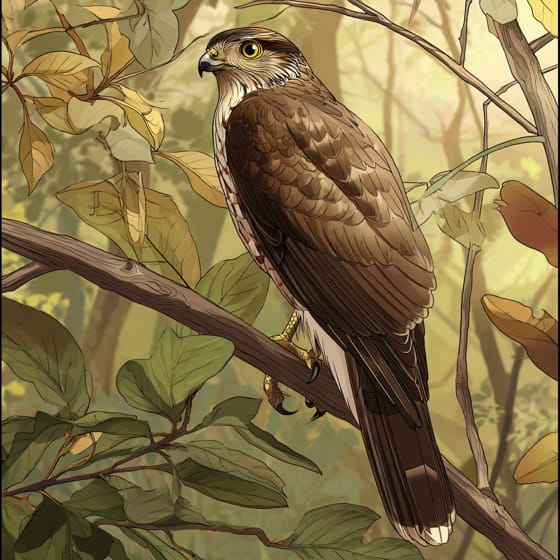
Accipiter cooperii
Nestlings and adults are hunted.
Thamnophis sirtalis
Can raid nests for eggs and chicks.
.jpg&width=800)
Rubus idaeus
Feeds on ripe fruits during migration.
Formica rufa
Forages for ants and their larvae.
Feathered describes animals, primarily birds, possessing a covering of feathers.
Marked with spots or patches of a different color.
Social animals live in organized groups, cooperating for survival benefits such as foraging, defense, and raising offspring.
Singing animals produce complex vocalizations, often for purposes of attracting mates, defending territory, or communicating within their species.

This trait identifies organisms whose diet primarily consists of insects and other small invertebrates.

Forest habitats are terrestrial environments dominated by dense tree cover, supporting a high diversity of plant and animal life.

Diurnal animals are primarily active during daylight hours, typically resting or sleeping at night.

Migratory animals undertake seasonal movements from one region to another, typically in response to changes in climate or food availability.
No aliases listed yet.
Danger
1/5 · Very low
Enjoy watching birds from a distance and don't try to touch them.
The easiest way to identify Swainson's Thrush is to use the Snappit nature identifier app.
16-20 cm
30-35 cm
0.027-0.045 kg
2-10 years
50 km/h
They are omnivores, eating mostly insects and berries depending on the season and availability.
Forests
Zoom in to split clusters and explore where this object has been snapped.
Jun 15, 2026
Kincaid ParkPhoto attribution
(c) tlaloc27, some rights reserved (CC BY)
License: CC BY 4.0 ↗
Image may be shown cropped inside the card frame.
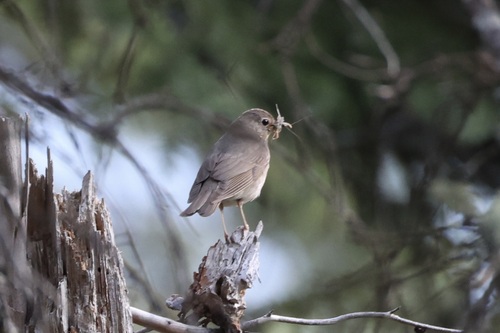
Jul 17, 2025
Cut Bank Ranger Station Historic DistrictPhoto attribution
no rights reserved
License: CC0 1.0 ↗
Image may be shown cropped inside the card frame.

US
You might spot Bald Eagle, Common Raven, and Salmonberry.
View guide →

Montana, US
You might spot Great Blanketflower and Seven-Spotted Lady Beetle.
View guide →

South Dakota, US
You might spot Duck, Canada Goose, and Thirteen-Lined Ground Squirrel.
View guide →

New Jersey, US
You might spot American Beech, Garlic Mustard, and Spotted Lanternfly.
View guide →

Indiana, US
You might spot Monarch, Black Swallowtail, and American Pokeweed.
View guide →

Alaska, US
You might spot Moose, Devil's Club, and Red-Berried Elder.
View guide →
Take the discovery with you
Snap it with Snappit to identify it, learn what makes it special, and add the discovery to your collection.




.jpg&width=800)







