





Lone Star Tick
Amblyomma americanum
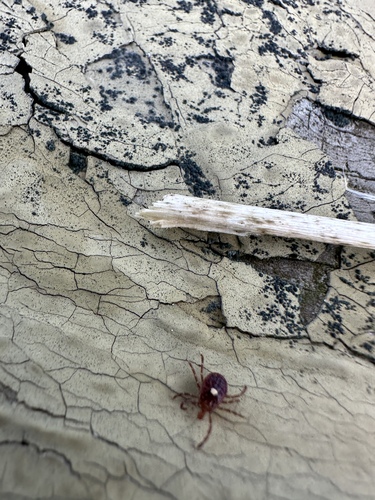
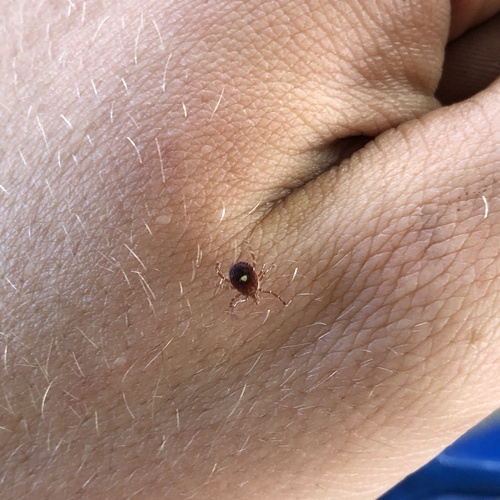
The Lone Star Tick is a small tick that can be found in grassy and wooded areas. They are known for the white spot on their back, which looks like a star!
Habitat: Forests
The Lone Star Tick is a reddish-brown arachnid with an oval body. Females have a distinctive silvery-white spot on their back, resembling a star, which is absent in males. Its long mouthparts make it unique.
Category
InsectsRarity
Common
Danger
3/5 · Moderate
Snaps
19
Lone Star Ticks are known for actively "questing," meaning they crawl towards moving shadows or warmth.
The tiny larva stage is sometimes called a "seed tick" because it looks like a speck of pepper.
These small ticks can survive over a year without needing any food!
They go through four life stages: egg, larva, nymph, and adult, each needing a blood meal.
Lone Star Tick can find animals and people using carbon dioxide and body heat sensors, helping them locate a blood meal.
Lone Star Tick has barbed mouthparts that securely anchor them to their host, making them difficult to remove once attached.
Lone Star Tick releases special saliva that prevents blood from clotting and numbs the bite, helping them feed undetected for a long time.
These tiny arachnids survive by drinking the blood of mammals and birds.
Age differences: Larvae, nymphs, and adults all feed on blood, but prefer different-sized hosts.
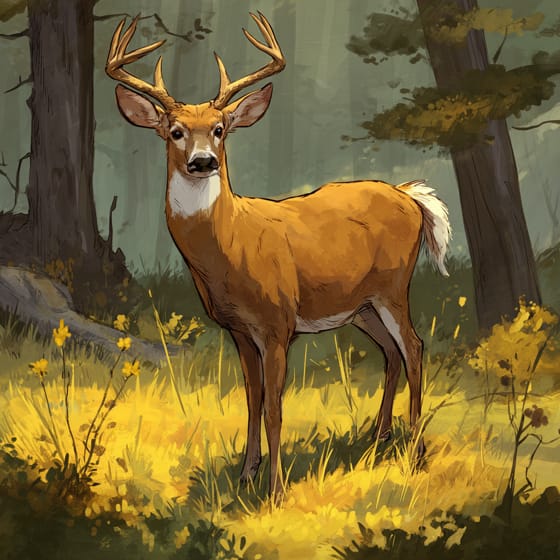
Odocoileus virginianus
Feeds on the blood of white-tailed deer.

Homo sapiens
Bites humans and can transmit diseases.
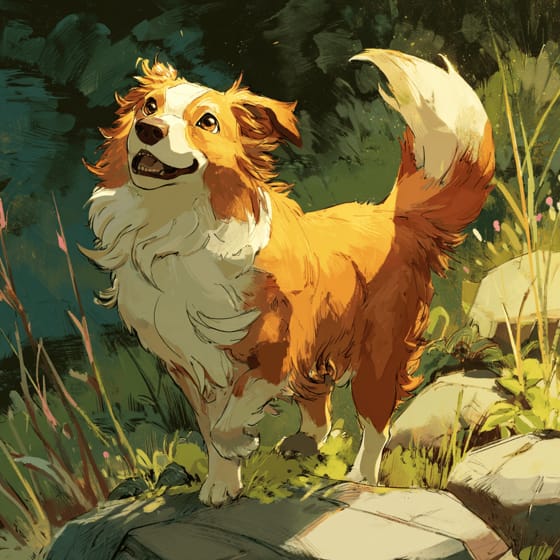
Canis familiaris
Attaches to dogs, feeding on their blood.
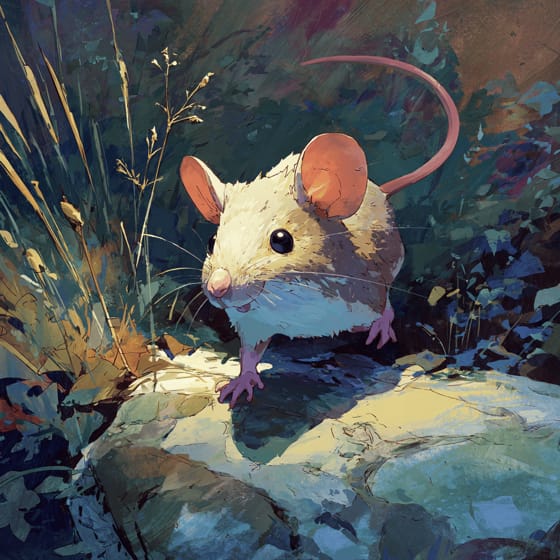
Mus musculus
Nymphs and larvae often feed on small rodents.
Marked with spots or patches of a different color.
Solitary animals live alone for most of their lives, only interacting with others for mating or parental care.
An ambush predator hunts by patiently waiting and concealing itself, then launching a sudden attack when unsuspecting prey comes within range.
Forest habitats are terrestrial environments dominated by dense tree cover, supporting a high diversity of plant and animal life.
This trait describes organisms that live on or in a host organism, obtaining nutrients at the host's expense.

Venomous organisms produce toxins that are injected into another animal, typically through a bite or sting.
No aliases listed yet.
Danger
3/5 · Moderate
Always check for ticks after playing outside, and tell an adult if you find one.
The easiest way to identify Lone Star Tick is to use the Snappit nature identifier app.
3-10 mm
300-700 days
These tiny arachnids survive by drinking the blood of mammals and birds.
Forests
Ambush
8
Zoom in to split clusters and explore where this object has been snapped.
Jun 11, 2026
Old Lyme Historic DistrictPhoto attribution
(c) Rochelle Davis, some rights reserved (CC BY)
License: CC BY 4.0 ↗
Image may be shown cropped inside the card frame.
May 26, 2026
Harriman Historic DistrictPhoto attribution
(c) Andrew Conboy, some rights reserved (CC BY)
License: CC BY 4.0 ↗
Image may be shown cropped inside the card frame.
Maryland, US
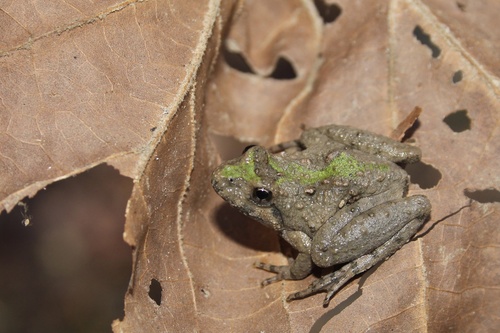
You might spot Northern Cricket Frog and Common Whitetail.
View guide →

Illinois, US
You might spot Eastern Fox Squirrel, Amur Honeysuckle, and Poison Hemlock.
View guide →

Virginia, US
You might spot Eastern Gray Squirrel, Duck, and Northern Mockingbird.
View guide →

Rhode Island, US
You might spot Tundra Bean Goose, Tansy, and Osprey.
View guide →

New Jersey, US
You might spot Duck, Canada Goose, and Red-Winged Blackbird.
View guide →

Tennessee, US
You might spot Pond Slider, White-Tailed Deer, and Great Blue Heron.
View guide →
Take the discovery with you
Snap it with Snappit to identify it, learn what makes it special, and add the discovery to your collection.










.jpg&width=800)



