





Long-spurred violet
Viola rostrata
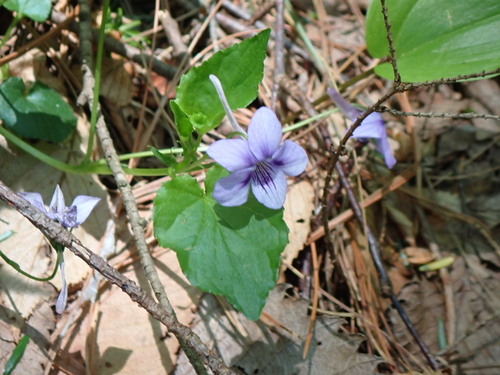
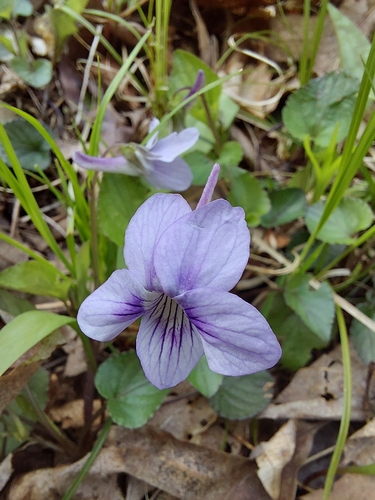
The Long-spurred violet is a lovely flower with pretty purple petals and long, pointy spurs. It blooms in spring and can be found in shady places like forests and along streams.
Habitat: Forests
The Long-spurred violet has distinctive heart-shaped to kidney-shaped leaves and vibrant purple-blue to white flowers. Its most striking feature is a remarkably long, slender spur, often longer than the petals, extending backward from the flower.
Category
PlantsRarity
Common
Danger
1/5 · Very low
Snaps
5
Its scientific name 'rostrata' means 'beaked' in Latin, referring to its distinct long spur!
Many Fritillary butterfly caterpillars can only eat violet leaves to grow into adult butterflies!
Native Americans traditionally used violet leaves to make soothing teas and healing poultices.
You can eat its fresh leaves and vibrant flowers, which are full of healthy vitamins C and A!
Long-spurred violet has an extra-long spur that stores sweet nectar, guiding long-tongued pollinators like bees to its delicious reward.
Long-spurred violet seeds come with a tiny fatty treat called an elaiosome, encouraging ants to carry them away and spread new plants!
Long-spurred violet can produce hidden, unopened flowers near the ground that self-pollinate, ensuring seeds even when insects are scarce.

Bombus impatiens
Visits flowers for nectar and pollen

Odocoileus virginianus
Browses on leaves and tender shoots
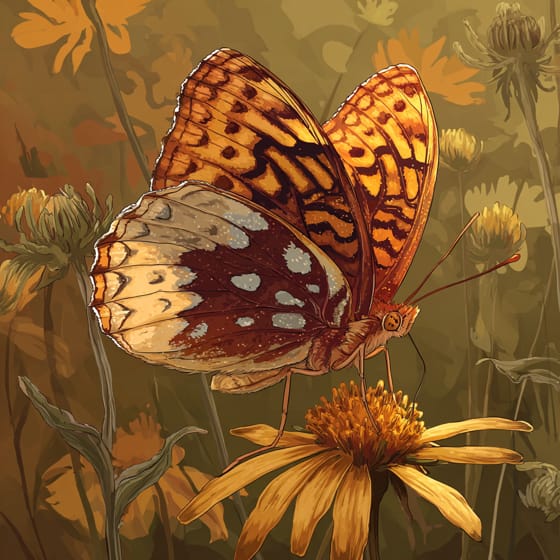
Speyeria cybele
Caterpillars feed on violet leaves

Aphaenogaster rudis
Carries seeds for their lipid-rich elaiosomes
Flowering plants are any plants that produce flowers as part of their reproductive cycle.
Shade tolerant plants are adapted to grow and thrive in areas with low light levels, requiring less direct sunlight.
Spring blooming plants produce their flowers during the spring season, often signifying the end of winter and the start of new growth.
Fragrant flowers emit a pleasant aroma, often to attract pollinators or for defense.

Colorful describes organisms or objects displaying a wide range of bright and distinct colors.

Describes plants that are particularly attractive and beneficial to a wide range of pollinating organisms.

Forest habitats are terrestrial environments dominated by dense tree cover, supporting a high diversity of plant and animal life.

Endangered status indicates a species is at a very high risk of extinction in the wild in the near future.
No aliases listed yet.
Danger
1/5 · Very low
Don't pick flowers without asking an adult first, so we can enjoy them in nature!
The easiest way to identify Long-spurred violet is to use the Snappit nature identifier app.
5-20 cm
10-25 cm
1-2 cm
Spring to early summer
Yes
None
Perennial
Zoom in to split clusters and explore where this object has been snapped.
May 17, 2026
October Mountain State ForestPhoto attribution
no rights reserved
License: CC0 1.0 ↗
Image may be shown cropped inside the card frame.
May 8, 2026
Sand Bar State ParkPhoto attribution
no rights reserved
License: CC0 1.0 ↗
Image may be shown cropped inside the card frame.

Massachusetts, US
You might spot Hemlock Woolly Adelgid, Eastern Newt, and Red Trillium.
View guide →

Kentucky, US
You might spot Large White Trillium and Sharp-Lobed Hepatica.
View guide →

Pennsylvania, US
You might spot Elk, Ring-Necked Snake, and Timber Rattlesnake.
View guide →

Massachusetts, US
You might spot American Toad, Hobblebush, and Mountain Laurel.
View guide →

Massachusetts, US
You might spot Eastern Newt, Admiral Butterfly, and Bluebead Lily.
View guide →

Vermont, US
You might spot Osprey, Great Blue Heron, and Wood Duck.
View guide →
Take the discovery with you
Snap it with Snappit to identify it, learn what makes it special, and add the discovery to your collection.







.jpg&width=800)


_001.jpg&width=800)



