





Rough Harvester Ant
Pogonomyrmex rugosus
Rough Harvester Ants are tiny, hardworking insects that live in the ground. They gather seeds and bring them back to their nests to eat. They are great builders and help keep the soil healthy!
Habitat: Desert
The Rough Harvester Ant is a robust ant, typically reddish-brown to dark brown, with a distinctly rough or sculptured texture on its head and thorax. It has powerful mandibles designed for seed collection and a noticeable post-petiole segment, making it appear stocky compared to many other ant species.
Category
InsectsRarity
Common
Danger
2/5 · Low
Snaps
8
Harvester ants often clear circular areas around their mounds, like tiny ant plazas!
Some people call them 'farmer ants' because they gather and store seeds for later!
Their nests can reach depths of 6 feet, deeper than a grown-up is tall!
They use special chemical trails, like invisible maps, to guide their friends to food.
Rough Harvester Ant can meticulously gather and store seeds because of its specialized mandibles and an under-head basket (psammophore) that helps them transport large loads.
Rough Harvester Ant can construct elaborate underground nests topped with large gravel mounds that help regulate temperature and protect the colony.
Rough Harvester Ant has a potent venomous sting that helps them defend their colony from predators and intruders.
Rough Harvester Ant can navigate long foraging trails using a sophisticated sun compass and chemical cues that help them find food and return home.
These ants are expert farmers, mainly eating seeds they collect and store in their nests.

Phrynosoma cornutum
A primary food source for this lizard.

Taxidea taxus
Badgers often dig up entire ant nests for food.
Bouteloua gracilis
Relies on its seeds as a major food source.
Mimosa biuncifera
Disperses seeds, helping the plant spread.
Social animals live in organized groups, cooperating for survival benefits such as foraging, defense, and raising offspring.
This trait identifies organisms whose diet includes both plant and animal matter.
Burrowing animals dig tunnels and chambers in the ground, using these subterranean structures for shelter, hunting, or breeding.
Desert habitats are arid regions characterized by extremely low precipitation and often extreme temperatures, supporting specialized flora and fauna.

Describes organisms that break down dead organic material, recycling nutrients back into the ecosystem.

Describes a species whose presence and role have a disproportionately large effect on its environment.

Pertaining to species that are significantly smaller than typical or average for their kind.
No aliases listed yet.
Danger
2/5 · Low
Be careful not to disturb their nests, as they might bite if they feel threatened.
The easiest way to identify Rough Harvester Ant is to use the Snappit nature identifier app.
5-9 mm
60-180 days
These ants are expert farmers, mainly eating seeds they collect and store in their nests.
Desert
Foraging
6
20000
Zoom in to split clusters and explore where this object has been snapped.

California, US
You might spot California Poppy and Common Side-Blotched Lizard.
View guide →

New Mexico, US
You might spot Tree Cholla, Colorado Pinyon, and House Finch.
View guide →

Arizona, US
You might spot Northern Cardinal, Engelmann's Hedgehog Cactus, and Queen.
View guide →

New Mexico, US
You might spot Common Side-Blotched Lizard and Kingcup Cactus.
View guide →
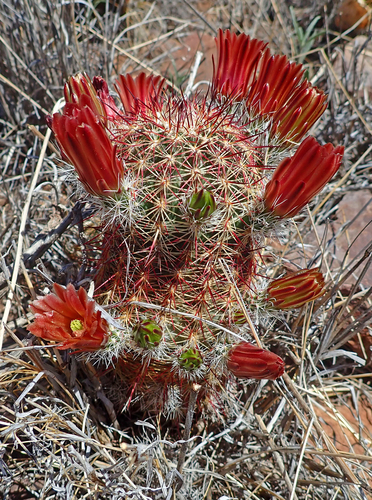
Texas, US
You might spot Texas Hedgehog Cactus, Cactus Wren, and Ornate Tree Lizard.
View guide →

Texas, US
You might spot Tree Cholla, House Sparrow, and Tahoka Daisy.
View guide →
Take the discovery with you
Snap it with Snappit to identify it, learn what makes it special, and add the discovery to your collection.









.jpg&width=800)



