





Margined Tiger Beetle
Ellipsoptera marginata
The Margined Tiger Beetle is a shiny, fast insect with beautiful green and black stripes. They love to run around in sandy areas and are great at catching their food!
Habitat: Sandy areas
The Margined Tiger Beetle has a slender, dark body, often appearing metallic green or bronze, with a distinct, pale, wavy margin running along the outer edge of its wing covers. Its large eyes and long, thin legs are prominent features.
Category
InsectsRarity
Common
Danger
1/5 · Very low
Snaps
2
Its larvae are "trap-door" predators, ambushing unsuspecting insects from burrows in the sand!
Scientists study their unique hunting style to inspire new designs for fast, agile robots!
The pale margin on its dark wing covers helps it blend perfectly with sandy environments.
When running super fast, it sometimes pauses to let its vision catch up before chasing more prey!
Margined Tiger Beetle can run incredibly fast because of its long, powerful legs, helping it ambush tiny prey.
Margined Tiger Beetle has huge, compound eyes that help them spot tiny moving insects from far away, even while running.
Margined Tiger Beetle can grip prey with powerful, sharp, hook-like jaws that help them hold onto their wiggly meals.
Margined Tiger Beetle can take flight in a blink, using its strong wings to quickly avoid predators or danger.
A tiny hunter, Margined Tiger Beetles feast on other small insects and arthropods.
Age differences: Larvae are ambush predators, while adults are active pursuit hunters.
Formica subsericea
A common small ant species it actively pursues.
Anolis carolinensis
A lizard predator that preys on many insects.
.jpg&width=800)
Tyrannus tyrannus
An insectivorous bird often found in coastal habitats.
Marked with parallel bands or lines of color.
Solitary animals live alone for most of their lives, only interacting with others for mating or parental care.
Colorful describes organisms or objects displaying a wide range of bright and distinct colors.
This trait identifies organisms whose diet primarily consists of insects and other small invertebrates.

This trait identifies organisms whose diet consists entirely or primarily of animal tissue.

Diurnal animals are primarily active during daylight hours, typically resting or sleeping at night.

This trait identifies organisms that exhibit exceptional swiftness in movement for hunting, escape, or travel.
No aliases listed yet.
Danger
1/5 · Very low
Be gentle and watch where you step; these little beetles are quick and might scurry away!
The easiest way to identify Margined Tiger Beetle is to use the Snappit nature identifier app.
25-35 mm
12-16 mm
180-365 days
15 km/h
A tiny hunter, Margined Tiger Beetles feast on other small insects and arthropods.
Sandy areas
Pursuit
Zoom in to split clusters and explore where this object has been snapped.

US
You might spot Firewheel, Domestic Horse, and Atlantic Horseshoe Crab.
View guide →

Georgia, US
You might spot Monarch, Sandhill Milkweed, and Fiery Skipper.
View guide →

Maryland, US
You might spot Seaside Dragonlet and Laughing Gull.
View guide →
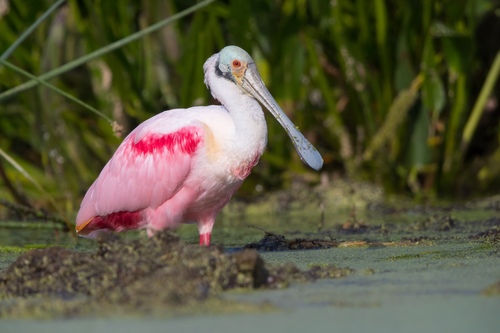
Florida, US
You might spot Roseate Spoonbill, Tricolored Heron, and Great Egret.
View guide →
Take the discovery with you
Snap it with Snappit to identify it, learn what makes it special, and add the discovery to your collection.








.jpg&width=800)



