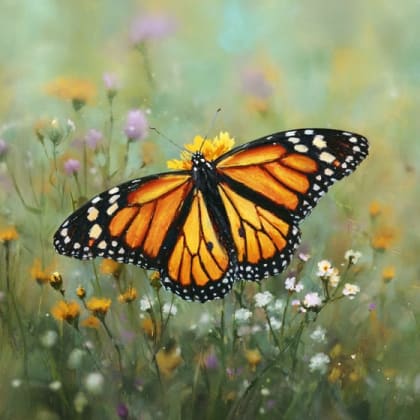





Monarch Butterfly

St. Catherines Island is a unique Georgia barrier island dedicated to conservation and research. This privately-owned island is a precious jewel along the Georgia coast, where pristine natural habitats meet a rich tapestry of human history and groundbreaking scientific study. Its extensive salt marshes, ancient maritime forests, and secluded beaches provide a haven for wildlife, while its carefully managed landscape supports critical conservation programs. The island's limited public access ensures its undisturbed nature, offering an exceptional environment for ecological and archaeological exploration.
The island is perhaps most famous for its thriving free-ranging colony of ring-tailed lemurs, which were introduced in 1985 as part of a captive breeding program aimed at preserving this endangered species. These charismatic primates, along with other exotic species like African Jackson hartebeest and Asian hornbills in the St. Catherines Wildlife Survival Center, represent a unique approach to endangered species management. Beyond these managed populations, the island is a vital nesting ground for loggerhead sea turtles, with active conservation programs monitoring and protecting nests. Native species such as gopher tortoises and a multitude of bird species, including bald eagles, ospreys, and roseate spoonbills, also flourish here. Moreover, archaeological sites like the 4,000-year-old shell rings and the historic Mission Santa Catalina de Guale provide deep insights into the island's 6,000 years of human history.
Visiting St. Catherines Island is not a typical tourist experience but rather an immersive encounter with a dynamic conservation and research facility. For approved researchers, educators, and those granted access through specific outreach initiatives, it offers a memorable journey into a world where ecological integrity and historical preservation are paramount. This unique setting allows for close observation of scientific endeavors and the natural world, highlighting the ongoing efforts to protect endangered species and fragile ecosystems. The island stands as a testament to the power of dedicated stewardship in safeguarding our planet's natural and cultural heritage. Take the ultimate field guide with you: use the Snappit app to identify birds, plants, and animals on your trip.
St. Catherines Island boasts a rich and layered history spanning over 6,000 years, beginning with its use as a hunting and fishing ground by Native Americans. Archaeological evidence, including two Late Archaic period shell rings—the St. Catherines Shell Ring and the McQueen Shell Ring—attests to early human habitation dating back approximately 4,000 years. In the late 1500s, the Spanish established Mission Santa Catalina de Guale on the island, which became the northernmost outpost of Spanish Florida and a significant center for the Guale missionary province until its abandonment in 1680. Remains of this mission, including Georgia's first Christian church, have been uncovered through extensive archaeological research. Following the Spanish departure, the island passed through various hands, including Muskogee leader Mary Musgrove and Button Gwinnett, a signer of the Declaration of Independence, who leased the island in the 1760s. It was operated as a plantation for nearly a century. The modern era of conservation began in 1943 when Edward John Noble, founder of the Life Savers Candy Company, purchased the island. After his death, the island was transferred to the Edward J. Noble Foundation in 1968, which subsequently established the St. Catherines Island Foundation. Today, the foundation manages the island as a private nature preserve, research site, and National Historic Landmark, dedicated to the conservation of natural resources, the survival of endangered species, and the preservation of historic and archaeological sites.
Beachcombing: Explore the untouched beaches (accessible by private boat).
* **Wildlife Viewing: ** Spot dolphins in surrounding waters, and various bird species.
* **Research and Educational Programs:** Participate in or observe scientific studies, if granted special access.
* **Archaeological Exploration:** Learn about the island's rich indigenous and colonial history through its preserved sites.
* **Conservation Tours: ** Engage with the island's active conservation efforts through grant tours or outreach programs.
**Seasonal notes: **
* **Spring (March-May): ** Mild temperatures, active bird migration, beginning of loggerhead sea turtle nesting season.
* **Summer (June-August): ** Hot and humid, peak loggerhead nesting and hatching season, potential for thunderstorms and tropical activity.
* **Fall (September-November):** Milder temperatures, bird migration continues, pleasant for outdoor activities.
* **Winter (December-February):** Coolest temperatures, fewer insects, good for birdwatching.
Loggerhead sea turtle nesting season runs from May through September.
**Accessibility features: **
The interior of St. Catherines Island is largely undeveloped and natural terrain, meaning accessibility for those with mobility challenges is very limited and generally not available to the public. There are no paved trails or dedicated accessibility features.
Spring (March-May): Mild temperatures, active bird migration, beginning of loggerhead sea turtle nesting season.
Summer (June-August): Hot and humid, peak loggerhead nesting and hatching season, potential for thunderstorms and tropical activity.
Fall (September-November): Milder temperatures, bird migration continues, pleasant for outdoor activities.
Winter (December-February): Coolest temperatures, fewer insects, good for birdwatching.
Loggerhead sea turtle nesting season runs from May through September.
**Accessibility features:
The interior of St. Catherines Island is largely undeveloped and natural terrain, meaning accessibility for those with mobility challenges is very limited and generally not available to the public. There are no paved trails or dedicated accessibility features.
The interior of St. Catherines Island is largely undeveloped and natural terrain, meaning accessibility for those with mobility challenges is very limited and generally not available to the public. There are no paved trails or dedicated accessibility features.
A unique conservation initiative.
Critical habitat for this endangered species.
Remains of Georgia's first Spanish mission.
Archaeological sites dating back thousands of years.
Each card links to a full Explore page with photos, traits, and fun facts.
Start with the big picture, then zoom in to explore individual wildlife observations around this place.
Understand Access Restrictions
Be aware that general public access to the island's interior is prohibited. Do not attempt to land on the private sections of the island without prior authorization.
Beach Access by Private Boat
If you wish to visit the beaches, you must arrive by private boat, as there are no public ferries or facilities. Remember that only the area below the mean high water line is public.
Contact the Foundation for Special Access: If interested in research, educational programs, or potential outreach tours, contact the St. Catherines Island Foundation directly for information on gaining approved access.
Prepare for Self-Sufficiency
If accessing the public beaches, bring all necessary supplies, including water, food, sunscreen, insect repellent, and first-aid, as there are no amenities or services on the island.
Respect Wildlife and Environment
St. Catherines is a critical conservation area. Observe all wildlife from a respectful distance, do not disturb nesting sites (especially sea turtles), and pack out everything you pack in.
Be Aware of Seasons
Consider the time of year for any potential visits. Summer is hot and humid but is peak loggerhead sea turtle nesting season.
May 21, 2026
May 21, 2026
May 21, 2026
May 21, 2026
May 21, 2026

Maryland, US
You might spot White-Tailed Deer and Eastern Gray Squirrel.
View guide →
.jpg)
District of Columbia, US
You might spot Eastern Gray Squirrel, Duck, and House Sparrow.
View guide →

Illinois, US
You might spot American Robin, Canada Goose, and House Sparrow.
View guide →

Virginia, US
You might spot Spotted Lanternfly and Northern Cardinal.
View guide →
Take the discovery with you
Identify the wildlife you spot, learn as you go, and keep a collection of the adventure.









_dorsal.jpg&width=800)