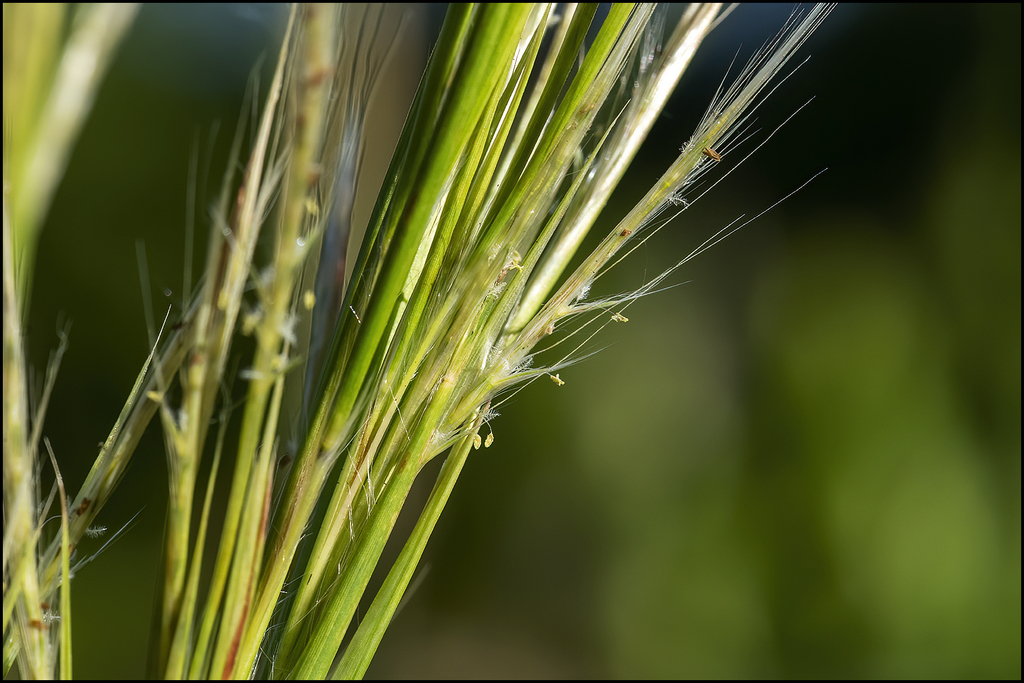





Maritime Bushy Bluestem
Anatherum tenuispatheum
Maritime Bushy Bluestem is a tall, grass-like plant that grows in coastal areas. It has beautiful blue-green leaves and can sway gently in the breeze, making it a lovely sight by the sea.
Habitat: Coastal areas
The Maritime Bushy Bluestem is a tall, clumping grass with slender, upright stems. Its narrow leaves often have a distinctive blue-green hue, contrasting with the fluffy, reddish-brown seed heads that emerge in late summer, giving it a soft, bushy appearance.
Category
PlantsRarity
Common
Danger
1/5 · Very low
Snaps
2
In autumn, its leaves can transform into beautiful shades of bronze and orange!
Its fuzzy seed heads look like tiny bottlebrushes dancing in the coastal breeze!
Some tiny insects burrow into its stems for cozy, sheltered winter homes!
Watch out! Its narrow leaves can feel slightly rough, like a tiny saw!
Its deep, fibrous root system creates a strong underground network, helping to stabilize sandy soil and prevent erosion on beaches.
This bluestem can withstand dry conditions, making it resilient in sandy, well-drained coastal environments with limited freshwater.
Schistocerca americana
They munch on its leaves and stems.
Ammodramus maritimus
They forage for its nutritious seeds.
Oryzomys palustris
These rodents feed on its seeds and tender shoots.
Grass-like plants are herbaceous plants that visually resemble true grasses, typically having long, narrow leaves.
Evergreen plants retain their foliage throughout the year, never shedding all their leaves at once.
Describes plants that are particularly attractive and beneficial to a wide range of pollinating organisms.
Coastal habitats are dynamic environments located along the interface between land and sea, influenced by tides, waves, and saltwater.
No aliases listed yet.
Danger
1/5 · Very low
Always stay on paths when exploring near plants to protect them and yourself.
The easiest way to identify Maritime Bushy Bluestem is to use the Snappit nature identifier app.
90-180 cm
30-60 cm
Late summer to fall
No
None
Perennial
Wind
Zoom in to split clusters and explore where this object has been snapped.

Texas, US
You might spot Anole, Monarch, and Pinkladies.
View guide →

Texas, US
You might spot Grooved Nipple Cactus and Blanchard's Cricket Frog.
View guide →

Georgia, US
You might spot Strawberry Bush, Fire Pink, and Red Salamander.
View guide →

Alabama, US
You might spot Horned Passalus Beetle and American Sweetgum.
View guide →
Take the discovery with you
Snap it with Snappit to identify it, learn what makes it special, and add the discovery to your collection.









.jpg&width=800)



_001.jpg&width=800)



