_Buenos_Aires.jpg&width=800)





Monk Parakeet
Myiopsitta monachus
Monk Parakeets are cheerful green birds that love to chatter and play. They build big nests in trees and are often seen in flocks, making them a fun sight in parks and gardens.
Habitat: Urban areas
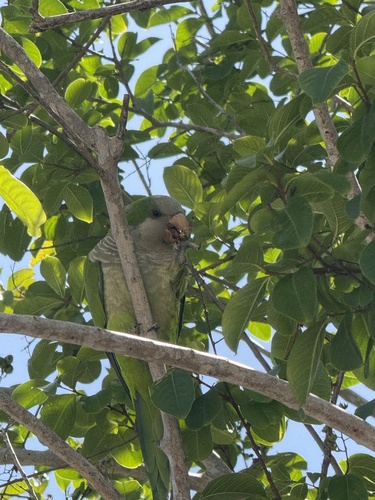
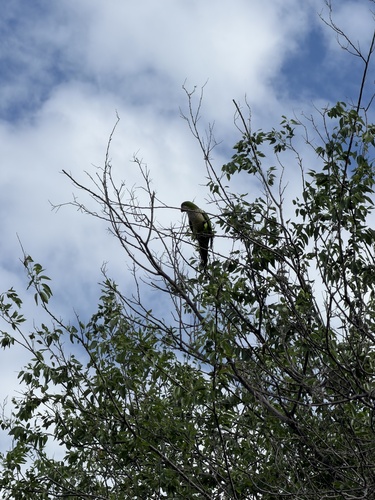
The Monk Parakeet has a distinctive gray head and chest, contrasting sharply with its bright green body and wings. Its primary flight feathers display a beautiful blue tint, and it possesses a short, pointed tail. This unique combination of gray and green makes it stand out.
Category
BirdsRarity
Common
Danger
1/5 · Very low
Snaps
10
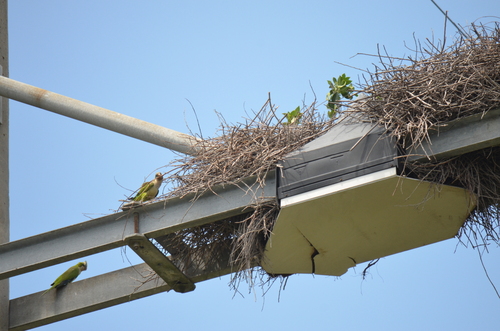
A single Monk Parakeet nest can be as big as a small car and weigh several hundred pounds!
Monk Parakeets are the only parrot species that build large stick nests instead of nesting in tree holes!
Monk Parakeets can live for over 20 years, even in the wild, which is super long for a bird!
These clever birds often choose city parks, power poles, and buildings as places to call home.
Monk Parakeets can construct massive, multi-chambered stick nests that allow many families to live together for protection and warmth.
Monk Parakeets have a versatile diet and can adjust to various food sources, helping them thrive in diverse environments, including cities.
Monk Parakeets have complex vocal cords that help them imitate a wide range of sounds, including human words and phrases.
Monk Parakeets can endure surprisingly cold climates because their communal nests provide excellent insulation and shelter.
A generalist feeder, they enjoy seeds, fruits, flowers, and even some insects.
Age differences: Young birds are fed regurgitated food by their parents, gradually transitioning to solid adult foods.
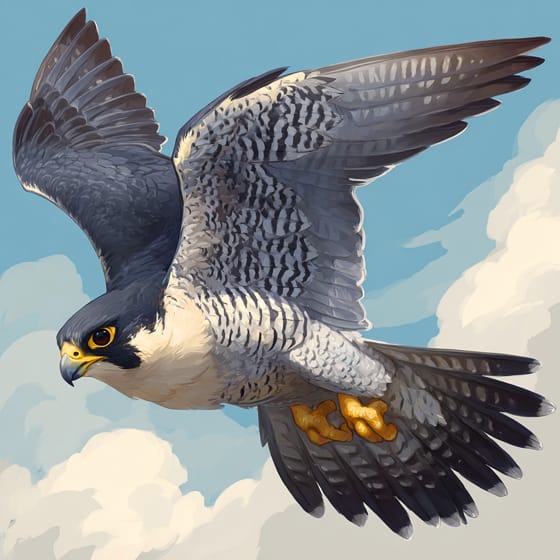
Falco peregrinus
A swift aerial predator of adult parakeets.
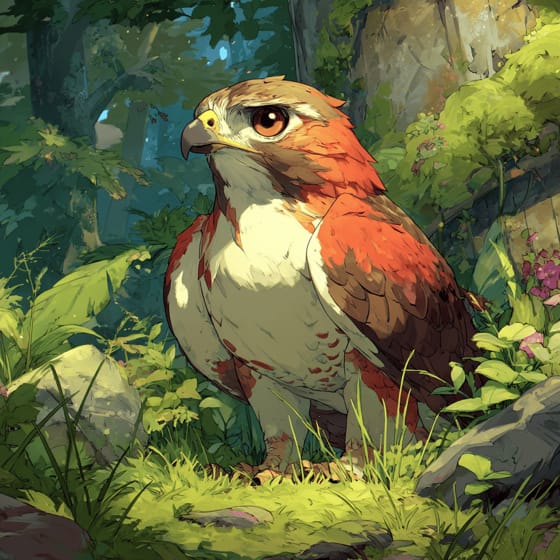
Buteo jamaicensis
This common hawk preys on both adults and fledglings.

Zea mays
Feeds on corn kernels, often raiding crops.

Helianthus annuus
Eats the seeds of this tall flowering plant.
Feathered describes animals, primarily birds, possessing a covering of feathers.
Social animals live in organized groups, cooperating for survival benefits such as foraging, defense, and raising offspring.
Singing animals produce complex vocalizations, often for purposes of attracting mates, defending territory, or communicating within their species.
Colorful describes organisms or objects displaying a wide range of bright and distinct colors.

This trait characterizes organisms whose diet consists entirely or primarily of plant material.

Diurnal animals are primarily active during daylight hours, typically resting or sleeping at night.

This habitat trait indicates species that can coexist with humans in urban and suburban environments, utilizing man-made structures and green spaces.

Describes organisms that transfer pollen, enabling the fertilization and reproduction of plants.
Danger
1/5 · Very low
Enjoy watching birds from a distance and don't try to touch or catch them.
The easiest way to identify Monk Parakeet is to use the Snappit nature identifier app.
28-30 cm
48-52 cm
0.1-0.14 kg
15-20 years
55 km/h
A generalist feeder, they enjoy seeds, fruits, flowers, and even some insects.
Urban areas
Zoom in to split clusters and explore where this object has been snapped.
Jun 7, 2026
Sunken GardensPhoto attribution
(c) Nick Tobler (Cowturtle), some rights reserved (CC BY)
License: CC BY 4.0 ↗
Image may be shown cropped inside the card frame.
May 23, 2026
Fort McIntoshPhoto attribution
(c) Ian McFaul, some rights reserved (CC BY)
License: CC BY 4.0 ↗
Image may be shown cropped inside the card frame.
May 22, 2026
Butterfly WorldPhoto attribution
(c) Josiah Londerée, some rights reserved (CC BY)
License: CC BY 4.0 ↗
Image may be shown cropped inside the card frame.

Valencian Community, ES
You might spot African Lion, Giraffes, and African Elephant.
View guide →

Texas, US
You might spot Bottlenose Dolphin and Sea Turtle.
View guide →

Florida, US
You might spot Cuban Tree Frog, Cane Toad, and Bee.
View guide →

US
You might spot Great Kiskadee, Rock Pigeon, and Mexican Palo Verde.
View guide →
Texas, US
You might spot Duck, Great-Tailed Grackle, and Egyptian Goose.
View guide →

Texas, US
You might spot Eastern Fox Squirrel, Duck, and American Robin.
View guide →
Take the discovery with you
Snap it with Snappit to identify it, learn what makes it special, and add the discovery to your collection.




.jpg&width=800)







