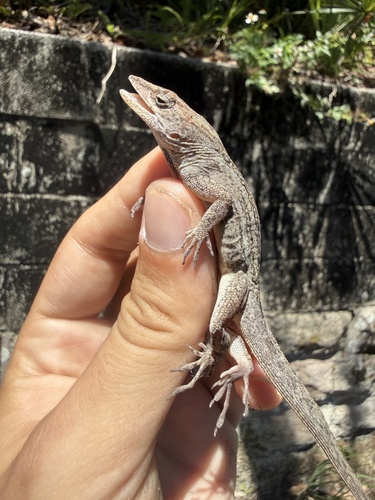
Brown Anole

Sunken Gardens offers a vibrant tropical oasis in the heart of St.
Sunken Gardens offers a vibrant tropical oasis in the heart of St. Petersburg, Florida. This historic botanical garden, spanning four acres, is a century-old living museum, renowned for its lush foliage, cascading waterfalls, and exotic bird collection, making it one of Florida's original roadside attractions. Visitors can immerse themselves in a serene escape filled with over 50,000 tropical plants and flowers from around the world.
Meandering pathways invite exploration through diverse habitats, where highlights include a flock of iconic Chilean flamingos, colorful macaws, and a variety of other tropical birds who have found their forever homes here as rescues. The gardens boast an impressive array of botanical wonders, such as the towering, multi-colored Rainbow Eucalyptus tree, an exquisite orchid collection, and serene Japanese and Butterfly Gardens, each offering unique visual delights. Keep an eye out for diverse flora, from vibrant bougainvillea and majestic royal palms to delicate water lilies and fruit trees.
More than just a garden, Sunken Gardens provides a tranquil retreat, offering a peaceful experience away from the city's hustle and bustle. It's a perfect spot for relaxation, photography, and connecting with nature, making it a memorable destination for all ages. The combination of historical charm, diverse plant life, and captivating animal residents ensures a unique and enriching visit. Eager to name that creature? Identify any animal you find during your visit using the Snappit app.
Sunken Gardens' rich history began in 1903 when George Turner Sr., a plumber with a passion for gardening, purchased a 4.1 to 6-acre plot of land in St. Petersburg. Using his plumbing skills, he drained a 10 to 15-foot deep sinkhole, known as Curlew Pond, to create a fertile environment for his tropical plants and fruit trees, including papayas, mangoes, bananas, and guavas. By the 1920s, visitors were already paying a small fee to stroll through his burgeoning garden, and by 1935-1936, "Turner's Sunken Gardens" officially opened as a commercial attraction. From the late 1940s through the 1970s, Sunken Gardens thrived as one of Florida's most popular roadside attractions, drawing over 200,000 visitors annually, known for its exotic plants, bird shows, and famous flamingos, which arrived in the 1950s. In 1967, the Turner family expanded, purchasing a former market building to create the "World's Largest Gift Shop" and the King of Kings Wax Museum. However, with the rise of theme parks in the 1980s, attendance declined. The City of St. Petersburg stepped in to preserve this historic landmark, purchasing the gardens in 1999 with funds from a voter-approved tax, ensuring its continued existence as a botanical oasis and educational resource. The original 1940 entrance and gift shop now houses a History Center, showcasing the garden's storied past.
Stroll along the winding, shaded pathways, photograph the diverse plant and animal life, observe the colorful macaws and other exotic birds, and find a quiet bench to relax amidst the lush surroundings. You can also purchase fish food to feed the koi in the Japanese Garden.
While beautiful year-round, spring offers the most spectacular floral displays. Summers in Florida can be hot and humid, so visiting earlier in the day is advisable, although many paths are shaded.
Many of the historic paths, spanning three-quarters of a mile, are ADA accessible, allowing for wheelchairs and walkers (not provided). While some paths have steep inclines, alternate routes are available to access all areas. Limited seating is also distributed throughout the gardens.
Don't miss the iconic Chilean flamingos, the vibrant Orchid Arbor, the serene Japanese Garden with its koi pond, and the unique Rainbow Eucalyptus tree. Other must-sees include the Butterfly Garden, the various cascading waterfalls, and the Cactus Garden, home to tortoises.
Each card links to a full Explore page with photos, traits, and fun facts.
Start with the big picture, then zoom in to explore individual wildlife observations around this place.
Allow ample time
** Plan for at least 1.5 to 2 hours to fully explore the gardens without rushing.
Grab a map
Pick up a map at the entrance to help navigate the 24 points of interest and ensure you don't miss any highlights.
Hydrate
Bring a refillable water bottle, as there's a water station at the welcome center and one inside the gardens.
Use facilities at entry
Restrooms are located only at the entrance/welcome center, so plan accordingly before heading into the main garden area.
Consider weekdays
To enjoy a more peaceful visit with fewer crowds, consider visiting on a weekday.
Dress comfortably
Wear comfortable shoes for walking the paved pathways and consider sunscreen and bug spray, especially during warmer months.
Parking
Ample free paved parking is available on-site, with overflow parking at Crescent Lake Park, a short walk away.
Jun 7, 2026
Photo attribution
(c) Nick Tobler (Cowturtle), some rights reserved (CC BY)
License: CC BY 4.0 ↗
Image may be shown cropped inside the card frame.
Jun 5, 2026
Photo attribution
(c) Nick Tobler (Cowturtle), some rights reserved (CC BY)
License: CC BY 4.0 ↗
Image may be shown cropped inside the card frame.
Jun 1, 2026
Photo attribution
no rights reserved
License: CC0 1.0 ↗
Image may be shown cropped inside the card frame.
Jun 7, 2026
Jun 6, 2026

Maryland, US
You might spot White-Tailed Deer and Eastern Gray Squirrel.
View guide →
.jpg)
District of Columbia, US
You might spot Eastern Gray Squirrel, Duck, and House Sparrow.
View guide →

Illinois, US
You might spot American Robin, Canada Goose, and House Sparrow.
View guide →

Virginia, US
You might spot Spotted Lanternfly and Northern Cardinal.
View guide →
Take the discovery with you
Identify the wildlife you spot, learn as you go, and keep a collection of the adventure.