





Moss Campion
silene acaulis
Moss Campion is a tiny, colorful flower that often grows in rocky places. Its bright pink blooms can make a whole hillside look like a fluffy blanket of color!
Habitat: Moss Campion lives in rocky, alpine areas, often found in tundra and mountain regions.
The Moss Campion is a low-growing plant forming dense, cushion-like mats of tightly packed green leaves. It produces numerous small, star-shaped flowers, typically bright pink, though sometimes white or pale purple, often appearing directly on the mossy cushion.
Category
PlantsRarity
Common
Danger
0/5 · No known danger
Snaps
3
It helps tiny insects and other plants by creating warm, sheltered mini-homes.
Its flowers sometimes change from bright pink to pale white depending on the local temperature!
Some Moss Campion cushions are over 100 years old! Talk about ancient plants!
These hardy plants can grow closer to mountain tops than most other flowering plants!
Moss Campion grows in dense, cushion-like mats, trapping warmth and sheltering itself from harsh winds in its cold mountain home.
It sends down long taproots to anchor itself securely in shallow, rocky soils, preventing it from being blown away.
Moss Campion can quickly burst into bloom during short arctic and alpine summers to ensure it produces seeds.
Its cells contain natural compounds that act like antifreeze, allowing it to survive freezing temperatures.
Bombus polaris
Main pollinator in Arctic environments.
_Pieris_napi_napi_-_Foret_de_Bouconne%2C_France_-_female.jpg&width=800)
Pieris napi
Attracted to its bright flowers for nectar.
Rangifer tarandus
A food source for grazing herbivores.
Microtus oeconomus
Voles may browse its leaves and stems.
Formica exsecta
Ants may nest within the protective cushion.
Solitary animals live alone for most of their lives, only interacting with others for mating or parental care.
Colorful describes organisms or objects displaying a wide range of bright and distinct colors.
Grassland habitats are terrestrial biomes dominated by grasses and herbaceous plants, supporting a variety of grazing animals.
This trait characterizes organisms whose diet consists entirely or primarily of plant material.

This habitat trait identifies species found in mountainous regions, characterized by high elevation, steep slopes, and varying climate zones.

Endangered status indicates a species is at a very high risk of extinction in the wild in the near future.
Danger
0/5 · No known danger
No special safety notes yet.
The easiest way to identify Moss Campion is to use the Snappit nature identifier app.
5-15 cm
10-50 cm
1-2 cm
Summer
Yes
None
Perennial
Zoom in to split clusters and explore where this object has been snapped.

Colorado, US
You might spot Rocky Mountain Marsh-Marigold and American Bistort.
View guide →
British Columbia, CA
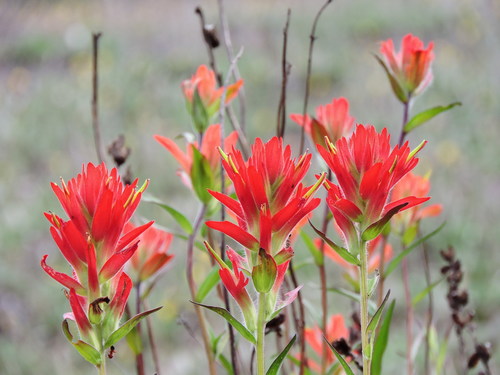
You might spot Giant Red Paintbrush, Lupines, and Broadleaf Arnica.
View guide →

Alaska, US
You might spot Dwarf Fireweed and Yellow Mountain-Avens.
View guide →

Colorado, US
You might spot Mountain Goat, Yellow-Bellied Marmot, and Bighorn Sheep.
View guide →

Aragon, ES
You might spot Androsace Ciliata and Purple Saxifrage.
View guide →

British Columbia, CA
You might spot Subalpine Larch, Arrowleaf Senecio, and Moss Campion.
View guide →
Take the discovery with you
Snap it with Snappit to identify it, learn what makes it special, and add the discovery to your collection.









.jpg&width=800)



_001.jpg&width=800)




