





Nashville Warbler
Leiothlypis ruficapilla
The Nashville Warbler is a small, bright yellow bird that loves to sing. It can often be found hopping around in bushes and trees, looking for tasty insects to eat.
Habitat: Forests
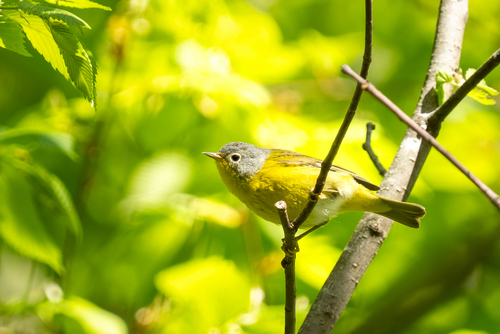
The Nashville Warbler is a small songbird with an olive-green back and a bright yellow belly. Its gray head features a subtle rusty cap on males, distinguishing it from other warblers by its plain face and lack of wing bars.
Category
BirdsRarity
Common
Danger
1/5 · Very low
Snaps
3
Males often sing two distinct songs, one to claim territory and another to attract a mate!
Their tiny rusty cap on male's heads is often completely hidden by other feathers!
These birds migrate mainly at night, navigating by the stars to reach far-off places.
They sometimes hang upside down on branches to find hidden bugs that others miss.
Nashville Warbler can acrobatically snatch insects from leaves and air because of its quick flight and pointed beak.
Nashville Warbler has a camouflaged, cup-shaped nest built on the ground that protects its eggs from predators.
Nashville Warbler can travel thousands of kilometers using the Earth's magnetic field to accurately find its wintering grounds.
This little bird mostly munches on various insects and spiders it finds in trees and bushes.

Accipiter striatus
A swift predator that hunts small birds like warblers.
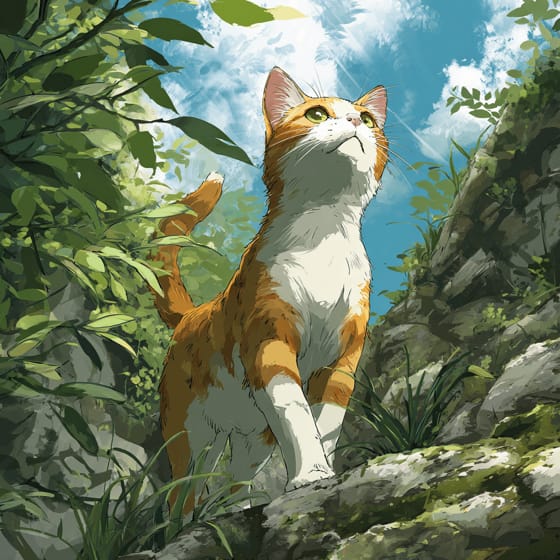
Felis catus
Domestic cats are a significant threat to ground-nesting warblers.
Malacosoma disstria
Feasts on these common caterpillars found on leaves.

Acer rubrum
Finds foraging habitat and nesting sites in maple trees.
Feathered describes animals, primarily birds, possessing a covering of feathers.
Social animals live in organized groups, cooperating for survival benefits such as foraging, defense, and raising offspring.
Singing animals produce complex vocalizations, often for purposes of attracting mates, defending territory, or communicating within their species.
Colorful describes organisms or objects displaying a wide range of bright and distinct colors.

This trait identifies organisms whose diet primarily consists of insects and other small invertebrates.

Forest habitats are terrestrial environments dominated by dense tree cover, supporting a high diversity of plant and animal life.

Diurnal animals are primarily active during daylight hours, typically resting or sleeping at night.

Migratory animals undertake seasonal movements from one region to another, typically in response to changes in climate or food availability.
No aliases listed yet.
Danger
1/5 · Very low
Always watch birds from a distance and be quiet so you don't scare them away.
The easiest way to identify Nashville Warbler is to use the Snappit nature identifier app.
11-13 cm
17-19 cm
0.007-0.012 kg
2-5 years
40 km/h
This little bird mostly munches on various insects and spiders it finds in trees and bushes.
Forests
Zoom in to split clusters and explore where this object has been snapped.
May 8, 2026
Iowa ArboretumPhoto attribution
(c) evangrimes, some rights reserved (CC BY)
License: CC BY 4.0 ↗
Image may be shown cropped inside the card frame.

Iowa, US
You might spot Painted Turtle, Blue Phlox, and Jack-In-The-Pulpit.
View guide →

Massachusetts, US
You might spot Eastern Newt, Admiral Butterfly, and Bluebead Lily.
View guide →
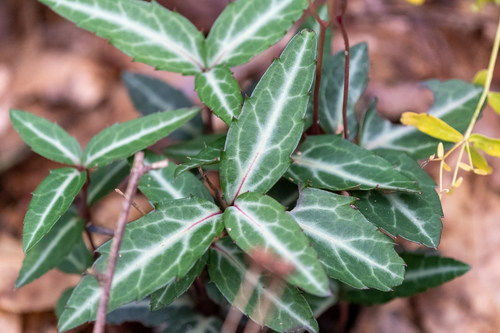
Indiana, US
You might spot Striped Wintergreen and Pointed-Leaved Tick-Trefoil.
View guide →
Take the discovery with you
Snap it with Snappit to identify it, learn what makes it special, and add the discovery to your collection.




.jpg&width=800)






