





North American Common Water Strider
Aquarius remigis
The North American Common Water Strider is a fun insect that skims across the water's surface. They have long legs that help them walk on water without sinking!
Habitat: Wetlands
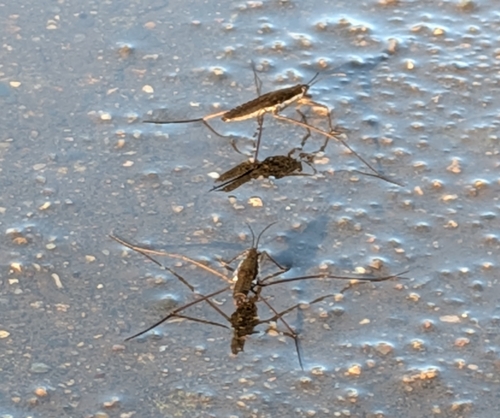
The North American Common Water Strider is a slender, dark brown to black insect with very long, thin legs. Its body is elongated and often has a velvety sheen. What makes it visually different are its extremely long middle and hind legs, which splay out to distribute its weight, allowing it to "skate" effortlessly on the water's surface.
Category
InsectsRarity
Common
Danger
1/5 · Very low
Snaps
18
Some can grow wings and fly to new ponds if their home dries up!
They clean their super-special legs as carefully as a cat cleans its whiskers!
They use their middle legs like oars to zip across the water super fast!
Water striders talk to each other by tapping special patterns on the water!
North American Common Water Striders can walk and glide on water because their specially-coated legs repel water, creating dimples in the surface tension that support their weight.
North American Common Water Striders can detect prey using sensitive hairs on their legs that sense tiny ripples and vibrations on the water's surface, helping them locate food.
North American Common Water Striders can move swiftly across the water using their middle legs like oars to propel themselves, reaching speeds impressive for their size.
These bug hunters eat small insects that fall onto the water's surface.
Age differences: Nymphs (young) eat smaller versions of the same insects as adults.
Gambusia affinis
Fish like mosquitofish will prey on water striders.
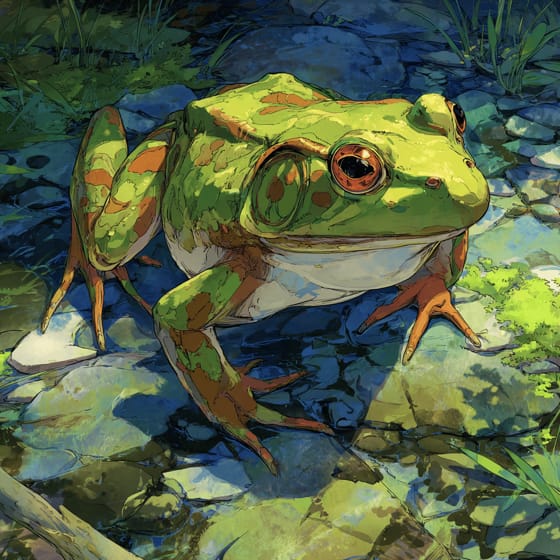
Lithobates catesbeianus
Frogs often snatch water striders from the surface.
Aedes aegypti
They ambush mosquito adults or larvae that fall into the water.
Chironomus riparius
They prey on midges and other small insects that land on water.
This trait identifies organisms whose diet primarily consists of insects and other small invertebrates.
This habitat trait identifies species found in wetlands, which are areas of land saturated with water, either permanently or seasonally, including marshes, swamps, and bogs.
Diurnal animals are primarily active during daylight hours, typically resting or sleeping at night.
Pertaining to species that are significantly smaller than typical or average for their kind.

This trait identifies organisms that exhibit exceptional swiftness in movement for hunting, escape, or travel.

Aquatic habitats encompass environments where organisms live predominantly in water, including oceans, rivers, lakes, and wetlands.

Describes organisms that transfer pollen, enabling the fertilization and reproduction of plants.
No aliases listed yet.
Danger
1/5 · Very low
Always watch where you step near water to keep safe from slipping.
The easiest way to identify North American Common Water Strider is to use the Snappit nature identifier app.
8-18 mm
30-90 days
These bug hunters eat small insects that fall onto the water's surface.
Wetlands
Ambush
6
Zoom in to split clusters and explore where this object has been snapped.
Mar 9, 2026
Potter Park ZooPhoto attribution
(c) Ethan Rose, some rights reserved (CC BY)
License: CC BY 4.0 ↗
Image may be shown cropped inside the card frame.

Arizona, US
You might spot Christmas Cholla and California Barrel Cactus.
View guide →

California, US
You might spot Western Fence Lizard, Duck, and California Brittlebush.
View guide →
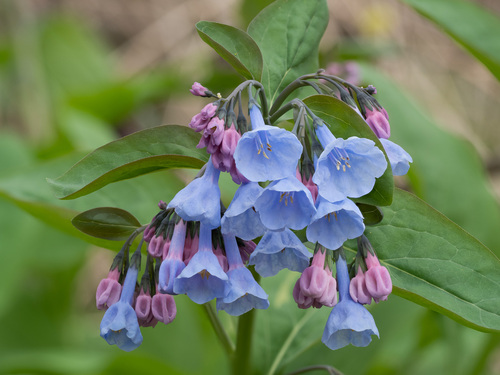
Virginia, US
You might spot Virginia Bluebells and Virginia Springbeauty.
View guide →

Iowa, US
You might spot Common Eastern Bumble Bee and North American Luna Moth.
View guide →

California, US
You might spot Western Fence Lizard and Pacific Poison Oak.
View guide →

Arizona, US
You might spot Saguaro and Graham's Nipple Cactus.
View guide →
Take the discovery with you
Snap it with Snappit to identify it, learn what makes it special, and add the discovery to your collection.








.jpg&width=800)




